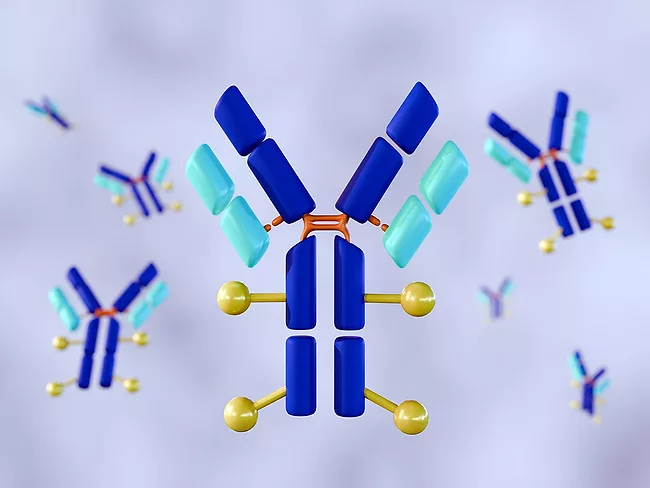
Sutro Biopharma Inc. has outlined its next-generation antibody-drug conjugate (ADC) pipeline following recent IND clearance and initiation of phase I for its tissue factor-targeting ADC, STRO-004.
At the busy annual congress of the American College of Surgeons in Chicago, attendees heard about a study that found rectal bleeding in younger adults – those under 50 years of age – increased their odds of a colorectal cancer (CRC) diagnosis by a shocking 850%. Already, the demographic has turned up sharply higher cases of the disease in recent years. The ACS meeting was held Oct. 4-7.
CEO Lynn Seely said Lyell Immunopharma Inc. is going “full steam ahead” with development of rondecabtagene autoleucel (ronde-cel, also known as LYL-314) amid the excitement of the firm’s latest news: the buy of global rights to LYL-273, an autologous guanylyl cyclase-C-targeted CAR T-cell candidate for metastatic colorectal cancer (mCRC), from Innovative Cellular Therapeutics Inc. (ICT) for an up-front payment of $40 million and 1.9 million shares of Lyell common stock.
ADAM9 (a disintegrin and metalloproteinase 9) is overexpressed in several gastrointestinal cancers, with expression levels correlating with suppressive tumor microenvironment, metastasis and poor prognosis. DB-1317, under development at Duality Biologics (Suzhou) Co. Ltd., is an ADAM9-targeting antibody-drug conjugate including a topoisomerase inhibitor payload P1003 at a drug-antibody ratio of 8.
CDR-609 is a T-cell engager therapeutic from CDR-Life Inc. that targets Leucine-rich repeat-containing G protein-coupled receptor 5 (LGR5) with potential for treating colorectal cancer.
At the ongoing AACR-NCI-EORTC International Conference on Molecular Targets and Cancer Therapeutics 2025 in Boston, Bridgebio Oncology Therapeutics Inc. (BBOT) presented data on BBO-11818, a potent and selective KRAS inhibitor with activity against several KRAS mutants both in active (ON) and inactive (OFF) forms.
In a recent publication in iScience, researchers from Peking University First Hospital investigated the therapeutic potential of SLC7A11 CAR T therapy for solid tumors, particularly colorectal and pancreatic cancers.
Excessive signaling by platelet-derived growth factor receptor (PDGFR)-α, a transmembrane tyrosine kinase, helps drive the rapid angiogenesis that many types of tumor cells need in order to proliferate and metastasize.
Carbonic anhydrase IX (CAIX) is overexpressed in the hypoxic tumor environment and is thought to help drive tumor progression and metastasis by generating protons that acidify the area. Therefore, inhibiting the enzyme may be effective as an anticancer treatment.