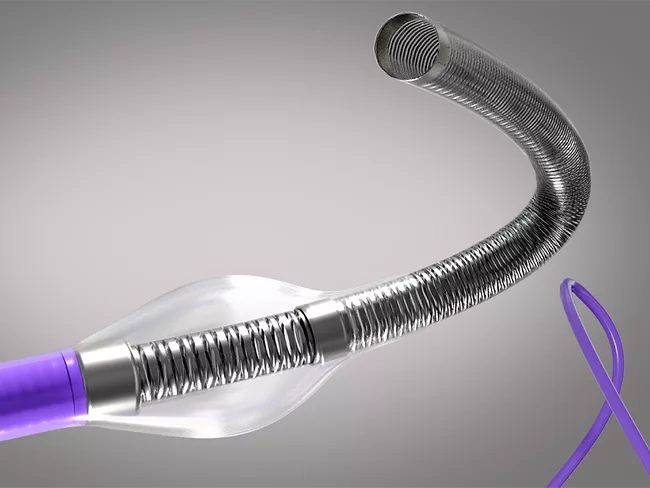
Penumbra Inc.’s 'resoundingly positive' results from its STORM-PE trial could see current guidelines for anticoagulant use in pulmonary embolism swept away in favor of mechanical thrombectomy. A deluge of favorable comments by experts and analysts followed the presentation during a late-breaking session at Transcatheter Cardiovascular Therapeutics, the annual scientific symposium of the Cardiovascular Research Foundation, which showed more than 50% improvement in treatment effect from Penumbra’s computer-assisted vacuum thrombectomy system plus anticoagulation compared to anticoagulation alone within two days with no increase in major adverse events.
Two med-tech companies focused on pulmonary embolism overcame their own blockages to commercialization this week. Inquis Medical Inc.’s Aventus thrombectomy system received U.S. FDA clearance for use in pulmonary embolism, an expanded indication, while Penumbra Inc. completed enrollment in the STORM-PE clinical trial of its Lightning Flash device.
Stanford University researchers are seeking patent protection for a medical device for performing endovascular surgical procedures, such as thrombectomy, rotablation, drug delivery and treating brain aneurysms. The device includes a magnetically actuated untethered rotation device, i.e., a magnetic spinner, that can navigate in blood vessels through its spinning-enabled propulsion.
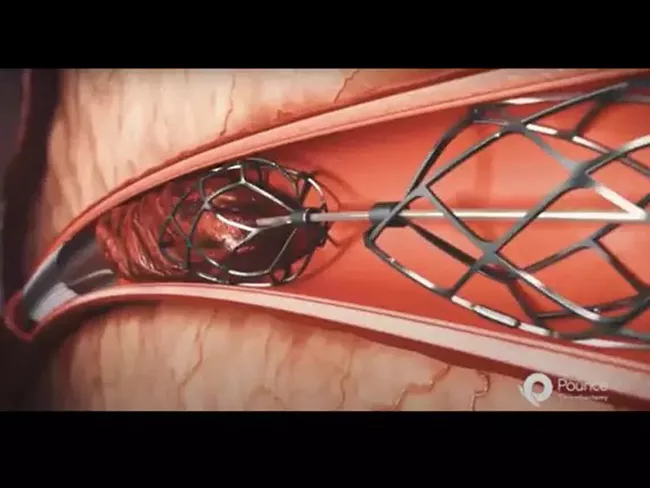
Surmodics Inc. is poised to jump on the market for below the knee thrombectomy now that its Pounce platform with a low-profile (LP) model has FDA 510(k) clearance. The system can now effectively clear organized clots from vessels as small as 2 mm in diameter. The Pounce LP expands the Eden Prairie, Minn.-based company’s “grab-go-flow” platform. In its first iteration, Pounce enabled removal of thrombi and emboli in peripheral arteries 3.5 mm to 6 mm in diameter.
Cardiovascular Systems Inc. (CSI) reported the submission by its partner Innova Vascular Inc. of U.S. FDA premarket notification for thrombectomy devices to treat peripheral vascular disease. Already an acknowledge leader in atherectomy technologies, St. Paul, Minn.-based CSI intends to acquire and commercialize each device to expand its technology portfolio to include treatment of deep vein thrombosis (DVT) and pulmonary embolism (PE).
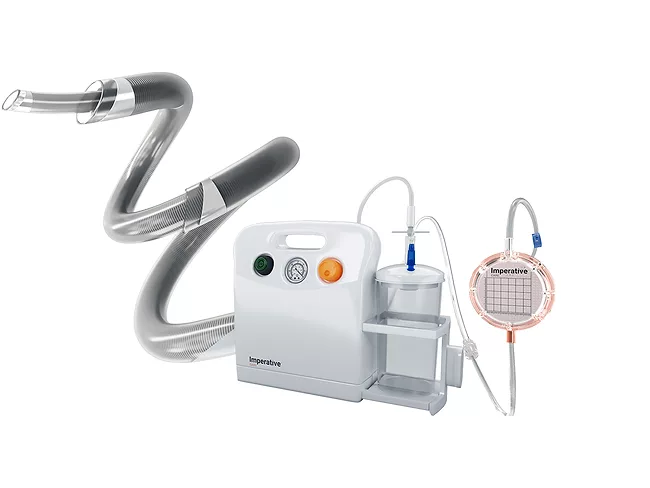
Imperative Care Inc. received U.S. FDA 510(k) clearance for its Zoom Rdl radial access system for treatment of ischemic strokes. The device is designed to enhance radial access for removal of clots in patients with tortuous anatomy and other challenges to the femoral access typically used, providing more options for both patients and physicians.
Cerenovus Inc. reported primary results from the real-world EXCELLENT Registry showing positive outcomes with its Embotrap revascularization devices in the removal of stroke-inducing blood clots. Patients enrolled in the registry were treated with either the Embotrap II or Embotrap III devices as a first line therapy to treat ischemic stroke.
Rapid Medical Inc. received FDA clearance for the Tigertriever 13, termed “the smallest and only adjustable thrombectomy device” for treating brain clots causing ischemic stroke. Stealing a page from aerospace engineers, Sunrise, Fla.-based Rapid Medical has developed complex, 3D “braiding” technology enabling its mechanical stent retriever to gain better access to and treat deeply embedded brain clots.
Vena Medical Inc. received Health Canada approval for a device that combines two neurovascular catheters that typically work separately to remove clots from the brains of people who have suffered stroke.
LONDON – Brainomix Ltd. has raised £16 million (US$ 21.2 million) in a series B, enabling the company to extend its artificial intelligence (AI)-driven diagnostic platform beyond the initial deployment in stroke, to the assessment of disease progression in lung fibrosis, and response to therapy in lung cancer.