BioWorld. Link to homepage.

Clarivate
  • BioWorld
  • BioWorld Science
  • BioWorld Asia
  • Data Snapshots
    • Biopharma
    • Medical technology
    • Infographics: Dynamic digital data analysis
    • Index insights
    • NME Digest
  • Special reports
    • Infographics: Dynamic digital data analysis
    • Trump administration impacts
    • Med-tech outlook 2026
    • Under threat: mRNA vaccine research
    • BioWorld at 35
    • Biopharma M&A scorecard
    • Bioworld 2025 review
    • BioWorld MedTech 2025 review
    • BioWorld Science 2025 review
    • Women's health
    • China's GLP-1 landscape
    • PFA re-energizes afib market
    • China CAR T
    • Alzheimer's disease
    • Coronavirus
    • More reports can be found here

BioWorld. Link to homepage.

  • Sign In
  • Sign Out
  • My Account
Subscribe
BioWorld - Monday, April 27, 2026
Home » facioscapulohumeral muscular dystrophy

Articles Tagged with ''facioscapulohumeral muscular dystrophy''

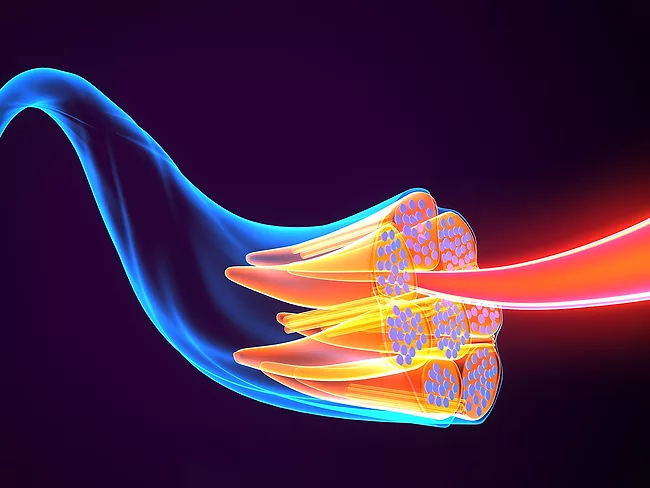
Illustration of motor neuron connecting to muscle fiber
Neurology/psychiatric

SFL-0821 shows promise for facioscapulohumeral muscular dystrophy

March 17, 2026
No Comments
Facioscapulohumeral muscular dystrophy (FSHD) is a muscle wasting disease caused by aberrant expression of double homeobox protein 4 (DUX4). When DUX4 is activated in skeletal muscle, it triggers myocyte cell death after several transcriptional changes, thus genetic DUX4 silencing arises as a promising approach for treating FHSD.
Read More
Illustration showing cross section of skeletal muscle
Neurology/psychiatric

Targeting DUX4 with improves muscle function in FSHD models

Jan. 23, 2026
No Comments
Facioscapulohumeral muscular dystrophy (FSHD) is an autosomal dominant skeletal muscle disorder with a prevalence of approximately 1 in 8,000. The disorder is driven by aberrant expression of double homeodomain protein 4 (DUX4) within the D4Z4 macrosatellite array. Currently, effective treatments for FSHD are lacking. Strategies aimed at reducing DUX4 expression could hold promise as potential therapeutic approaches for FSHD.
Read More
Neurology/psychiatric

Solve FSHD and Modalis collaborate on treatment for muscular dystrophy subtype

June 10, 2025
No Comments
Solve FSHD and Modalis Therapeutics Corp. have established a strategic collaboration to develop an innovative therapy for facioscapulohumeral muscular dystrophy (FSHD).
Read More
Illustration of muscle tissue anatomy
Neurology/psychiatric

Solve FSHD supports Armatus Bio drug for facioscapulohumeral muscular dystrophy

May 7, 2025
No Comments
Armatus Bio Inc.’s development of ARM-201, an AAV-delivered microRNA therapy for facioscapulohumeral muscular dystrophy (FSHD), has been boosted by a $3 million investment by Solve FSHD.
Read More
Illustration of muscle anatomy
Neurology/psychiatric

FORCE platform boosts muscle function in dystrophic mice

April 2, 2025
Dyne Therapeutics Inc. presented their most recent work to advance novel therapeutics for facioscapulohumeral muscular dystrophy (FHSD). FSHD is an autosomal dominant genetic disorder characterized by muscle weakness and atrophy. Dyne Therapeutics previously developed the FORCE platform, which uses an antigen-binding fragment (Fab) specifically targeting telomeric repeat binding factor-1 (TfR1) for targeted therapeutic delivery.
Read More
DNA mutations or genetic disorder concept art
Neurology/psychiatric

Epicrispr advances EPI-321 for FSHD with CTA clearance in New Zealand, new funding

March 27, 2025
Epicrispr Biotechnologies Inc. has secured $68 million in the first close of its series B financing to support the clinical development of EPI-321, a first-in-class epigenetic therapy for facioscapulohumeral muscular dystrophy (FSHD).
Read More

Sarepta ‘secures future’ with massive Arrowhead collaboration

Nov. 26, 2024
By Jennifer Boggs
In the largest collaboration of 2024, Sarepta Therapeutics Inc. and Arrowhead Pharmaceuticals Inc. entered a sprawling global licensing deal that includes a swath of clinical and preclinical candidates targeting rare genetic diseases. Under the terms, Sarepta gains access to existing and potential future compounds derived from the RNAi platform developed by Arrowhead, with the latter eligible for payments potentially exceeding $11 billion.
Read More

Novartis acquires gene therapy developer Kate Therapeutics for $1.1B

Nov. 21, 2024
By Karen Carey
Rising from a $51 million series A round a year ago to a $1.1 billion acquisition, Kate Therapeutics Inc. has stepped under the umbrella of Novartis AG, which gains preclinical adeno-associated virus-based gene therapies for neuromuscular diseases.
Read More
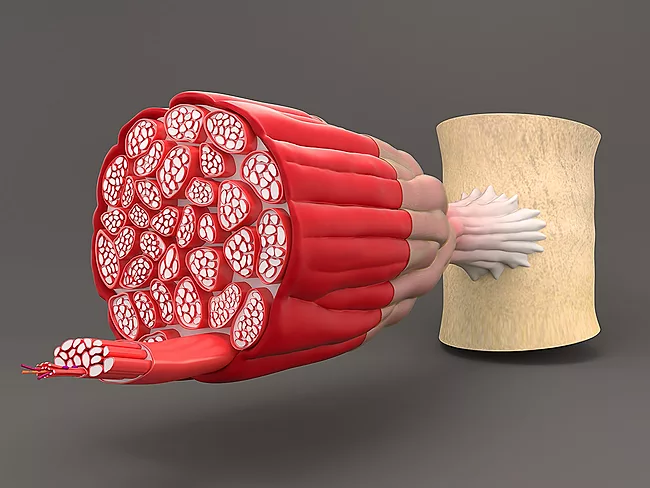
3D cross-section illustration of muscle anatomy
Musculoskeletal

Dyne Therapeutics’ DYNE-302 normalizes muscular pathology in preclinical FSHD

Oct. 11, 2024
Facioscapulohumeral muscular dystrophy (FSHD) is a severe muscle disorder caused by aberrant DUX4 mRNA expression in skeletal muscle. DUX4 activates downstream target transcriptome, known as D4T, leading to myofiber loss and muscle weakness.
Read More

Rare disease failure batters Fulcrum shares

Sep. 12, 2024
By Lee Landenberger
After missing the primary and secondary endpoints in its phase III study of losmapimod in treating the rare disease facioscapulohumeral muscular dystrophy (FHSD), Fulcrum Therapeutics Inc. is yanking the program’s plug. The selective p38α/β mitogen activated protein kinase inhibitor had a lot of money behind it. It was originally in-licensed from GSK plc and then, in May, Sanofi SA signed on to help Fulcrum develop and commercialize losmapimod for FHSD worldwide, excluding the U.S., in a deal worth $1.06 billion.
Read More
Previous 1 2 3 Next

Popular Stories

  • Today's news in brief

    BioWorld
    BioWorld briefs for April 27, 2026.
  • Illustration of a tumor

    Detecting the invisible: minimal residual disease at AACR 2026

    BioWorld Science
    Minimal residual disease (MRD) has become a central concept in modern oncology, reshaping how clinicians evaluate response, relapse risk and treatment precision....
  • Boy cupping ear with soundwave graphic

    A free gene therapy? Regeneron’s Otarmeni approved for hearing loss

    BioWorld
    Children and adults with a type of congenital hearing loss now have a free treatment option, with the U.S. FDA’s accelerated approval of Regeneron Pharmaceuticals...
  • Illustration of human face that looks abstract and digital

    AACR 2026: The age of agentic AI in oncology

    BioWorld Science
    New Approach Methodologies (NAMs) for drug development are transforming biomedical research by replacing or complementing animal models. More than 90% of...
  • Chengdu Mfs Pharma synthesizes new compounds for pain

    BioWorld Science
    Chengdu Mfs Pharma Co. Ltd. has prepared and tested compounds for the potential treatment of pain, sleep disorder and status epilepticus epilepsy as well as for...
  • BioWorld
    • Today's news
    • Analysis and data insight
    • Clinical
    • Data Snapshots
    • Deals and M&A
    • Financings
    • Medical technology
    • Newco news
    • Opinion
    • Regulatory
  • BioWorld Science
    • Today's news
    • Biomarkers
    • Cancer
    • Conferences
    • Endocrine/metabolic
    • Immune
    • Infection
    • Neurology/psychiatric
    • NME Digest
    • Patents
  • BioWorld Asia
    • Today's news
    • Analysis and data insight
    • Australia
    • China
    • Clinical
    • Deals and M&A
    • Financings
    • Newco news
    • Regulatory
    • Science
  • More
    • About
    • Advertise with BioWorld
    • Archives
    • Article reprints and permissions
    • Contact us
    • Cookie policy
    • Copyright notice
    • Data methodology
    • Infographics: Dynamic digital data analysis
    • Index insights
    • Podcasts
    • Privacy policy
    • Share your news with BioWorld
    • Staff
    • Terms of use
    • Topic alerts
Follow Us

Copyright ©2026. All Rights Reserved. Design, CMS, Hosting & Web Development :: ePublishing