The European Commission has given in to the increasing pressure and alarm from member states and is moving to extend the deadlines for implementing the 2017 Medical Device Regulation (MDR) and the In Vitro Devices Regulation (IVDR).
The angst over the maladroit roll-out of the European Union’s Medical Device Regulation (MDR) has reached the European Parliament (EP), which met recently to address the issue. Stella Kyriakides, who oversees the MDR on behalf of the European Commission (EC) responded to stinging criticism from the EP that the EC’s health council will meet in December to address both the short-term and structural problems with the MDR, but had little detail to offer other than a promise to keep the EP abreast of these developments.
The European Commission (EC) has proposed updates to rules regarding product liability, one of which is an update to strict liability policy for pharmaceuticals (and presumably medical devices) that would expand the term of liability to 15 years. The proposal for artificial intelligence (AI) liability would up the ante on transparency into these algorithms, and the combination of the two novel policies would suggest that life science companies may face a more uniform, but potentially more hazardous legal landscape in the EU should these proposals be adopted.
The European Commission (EC) is proposing a novel cancer screening program that would improve cancer outcomes by fostering more frequent cancer screenings among European Union (EU) member nations. The primary focus is on screening for breast, cervical and colorectal cancers, but the plan carries a lofty target of providing screening services for 90% of those who qualify for screening.
EU health ministers have warned that developers of medical devices face trouble ahead in meeting deadlines for implementing the two new key regulations for medical devices (MDR) and in vitro diagnostics (IVDR). These were planned to enter into force in May 2021 and May 2022 respectively. EU executives and stakeholders have now all accepted that delays in complying with the regulations could result in issues achieving certification for medical devices, threatening shortages in the market.
An administrative law judge has decreed that the acquisition of Grail Inc., by Illumina Inc., would not represent a suppression of competition in the market for multicancer early detection (MCED) tests, clearing a way for an acquisition that was initially valued at more than $7 billion.
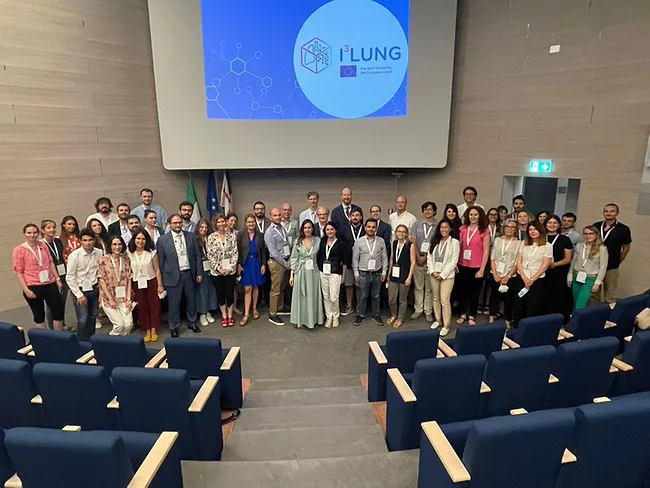
The European Commission launched a new research initiative with $10 million from Horizon Europe, the E.U.’s research and innovation program, to create a cutting-edge decision-making tool to help clinicians and patients select the best lung cancer treatment based on each patient’s specific needs and circumstances. The I3Lung initiative brings together 16 international partners from Germany, Belgium, Denmark, Italy Sweden, Switzerland, the U.S. and Israel.
Illumina Inc.’s acquisition of Grail Inc., of Menlo Park, Calif., may or may not prove to be a case of jumping the regulatory gun, but the move to date has not racked up significant financial penalties for the company. That may soon change per a statement by the European Commission, which said that Illumina may find itself on the receiving end of “hefty fines,” a statement made by EC executive vice president Margrethe Vestager.
Illumina Inc., of San Diego, is struggling to complete the regulatory side of its acquisition of Grail Inc., of Menlo Park, Calif., thanks in part to the U.S. Federal Trade Commission’s (FTCs) ongoing review of the transaction. However, Illumina is also facing stiff winds in Europe where the General Court of the European Union rejected the company’s bid to push the deal through despite the opposition of the European Commission (EC).
Companies in the device and diagnostics spaces are familiar with how government agencies react to acquisitions that bolster the acquiring company’s product pipeline, but vertical mergers provoke a different set of regulatory concerns. The European Commission (EC) recently updated its guidelines for vertical agreements, a development that could hamper some EU corporate activity going forward.