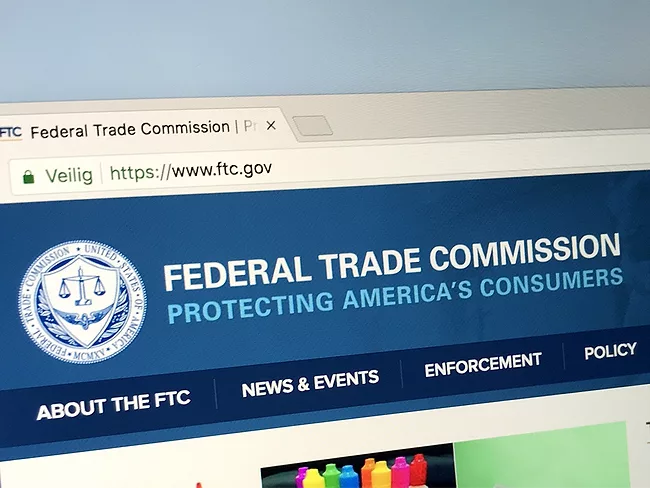
Boston Scientific Corp., has announced that it has abandoned its plans to acquire M.I. Tech Co. Ltd., of South Korea after opposition was announced by the U.S. Federal Trade Commission (FTC). The FTC lauded the news with a May 24 statement that cited the agency’s cooperation with other national regulatory authorities as a factor in scotching the proposed acquisition, the second time in recent weeks that government agencies have grounded mergers and acquisitions in the med-tech space.
The U.S. Federal Trade Commission (FTC) issued a final order in connection with the proposed reacquisition of Grail Inc. by Illumina Inc., in an action that might seem to finally conclude a matter that has stretched over several years. However, the FTC acknowledged that Illumina has 60 days to petition the order, which Illumina said it intends to do in conjunction with an effort to overturn a similarly adverse outcome in the EU.
From Carl Icahn’s point of view, Illumina Inc.’s desired reintegration of its former spinoff is more a poisoned chalice than a holy Grail. In his opening salvo to a proxy fight, Icahn published an open letter March 13 to other Illumina shareholders referencing the “extreme displeasure” of investors with Illumina’s “reckless” determination to acquire Grail Inc., despite European regulators’ strong opposition to the deal.
The latest U.S. Federal Trade Commission (FTC) hearing on the merger between Illumina Inc., and Grail Inc., highlighted some sharp disagreements over the impact of the transaction on the market for multi-cancer early detection (MCED) tests, but Illumina has vowed to take steps to blunt any such effects in an open offer.
A subcommittee of the Senate Judiciary Committee met recently to review the current state of antitrust enforcement in the U.S., and heard from both the Department of Justice (DOJ) and the Federal Trade Commission (FTC) about their enforcement activities. FTC chairwoman Lina Khan acknowledged that the agency had coordinated with the European Commission about the transaction between Illumina Inc., and Grail Inc., activities which she claimed were nothing more than an attempt to promote regulatory efficiency.
Thirteen months after Illumina Inc. and Grail Inc. merged, prior to regulatory approval, the deal has taken a turn for the worse. The prognosis looked better following an administrative law judge’s ruling Sept. 1 against the U.S. Federal Trade Commission’s lawsuit seeking to block the transaction, but the European Commission (EC) issued a decision Sept. 6 prohibiting the deal based on the likelihood that a merger would stifle innovation and limit choices in the early cancer detection liquid biopsy market.
An administrative law judge has decreed that the acquisition of Grail Inc., by Illumina Inc., would not represent a suppression of competition in the market for multicancer early detection (MCED) tests, clearing a way for an acquisition that was initially valued at more than $7 billion.
The largest study to date assessing the use of cell-free DNA (cfDNA) analysis to detect cancer in advance of symptoms has completed enrollment of 140,000 healthy volunteers. The study, being run in the U.K. National Health Service (NHS) by the charity Cancer Research UK (CRUK) and cfDNA diagnostics specialist Grail Inc., is using Grail’s Galleri test to look for cancer-specific methylation patterns in blood.
Illumina Inc.’s acquisition of Grail Inc., of Menlo Park, Calif., may or may not prove to be a case of jumping the regulatory gun, but the move to date has not racked up significant financial penalties for the company. That may soon change per a statement by the European Commission, which said that Illumina may find itself on the receiving end of “hefty fines,” a statement made by EC executive vice president Margrethe Vestager.
Illumina Inc., of San Diego, is struggling to complete the regulatory side of its acquisition of Grail Inc., of Menlo Park, Calif., thanks in part to the U.S. Federal Trade Commission’s (FTCs) ongoing review of the transaction. However, Illumina is also facing stiff winds in Europe where the General Court of the European Union rejected the company’s bid to push the deal through despite the opposition of the European Commission (EC).