Companies in the device and diagnostics spaces are familiar with how government agencies react to acquisitions that bolster the acquiring company’s product pipeline, but vertical mergers provoke a different set of regulatory concerns. The European Commission (EC) recently updated its guidelines for vertical agreements, a development that could hamper some EU corporate activity going forward.
The lawsuit filed by Illumina Inc., against officials with Guardant Health Inc., revolves around trade secrets allegedly misappropriated by two former Illumina employees, including Helmy Eltoukhy, who helped to found Guardant while still employed at Illumina. Among other things, the complaint states that Eltoukhy had asked another Illumina employee about research that ultimately ended up in the hands of Guardant despite that the document in question was explicitly labeled as confidential and for internal use only.
In a lively discussion at the 40th annual J.P. Morgan Healthcare Conference, panelists from leading diagnostics companies debated the best way to screen for cancer – and whether diagnostic testing does more harm than good in some circumstances. Kevin Conroy, CEO of Exact Sciences Corp., noted that he expected liquid biopsies to have an “enormous impact on making earlier cancer detection a routine part of medical care” with his company currently developing a blood-based test for colon cancer as well as a multicancer test and one for minimal residual disease.
Regulatory agencies across the globe had their hands full in 2020 and 2021 in responding to the COVID-19 pandemic, but that is just one reason that regulatory frameworks for artificial intelligence are lagging. Several regulatory proposals have been floated, but one of these hints at a need for regulatory harmonization, a requirement that seems certain to add yet more drag to a process that is already years behind the technology.
The U.S. Federal Trade Commission (FTC) has restored a rule that requires prior authorization for any mergers that affect a market that was the subject of previous allegations of attempted anticompetitive behavior. The agency’s press release on the change seems to respond to the decision by Illumina Inc. to complete its acquisition of Grail Inc. and its multicancer screening test, as indicated by the statement that the policy would address the behavior of companies that see little risk to their long-term market strategies despite FTC opposition to an acquisition.
The U.S. Federal Trade Commission (FTC) has restored a rule that requires prior authorization for any mergers that affect a market that was the subject of previous allegations of attempted anticompetitive behavior. The agency’s press release on the change seems to respond to the decision by Illumina Inc. to complete its acquisition of Grail Inc. and its multicancer screening test, as indicated by the statement that the policy would address the behavior of companies that see little risk to their long-term market strategies despite FTC opposition to an acquisition.
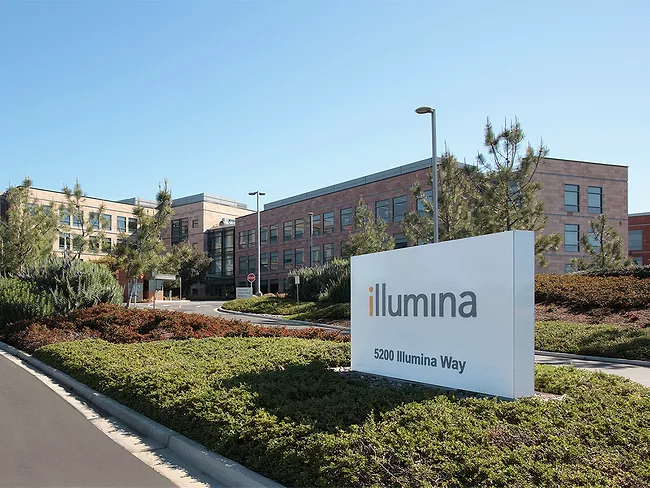
Illumina Inc.’s troubled takeover of Grail Inc. is facing further backlash from the European Commission (EC) after the regulator issued a statement of objections to the companies following their alleged breach of the EU Merger Regulation. Illumina’s acquisition of Grail has faced scrutiny from regulators since it was first announced due to concerns the deal could curb innovation and competition.
The U.S. Federal Trade Commission (FTC) is hardly alone in its antipathy toward Illumina Inc.'s acquisition of Grail Inc., and FTC attorney Susan Musser said Aug. 24 that Illumina’s dominance of the market for next-generation sequencing (NGS) is perhaps the key aspect of the FTC’s case. Musser invoked the wide number of companies that jumped into the fray to develop a vaccine for the COVID-19 pandemic as an illustration of the need to maintain competition in the multicancer testing space.
Illumina Inc.’s acquisition of cancer diagnostic specialist Grail Inc. is on go in a $7.1 billion transaction that is structured so that it can be unwound with limited impact on Illumina. However, a number of regulatory entities are closely scrutinizing the deal for a potential regulatory challenge, a fact of life that shaved nearly 10% off the value of the company’s shares in early Aug. 19 trading, and which could ultimately scuttle the transaction altogether.
Grail Inc. reported on June 4 the first results of its Pathfinder study evaluating its assay for the early detection of 50 cancers, showing a positive predictive value of 44.6%. With a total of 6,629 study participants across more than 140 clinical study sites, the blood test is supported by what the health care company believes to be the “largest clinical study program in genomic medicine.”