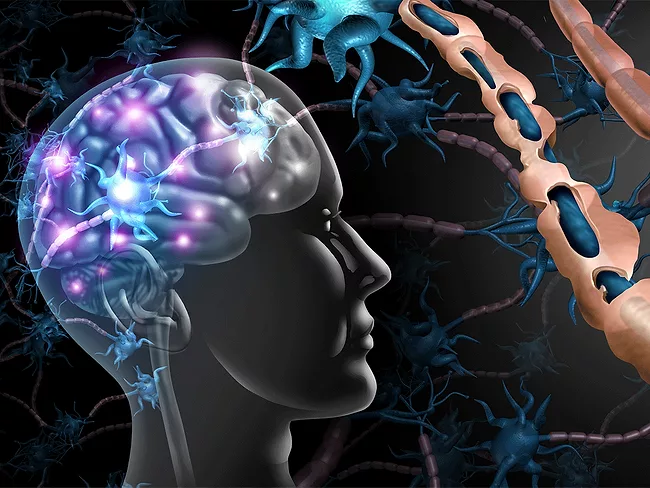
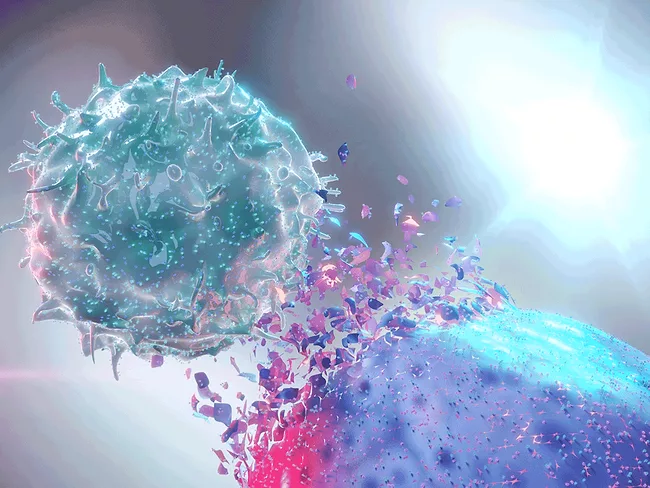
The pathogenesis of multiple sclerosis (MS) has been tied to ineffective immune control of Epstein-Barr virus-driven autoimmune responses. Patients with MS are deficient in protective adaptive natural killer cells (pNK cells) in contrast to healthy individuals. These pNK cells are positive for NKG2A, NKG2C and NKG2D and recognize and kill autoreactive B cells in a selective and efficient manner.
Colorectal cancer (CRC) accounts for 9.3% of cancer-related deaths worldwide. The levels of circulating immune cells in patients with CRC have been reported to undergo significant alterations, concretely in lymphocyte subsets.
This summer’s IPO by Artiva Biotherapeutics Inc. highlighted early stage efforts with natural killer cells in autoimmune disease, where a handful of companies are advancing programs. The firm raised $167 million through an upsized financing, with funds aimed at the development of its lead AlloNK program for systemic lupus erythematosus and other indications in the same category.
Artiva Biotherapeutics Inc. raised $167 million through an upsized IPO, with funds aimed at the development of its lead AlloNK program for systemic lupus erythematosus and other autoimmune indications. Just a few days ago, the San Diego based company had aimed to sell 8.4 million shares between $14 and $16 each, but it raised the number of shares offered to 13.92 million and lowered the price to $12 each. The upsize brings Artiva’s shares outstanding following the IPO to about 22.8 million, giving the company a market cap of $273.6 million based on the IPO price.
Merck Sharp & Dohme Corp. (MSD), known as Merck & Co. Inc. in the U.S. and Canada, terminated its potential $1.86 billion deal with San Diego-based Artiva Biotherapeutics Inc. for novel chimeric antigen receptor-natural killer cell therapies. GC Cell disclosed news of the terminated deal on the Korea Exchange near market close of June 25, saying it was notified by Artiva after the decision was reached by MSD’s internal decision makers.
Merck Sharp & Dohme Corp. (MSD), known as Merck & Co. Inc. in the U.S. and Canada, terminated its potential $1.86 billion deal with San Diego-based Artiva Biotherapeutics Inc. for novel chimeric antigen receptor-natural killer cell therapies. GC Cell disclosed news of the terminated deal on the Korea Exchange near market close of June 25, saying it was notified by Artiva after the decision was reached by MSD’s internal decision makers.
A new spinout from Monash University in Melbourne, Australia, is tackling biology to better understand immune cell function and to find targets that were thought to be undruggable. Onko-innate co-founders Jai Rautela and Nicholas Huntington first worked together at Huntington’s lab at the Walter and Eliza Hall Institute of Medical Research (WEHI) in Melbourne where they studied the role of natural killer (NK) cells in tumor immunology and discovered some interesting regulatory pathways for cytokine responses.
A new spinout from Monash University in Melbourne, Australia, is tackling biology to better understand immune cell function and to find targets that were thought to be undruggable.
A new spinout from Monash University in Melbourne, Australia, is tackling biology to better understand immune cell function and to find targets that were thought to be undruggable.
Researchers at Monash University in Melbourne have discovered that transcription factors Ikaros and Aiolos work by binding to AP-1 transcriptional complexes and driving their transcription, which regulates thousands of genes in the human body.