The U.S. FDA’s device center has declared it will not review emergency use authorization (EUA) requests for lab-developed tests (LDTs) for the COVID-19 pandemic, but on the agency’s most recent town hall, on Oct. 14, FDA officials were uncertain as to whether labs should file those EUAs, leaving labs in a state of limbo yet again.
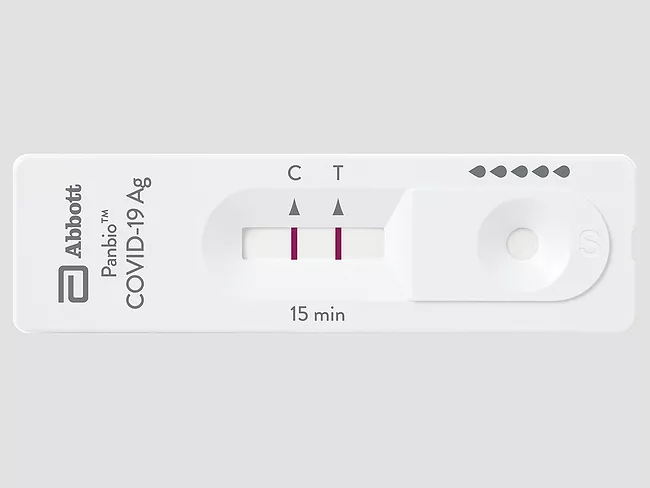
The diagnostic industry in the U.S. and elsewhere has scrambled to keep up with the COVID-19 pandemic, and one of the key developments will be a test that can be used at home without medical supervision. However, Tim Stenzel, director of the U.S. FDA’s Office of In Vitro Diagnostics and Radiological Health, said on the Sept. 16 diagnostic town hall that the agency is keen on authorizing such a test, but has yet to receive any emergency use authorization filings. “We want to see a home test submission, and we’re willing to be very flexible here,” Stenzel said.
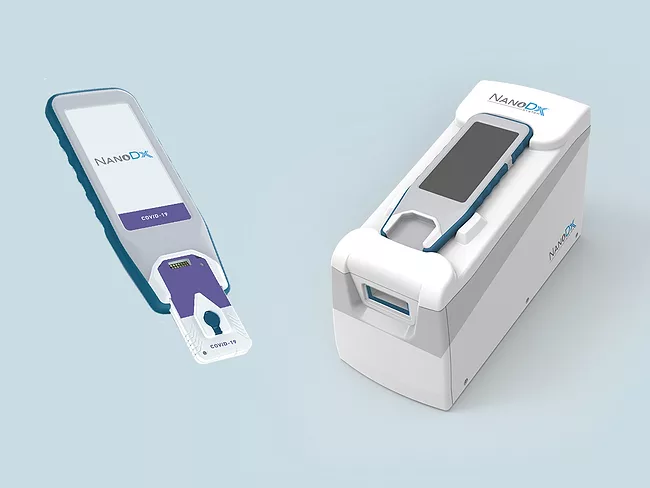
A new type of SARS-CoV-2 antigen test that relies on single molecule array technology may be able to help clinicians identify which patients are most likely to experience severe disease.
The need for self-administered surveillance testing finally has a few candidates, thanks to labs and test developers across the globe, and the U.S. FDA is keen on exploiting the opening. Tim Stenzel, director of the FDA’s Office of In Vitro Diagnostics and Radiological Health, said on the agency’s Sept. 2 testing town hall that the agency is interested in a test intended to be self-administered multiple times compared to a test validated under a single test approach, a flexibility that may prove critical in advancing the U.S. approach to testing for the COVID-19 pandemic.
As the COVID-19 pandemic continues into the fall, Roche Group is planning to launch its latest tool later this month. And while its SARS-CoV-2 Rapid Antigen Test will be available in markets accepting the CE mark, the company is expecting the filing for emergency use authorization (EUA) from the U.S. FDA. Roche’s test is a rapid chromatographic immunoassay intended for the qualitative detection of a specific antigen of SARS-CoV-2 present in human nasopharynx.
The U.S. FDA has granted emergency use authorization (EUA) to Lumiradx UK Ltd. for its point-of-care SARS-CoV-2 antigen test, which aims to speed the diagnosis of people suspected of having the virus that causes COVID-19. The test detects antigen nucleocapsid protein from a nasal swab taken from symptomatic patients and delivers results in less than 12 minutes.
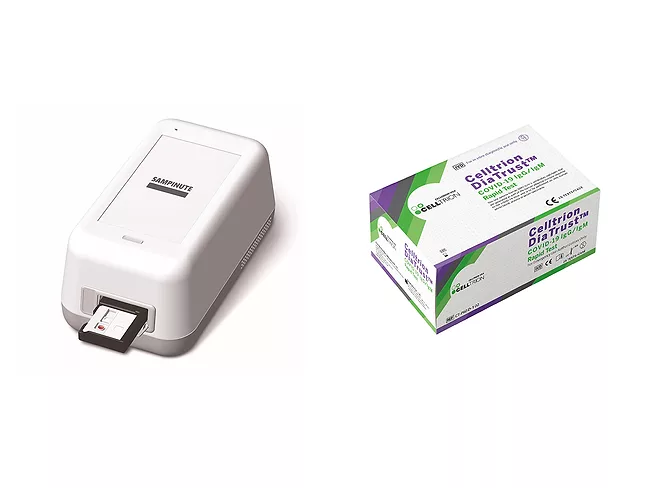
HONG KONG – Incheon, South Korea-based Celltrion Inc. is planning to launch two of its three rapid test kits in the U.S. as it plays its part in the global fight against the COVID-19 pandemic. Celltrion said Aug. 12 that its Sampinute COVID-19 Antigen MIA and Diatrust COVID-19 IgG/IgM rapid test kits will launch in the U.S. by the third week of August.
The U.S. FDA detailed which kinds of SARS-CoV-2 tests are getting top priority, with access to rolling, rapid reviews for emergency use authorization (EUA) during the unfolding pandemic. The agency is aiming to authorize point-of-care and at-home tests to better distribute the use of testing in various locations. It also is looking at automated and high-throughput tests that can offer analysis of larger batches of tests at one time.