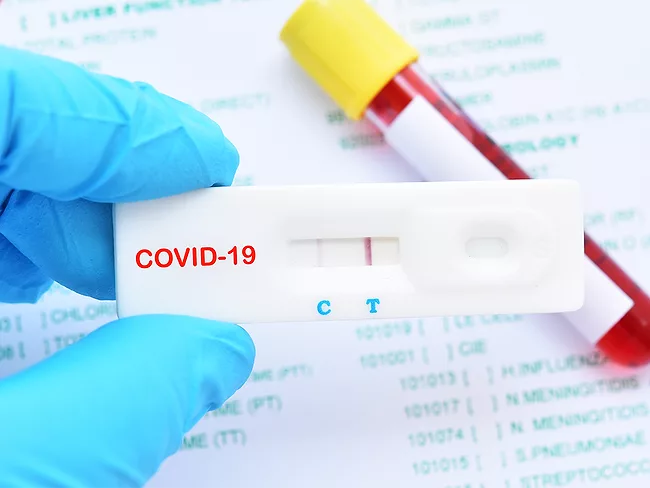
The FDA reported a new streamlined pathway for diagnostic testing as part of a serial testing program using pooled samples, a pathway that should enable the further reopening of the economy. However, the FDA’s Tim Stenzel said April 21 that this new pathway relied on accumulated data for molecular testing, and that the agency lacks sufficient data to provide a similar mechanism for this use of antigen tests.
The U.S FDA’s response to the pandemic has been all-consuming, but epidemiologist Michael Mina of Harvard blasted the agency’s handling of rapid testing. Mina said the agency is in possession of emergency use authorization filings for rapid antigen tests that should be acceptable, but that the FDA is “the only bottleneck” in the rapid antigen testing pipeline.
If the SARS-CoV-2 virus has achieved anything useful in the world of in vitro diagnostics, it’s that the associated pandemic has shone a bright and unsparing light on the respective merits of diagnostic and surveillance testing. Harvard University’s Michael Mina, an assistant professor of epidemiology, was one of several academic researchers who took up the gauntlet yet again in opposition to what they characterized as a gross misunderstanding of the respective roles of these types of tests, a misunderstanding they said must be addressed if the pandemic is to be corralled.
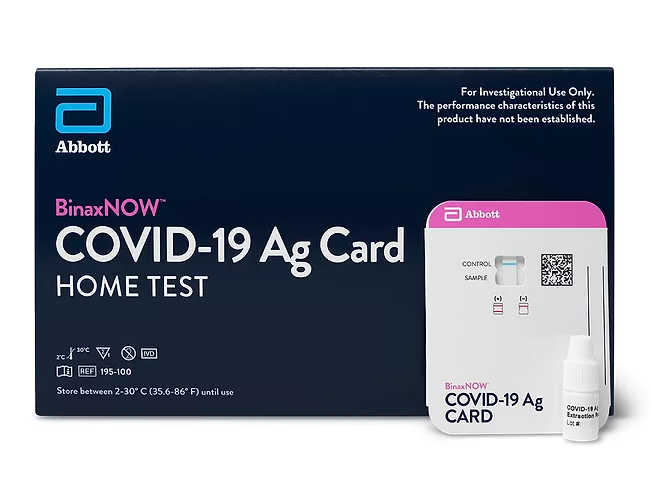
As COVID-19 cases surge across the U.S., there is growing demand for greater access to testing to rein in the pandemic. On Wednesday, the U.S. FDA granted an emergency use authorization (EUA) to Abbott Laboratories for at-home use of the company’s Binaxnow COVID-19 Ag Card Home Test. Abbott has teamed up with Miami-based telehealth provider Emed to distribute and administer the tests, with an expected 30 million in the first quarter of 2021.
In what U.S. FDA commissioner Stephen Hahn billed as “a major milestone” in testing for the COVID-19 pandemic, the FDA has granted an emergency use authorization (EUA) to Ellume Ltd., of East Brisbane, Australia, for the company’s COVID-19 home test. The rapid lateral-flow test for antigen detection can be obtained without prescription and will return results to the at-home user in 20 minutes, according to the FDA’s Dec. 15 statement.
Michael Mina, assistant professor of epidemiology at the Harvard T.H. Chan School of Public Health, again criticized the U.S. FDA for taking a conventional regulatory approach to rapid antigen tests for the pandemic. However, not everyone at the FDA’s parent department deserves brickbats. Mina said Assistant Secretary for Health Brett Giroir deserves a lot of credit for assisting in the effort to stand up pilot studies for rapid antigen tests that could be used to restore the U.S. economy even in the absence of a fully rolled-out vaccination campaign.
Qiagen NV has started U.S. commercialization of a portable SARS-CoV-2 antigen testing device that can analyze up to 30 patient samples an hour. The Qiareach test features a portable hub device – smaller than a laptop – that can hold up to eight nasopharyngeal swab samples at a time. The test provides a digital readout of the results in two to 15 minutes – with strong positive results taking closer to two minutes and negative results coming back in 15 minutes.
The U.S. FDA’s stated policy is that it will not review emergency use authorizations (EUAs) for lab-developed tests (LDTs) for the COVID-19 pandemic, but that doesn’t mean labs are completely shut out. The FDA’s Toby Lowe said that a lab that wants to pair an assay that already has an EUA with a new software installation on lab instrumentation can work with the assay developer to update that EUA.
The latest global regulatory news, changes and updates affecting medical devices and technologies, including: FDA announces recall of discontinued Medtronic catheter.
The latest global regulatory news, changes and updates affecting medical devices and technologies, including: Medtronic advises of problems with Interstim leads; Palmetto eyes coverage of CT for cerebral perfusion.