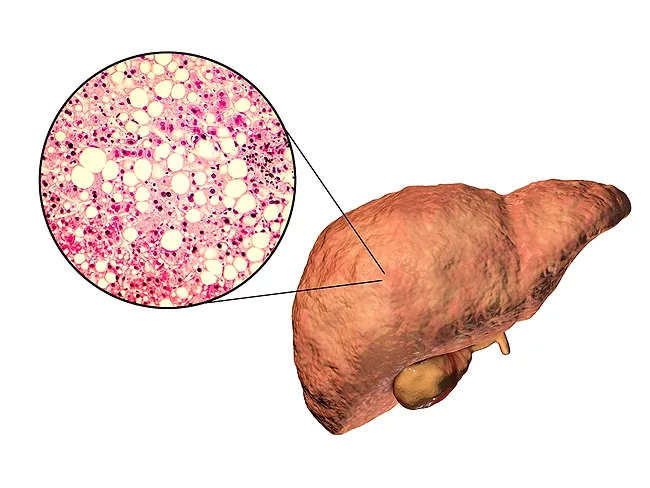
As the company’s phase II study in idiopathic pulmonary fibrosis continues, Pliant Therapeutics Inc.’s investors looked hard at 12-week interim data from the 320-mg dose group of Integris-PSC, a multinational, randomized, double-blind, placebo-controlled phase II trial testing bexotegrast in primary sclerosing cholangitis and suspected moderate to severe liver fibrosis.
Hopes raised by the phase IIb Harmony study with FGF21 analogue efruxifermin (EFX) in pre-cirrhotic nonalcoholic steatohepatitis (NASH), which appeared in a scientific journal last week, were less than fulfilled as Akero Therapeutics Inc. rolled out disappointing 36-week results from another, same-stage trial called Symmetry in NASH patients with cirrhosis. The company is forging ahead with U.S. FDA talks to figure out how a phase III effort might be designed.
Having raised HK$791 million (US$101 million) through an IPO in Hong Kong, Laekna Inc., which develops therapies for cancer and liver fibrosis, now plans to focus on further developing its two lead products in-licensed from Novartis and push its pipeline of 14 products forward.
Liminal Biosciences Inc. has nominated a lead preclinical candidate, LMNL-6326, from its oxoeicosanoid receptor 1 (OXER1) antagonist program, targeting the treatment of eosinophil-driven diseases such as eosinophilic asthma and atopic dermatitis.
Researchers from the University of Maryland presented preclinical data for YA-6060, a novel small molecule showing dual activities of Wnt inhibition and AMPK activation via the mechanism of AXIN stabilization. Since both Wnt/β-catenin and AMPK signaling pathways have been previously shown to play a key role in liver fibrosis, this study aimed to assess the potential of YA-6060 as an antifibrosis agent.
The U.S. FDA’s release of its briefing document for the upcoming advisory committee meeting on obeticholic acid 25 mg as a fatty liver disease treatment sent Intercept Pharmaceuticals Inc. on a downwards spiral May 17. Soon after the document was released, Intercept stock (NASDAQ:ICPT) dropped as low as $11.41 – down almost 30% from its May 16 close of $16.21. As the day wore on, it regained some of that lost value in heated trading that was more than eight times the company’s average daily volume of 782,285. The rebound helped Intercept close the day at $13.83, down about 15%.
Researchers from the First Affiliated Hospital of Guangxi Medical University presented data from a study that aimed to assess the association between translocase of the inner mitochondrial membrane 13 (Timm13) and liver fibrosis.
One of the most important transformations in the pharmaceutical industry over the next decade is the ability to modify genes or expression and go after any target, Cargene Biopharma Inc. CEO Kathy He told BioWorld, explaining that small molecules and large molecules can only go after 15% of the known targets. But the technology platform of short-interfering RNA (siRNA) opens a huge opportunity to make those inaccessible targets available, she said.
One of the most important transformations in the pharmaceutical industry over the next decade is the ability to modify genes or expression and go after any target, Cargene Biopharma Inc. CEO Kathy He told BioWorld, explaining that small molecules and large molecules can only go after 15% of the known targets. But the technology platform of short-interfering RNA (siRNA) opens a huge opportunity to make those inaccessible targets available, she said.
Researchers from Yale School of Medicine, along with Helsinki University Hospital and University of Helsinki, have reported data from a study that aimed to assess the effects of a common variant in hydroxysteroid 17-β dehydrogenase 13 (HSD17B13 rs72613567-A) in the liver.