Regulatory agencies across the globe had their hands full in 2020 and 2021 in responding to the COVID-19 pandemic, but that is just one reason that regulatory frameworks for artificial intelligence are lagging. Several regulatory proposals have been floated, but one of these hints at a need for regulatory harmonization, a requirement that seems certain to add yet more drag to a process that is already years behind the technology.
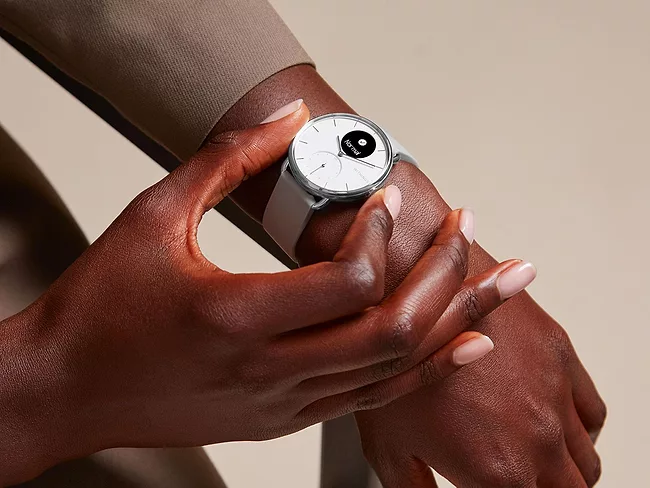
This year saw continued advances in smartwatches as they increasingly move from wellness assistants to medical monitors. Nowhere has that been clearer than in cardiovascular health, where multiple wearables now allow users to quickly detect atrial fibrillation, a notoriously shy condition previously only detectable in early stages by chance in a physician’s office or by wearing a cumbersome Holter monitor for 24 to 48 hours.
At more than $48.2 billion raised through mid-December, the med-tech industry has recorded another stellar financing year – one that is 19% below 2020, but above every other year to date.
In 2021, progress on preventing and treating COVID-19 was a seemingly endless series of starts and stalls. In spite of the high-profile stumbles, science and finance took startling steps forward.
Med-tech financings in 2021 have reached 673 transactions valued at $48.04 billion. This compares with 718 transactions valued at $59.7 billion in 2020, indicating a drop this year of about 6% in terms of volume and nearly 20% in terms of value. Nevertheless, 2021 is the second-best year of the last five.
Financings ramped up dramatically in 2015 with $68 billion collected, but the amount does not touch biopharma investment in the last two years. The industry has raised $113 billion in 2021, down from the $134.5 billion full year 2020 total, but more than every five-year combination total from the years 2000 to 2014. It is an increase of 65% over 2015, 200% over 2016, 118% over 2017, 68% over 2018 and 95% over 2019. Both IPOs ($23.7 billion) and venture capital rounds ($37.8 billion) have hit all-time records this year. But will the onslaught of money continue for the industry?
As the COVID-19 pandemic emerged in early 2020 and med-tech companies stepped up with numerous diagnostic and telehealth solutions, the availability of funding sources began to soar. The med-tech industry has raised a total of $46.9 billion so far in 2021 through 636 financings.
Without a doubt, 2021 has been a strong year for med-tech M&As, which are valued at significantly more than each of the three prior years. The industry has completed 520 M&As worth $111.7 billion so far, which is 88% more than the next highest year, 2019’s $59.48 billion. The volume is 33% more than the 391 M&As completed in 2020. In addition to completed M&As, a total of 1,376 med-tech deals, including licensings, collaborations and joint ventures, have been completed. They are valued at $1.98 billion, with only 31 deals including financial terms. The number of med-tech deals this year are only slightly below the 1,400 completed by the end of the year in 2020.
A total of 946 med-tech deals so far in 2021 are valued at $537.42 million, which pales in comparison to each of the last three years, although the volume is way ahead, indicating robust activity but a high number of deals with undisclosed terms.
Following the temporary lapse in FDA inspections of manufacturing sites amid the COVID-19 pandemic, this year has already seen more class I medical device recalls issued than in all of 2020. The agency is now working to remediate the interruptions resulting from the pandemic among certain manufacturers of high-risk medical devices in reporting these recalls to the FDA.