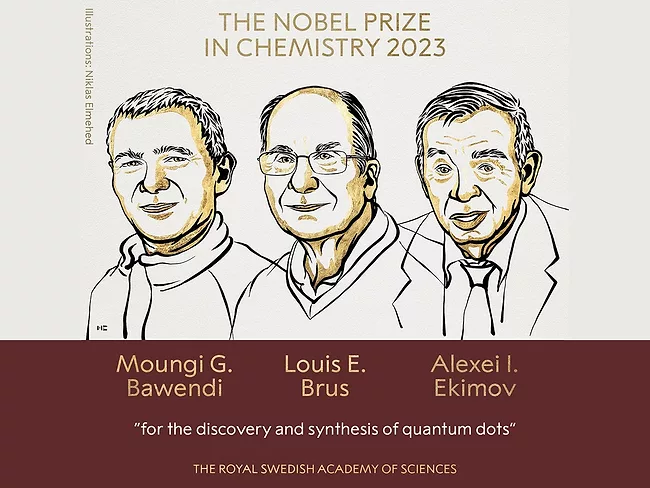
Quantum dots, a phenomenon in quantum physics that alters the energy of electrons and changes the properties of particles, caught the attention of the Royal Swedish Academy of Sciences (KVA) for the 2023 Nobel Prize in Chemistry. Alexei Ekimov and Louis Brus received the award for their discovery; Moungi Bawendi, for developing its applications. With their work, “in equal shares,” said the Secretary General of KVA Hans Ellegren, the three scientists have laid the foundations of nanotechnology, a tool that we see today in our homes, on televisions and LED lamps, or in laboratories and hospitals for designing new drugs or new strategies against cancer.
The autosomal dominant form of osteopetrosis, referred to as autosomal dominant osteopetrosis type 2 (ADO2), is caused by single allele dominant negative mutations of the CLCN7 gene. In a recent paper, researchers from Sisaf Ltd. detailed the development and preclinical evaluation of novel silicon stabilized hybrid lipid nanoparticles (sshLNPs), SIS-101-ADO, designed to deliver small interfering RNA (siRNA) specific against the human CLCN7 G215R mRNA.
Altamira Therapeutics Ltd. has entered into a collaboration and option agreement with Heqet Therapeutics srl, a spin-out from King’s College London, to utilize the company’s proprietary Oligophore delivery platform in cardiovascular research.
Sisaf Ltd. has entered into a collaboration with the University of Leipzig to develop Bio-Courier targeted micro interfering RNAs (miRNA) for the treatment of cancer, with an initial focus on pancreatic cancer.
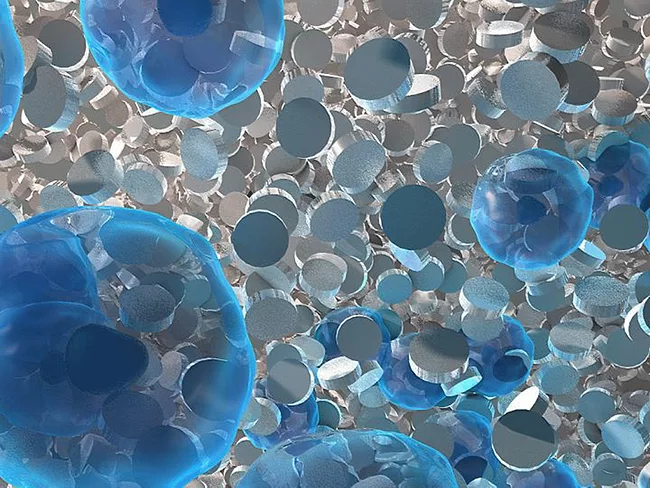
The positively charged nanoparticle polyamidoamine generation 3 (P-G3) can be specifically targeted to either visceral or subcutaneous fat, and affects both types of fat in different ways, researchers from Columbia University reported in two papers recently published.
The positively charged nanoparticle polyamidoamine generation 3 (P-G3) can be specifically targeted to either visceral or subcutaneous fat, and affects both types of fat in different ways, researchers from Columbia University reported in two papers recently published. The studies, published online in Nature Nanotechnology on Dec. 1, 2022, and in Biomaterials on Nov. 28, 2022, are both “a conceptual advance” and “quite amenable to translation,” co-corresponding author Kam Leong told BioWorld.
Steric hindrance and electrostatic interactions often prevent the subsequent development of clinically relevant nanoparticles to the in vivo stage. Researchers at the Shanghai Institute of Materia Medica, Chinese Academy of Sciences, have now demonstrated the development of nanoparticles exhibiting pH-sensitive properties triggering the stretching of peptides to reveal accessible liver-targeted ligands that can deliver biologically active peptides in vivo.
While simultaneous targeting of PD-1 and TGF-β has been previously suggested to be a favorable strategy to reverse immune checkpoint inhibitor (ICI) resistance of tumors, the hydrophobicity of TGF-β inhibitors and latent drug-related adverse events of this treatment hindered its utility.
A research team at the Korea Advanced Institute of Science and Technology (KAIST) has developed tattoo ink made of liquid metal and carbon nanotubes that can work as a bioelectrode. This technology could translate to a tattoo that can function as a health-monitoring device.
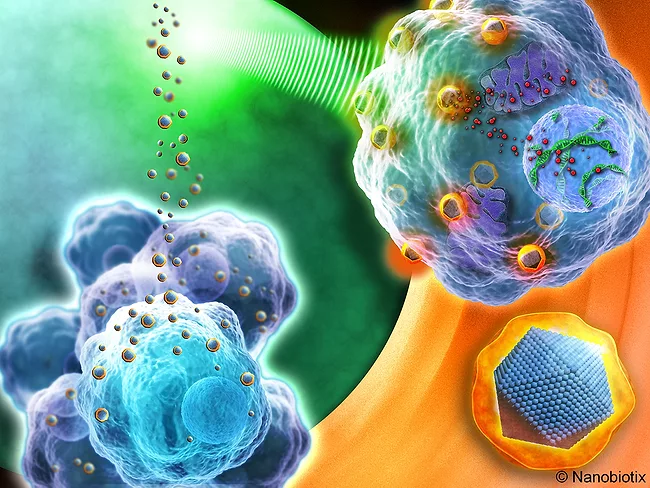
Nanobiotix SA has just presented new data from an open-label preclinical study evaluating the action of its nanoparticle-enhanced radiotherapy, NBTXR3, with the triple blockade of PD-1, LAG-3, and TIGIT on mice carrying cancerous cells. PD-1, LAG-3 and TIGIT are three checkpoint inhibitors which regulate the natural killer cells usually targeted in combination therapy in immuno-oncology.