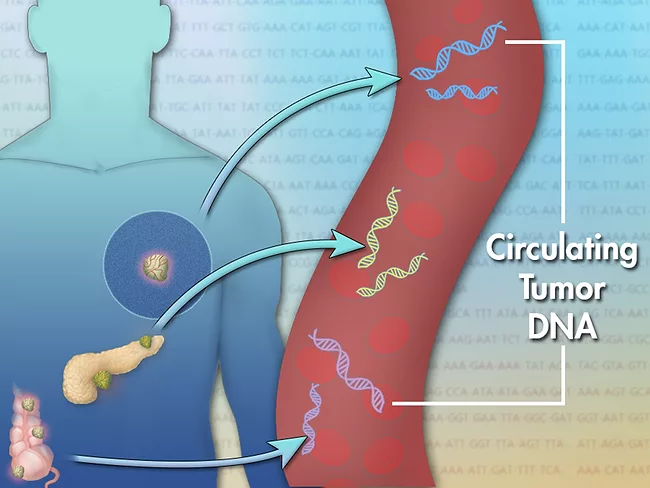
Nowadays, there are many tools for cancer diagnosis, from imaging techniques to biopsies. In traditional blood tests, liquid biopsy bursts onto the scene as an explosion of possibilities driven by molecular techniques for the detection and sequencing of proteins or genetic material. But specialists are cautious because they know that in liquid biopsies not everything is detected. At the ENA 2022 session “The role of ctDNA in clinical trials,” Marie Morfouace, a translational researcher at the EORTC, presented “ctDNA in clinical trial practice today,” where she described the balance of the possibilities of the liquid biopsy when confronting it with the results in patients offered by the studies published to date.
Pharus Diagnostics Inc. emerged from stealth mode to streamline precision medicine-based cancer screening with its new multi-cancer early detection liquid biopsy test. Spun out from Hsinchu, Taiwan-based Quark Biosciences Taiwan Inc. in July 2022, Pharus is developing solutions to detect cancer early via Oncosweep, its multi-cancer early detection (MCED) liquid biopsy test that evaluates microRNA (miRNA) within the body.
Despite wide availability and coverage for colonoscopy, many patients diagnosed with colorectal cancer (CRC) have never undergone the recommended screening procedure for the malignancy and its precursors. As a result, the cancer has already spread in the majority of cases at the time of diagnosis. CRC remains the third most common cancer diagnosed in the U.S. and the second leading cause of cancer death for both men and women.
Guardant Health Inc. expanded its cancer testing to include one that provides multi-dimensional insights into tumor profiles and microenvironment that can be used to guide therapy selection. The liquid biopsy, Guardantinfinity, combines analysis of more than 800 genes with exome-wide methylation detection.
Thirteen months after Illumina Inc. and Grail Inc. merged, prior to regulatory approval, the deal has taken a turn for the worse. The prognosis looked better following an administrative law judge’s ruling Sept. 1 against the U.S. Federal Trade Commission’s lawsuit seeking to block the transaction, but the European Commission (EC) issued a decision Sept. 6 prohibiting the deal based on the likelihood that a merger would stifle innovation and limit choices in the early cancer detection liquid biopsy market.
Guardant Health Inc. tripled the number of cancers that can be monitored for minimal residual disease (MRD) or risk of recurrence using its Reveal liquid biopsy, adding breast and lung cancers. The test is currently used to detect circulating tumor DNA in blood for patients treated for stage II or III colorectal cancer (CRC).
The U.S. FDA has granted 510(k) clearance to a blood-based biomarker assay for disease monitoring of patients with metastatic breast cancer (MBC). The Divitum Tka assay, developed by Uppsala, Sweden-based Biovica International AB, measures the activity of the enzyme thymidine kinase-1 (TK1) which is highly associated with cell proliferation and a predictive marker of tumor aggressiveness. It is the first liquid cancer cell proliferation biomarker assay to be approved by the FDA for use in monitoring metastatic breast cancer.
A new assay developed by Metadeq Inc. may be bringing the days of the invasive liver biopsy for non-malignant conditions to a close. The company’s liquid biopsy successfully used the presence of two proteins in blood to identify and stage non-alcoholic steatohepatitis (NASH) and liver fibrosis in a study published in Gut.
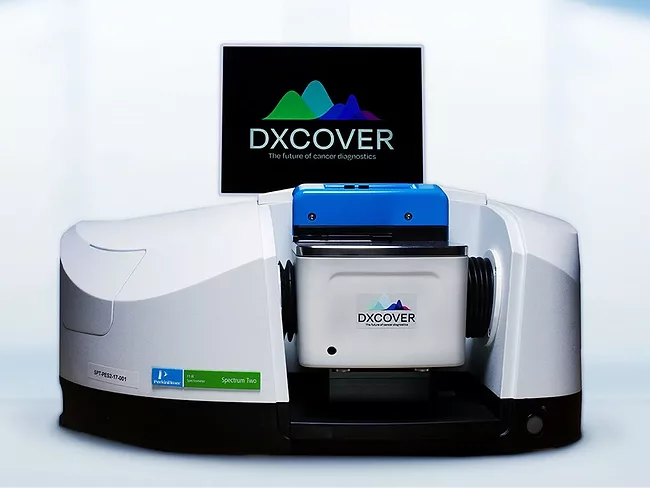
A presentation at the American Society of Clinical Oncology (ASCO) 2022 annual conference demonstrated that the Dxcover Cancer Liquid Biopsy differentiated between patients with cancer and healthy controls and detected more than 90% of stage I malignancies across a broad range of cancers. Dxcover Ltd. provided more details on its new approach to the search for reliable, rapid screening for multiple malignancies at the 12th International Conference on Clinical Spectroscopy on June 21.
Grail LLC reported a new study with the U.K.’s NHS to assess the clinical utility of its Galleri multi-cancer early detection test (MCED) for reducing late-stage cancer diagnoses. Menlo Park, Calif.-headquartered Grail presented the study design during the American Society of Clinical Oncology (ASCO) meeting in Chicago. The randomized controlled trial will enroll 140,000 asymptomatic participants aged 50-77 living across England to determine if Galleri can find cancers at an early stage when they are less advanced.