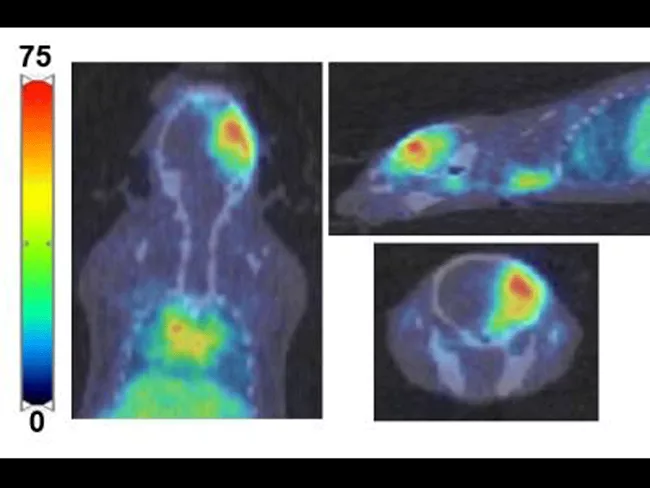
Radiopharm Theranostics Ltd.’s radiotracer RAD-101 met the primary endpoint in 92% of patients in the phase IIb imaging trial in brain metastases, according to interim results. To date, 11 of the 12 patients treated with RAD-101 (F18-Pivalate) achieved concordance with MRI (the primary endpoint) as assessed by PET imaging of brain metastases. The results showed significant and selective tumor uptake, and images confirm metabolic activity in brain metastases compared to equivocal MRI findings.
Radiopharm Theranostics Ltd. completed a AU$35 million (US$22.77 million) placement to advance six of its radiopharmaceutical candidates for both diagnostic and therapeutic uses. The funds raised will go toward clinical trials, drug manufacturing and working capital to extend Radiopharm’s funding runway into 2027.
A recently published study has identified collagen type X α 1 chain (CoL10A1) as a promising target for treating brain metastasis in breast cancer patients. The research, conducted by a team at First Affiliated Hospital of Xinxiang Medical University and collaborators, sheds light on the regulatory role of CoL10A1 in the progression of breast cancer brain metastasis (BMBC).
Radiopharm Theranostics Ltd.’s radiotracer RAD-101 (F18-Pivalate) successfully detected brain metastases in a variety of primary solid tumors in a phase II study.
Radiopharm Theranostics Ltd.’s radiotracer RAD-101 (F18-Pivalate) successfully detected brain metastases in a variety of primary solid tumors in a phase II study.
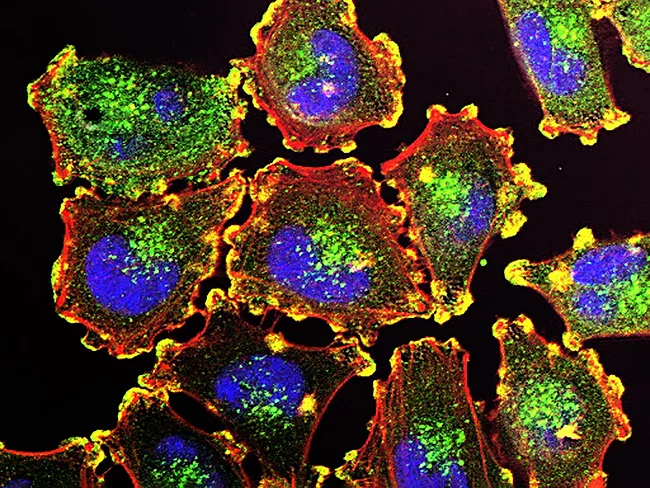
Melanoma is the most aggressive form of skin cancer and often spreads to the brain. Though immunotherapy has greatly improved the outlook for even metastatic melanoma patients, once melanoma brain metastases (MBM) develop, prognosis worsens, and available therapeutic options decline. Scientists at the Institute for Neurosciences (IN), a joint center of the Spanish National Research Council (CSIC) and the Miguel Hernández University of Elche (UMH) have found a way to tackle MBM through microglial reprogramming.
Kinnate Biopharma Inc. and affiliated organizations recently reported preclinical data for the novel brain-penetrant combination therapy using the MEK inhibitor KIN-7136 and the RAF inhibitor KIN-8391, as a novel therapeutic strategy for the treatment of melanoma brain metastasis.
China’s drug regulator approved Alpha Biopharma Ltd.’s EGFR tyrosine kinase inhibitor (TKI), Zorifer (zorifertinib hydrochloride tablets; AZD-3759), as a first-line treatment for EGFR-mutated non-small-cell lung cancer (NSCLC) with brain metastases.
China’s drug regulator approved Alpha Biopharma Ltd.’s EGFR tyrosine kinase inhibitor (TKI), Zorifer (zorifertinib hydrochloride tablets; AZD-3759), as a first-line treatment for EGFR-mutated non-small-cell lung cancer (NSCLC) with brain metastases.
Gandeeva Therapeutics Inc. has divulged serine/threonine-protein kinase B-raf (BRAF)/MAP2K1 (MEK1) interaction stabilizers reported to be useful for the treatment of brain metastasis.