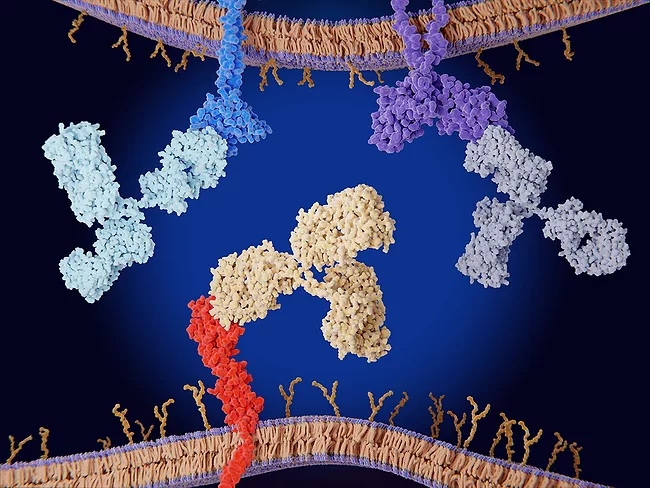
Chinese pharmaceutical companies are making significant inroads into the global oncology market, particularly with the development and approval of immune checkpoint inhibitors. These treatments, which have shown strong efficacy in various cancer indications, are not only transforming the oncology landscape in China but are also gaining traction in high-value international markets, including the U.S.
Beigene Co. Ltd. has presented data on a CDK4 selective inhibitor, BGB-43395, for the potential treatment of this cancer type and which would reduce the neutropenia associated with CDK6 inhibition.
In tumoral cells, the modulation of the G1/S phases of cell cycle is destabilized by amplification and high expression of cyclin E (CCNE) or by mutation or loss of retinoblastoma 1 (RB1) gene. Cancer cells meeting these characteristics have been sown to be highly sensitive to cyclin-dependent kinase 2 (CDK2) depletion.
Astrazeneca plc’s China president, Leon Wang, is under investigation in mainland China, the company said in an Oct. 30 statement. Although details are scant, Astrazeneca said Wang is “cooperating with an ongoing investigation by Chinese authorities,” and the company’s China operations will continue under the leadership of the current general manager of Astrazeneca China.
Astrazeneca plc’s China president, Leon Wang, is under investigation in mainland China, the company said in an Oct. 30 statement. Although details are scant, Astrazeneca said Wang is “cooperating with an ongoing investigation by Chinese authorities,” and the company’s China operations will continue under the leadership of the current general manager of Astrazeneca China.
Researchers from Beigene (Beijing) Co. Ltd. have disclosed preclinical data for BGB-B167, a first-in-class immunoglobulin G (IgG)-based bispecific antibody (bsAb) targeting 4-1BB and CEA, being developed for the treatment of advanced or metastatic solid tumors.
Research at Beigene Co. Ltd. has led to the identification of new proteolysis targeting chimera (PROTAC) compounds comprising E3 ubiquitin ligase binding moiety covalently linked to a Bruton tyrosine kinase (BTK) targeting moiety via linker. They are reported to be useful for the treatment of cancer.
Beigene Co. Ltd. has divulged antibody-drug conjugates (ADC) comprising HER3 (erbB3) targeting antibody linked to an effector molecule through a linker reported to be useful for the treatment of cancer, metabolic diseases, neurodegeneration and inflammation.
Beigene Co. Ltd. has identified 3, 4-dihydroisoquinolin-1 (2h)-ones derivatives acting as stimulator of interferon genes protein (STING; TMEM173) antagonists reported to be useful for the treatment of systemic lupus erythematosus (SLE).