GE Healthcare Technologies Inc. entered into a conditional agreement to acquire the clinical AI business of Intelligent Ultrasound Group plc for £40.5 million (US$51 million). The deal is part of GE Healthcare’s effort to bolster its portfolio of artificial intelligence-enabled devices and strengthen its ultrasound business.
Boston Scientific Corp. is hoping to help change European guidelines on the use of intravascular imaging during percutaneous coronary intervention procedures, Emile Mehanna, medical affairs and medical education director, interventional cardiology, EMEA, told BioWorld.
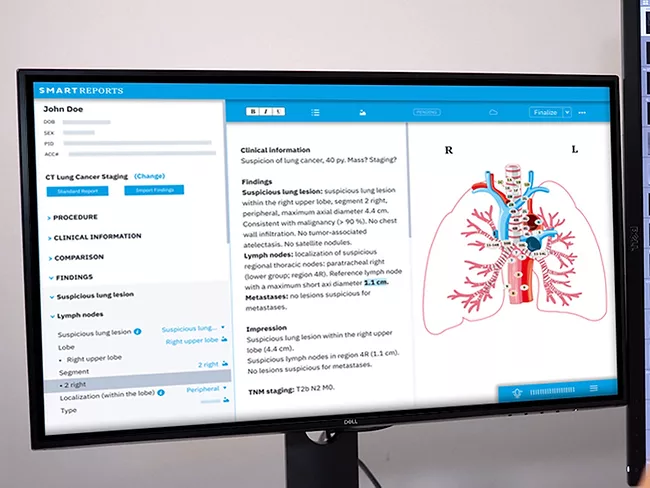
Smart Reporting GmbH raised €23 million (US$24.5 million) in a series C funding round for its medical reporting software which automates and streamlines physicians’ workload. The funding is a “significant accelerator” for the company, “catalyzing business growth, product development, and expansion into international markets,” Wieland Sommer, founder and co-CEO of Smart Reporting told BioWorld.
In its first full year since its spin-off from parent company General Electric Co., GE Healthcare Technologies Inc. reported beating Wall Street’s expectations. For 2023, revenues of $19.6 billion grew 8% organically vs. 2022.
Industry may still be less than fond of the failure of the term “recall” to distinguish between corrections and market withdrawals, but the class I recall of the Insulet Omnipod 5 app for Android smartphones is a correction of some importance. This recall, one of the first to be announced by the FDA in 2024, addresses a software problem that could lead to overdose of insulin, a potentially lethal problem for which the company has already provided a fix.
In the following years, 2023 may come to be seen in medical device circles as the year of artificial intelligence (AI), but that doesn’t mean that 2023 will be seen as the year of regulatory clarity for AI.
The largest strike by U.S. health care workers, in early Oct. 2022, brought increased attention to the seriousness of the staff shortage in hospitals and the urgent need to address it. Multiple reports over the last 10 years have documented the impact of alarm fatigue on nurses, in particular, and its contribution to professional burnout and ongoing staffing issues. A bit counterintuitively, more integrated, continuous monitoring of vital signs reduces alarm fatigue for medical staff attending to post-surgical patients, a study by GE Healthcare Technologies Inc. and Cleveland Clinic found.
Device recalls pop up with no regard to human appreciation for seasonality, and thus it was that recalls involving three major medical device makers emerged as the steamy month of July gave way to the arid, oppressive swelter of August. These recalls affected more than 7,500 units of the Trusignal pulse oximeter by GE Healthcare Technologies Inc., nearly 23,000 units of the Sigma Spectrum and Spectrum IQ infusion pumps by Baxter Healthcare Corp., and an unspecified number of units of the Carina ventilator by Drägerwerk AG, all of which adds a little more than the usual heat to the device industry’s dog days.
GE Healthcare Technologies Inc. has launched Sonic DL, a deep learning technology designed to significantly accelerate magnetic resonance imaging (MRI) exams, after receiving regulatory clearance from the U.S. FDA.
The U.S. FDA has granted 510(k) clearance to GE Healthcare Technologies Inc. for its Precision DL for PET/CT, an artificial intelligence (AI) and deep learning (DL)-powered software designed to sharpen quality and improve efficiencies in medical imaging. Part of the company’s Effortless Recon DL portfolio, the technology is available on GE’s Omni Legend PET/CT digital scanner.