FMS-like tyrosine kinase 3 (FLT3) mutations, particularly internal tandem duplications and point mutations in the tyrosine kinase domain, are frequently observed in acute myeloid leukemia (AML) and contribute to disease progression and poor prognosis.
Shanghai Institute of Materia Medica of the Chinese Academy of Sciences and Zhejiang University have jointly discovered N2-3-fluoro-5-substituted phenyl-2-aminopyrimidine derivatives.
Around one-third of patients with acute myeloid leukemia (AML) harbor FLT3 gene mutations which are associated with poor prognosis and high risk of relapse. Several compounds targeting FLT3 internal tandem duplication (ITD) have been developed in the past decades, but none has overcome myelosuppressive toxicity caused by the simultaneous inhibition of FLT3 and c-Kit. Therefore, there is a need for new treatment options.
Hangzhou Polymed Biopharmaceuticals Inc. has synthesized crystalline forms of compounds acting as FLT3 (FLK2/STK1) and interleukin-1 receptor-associated kinase 4 (IRAK-4) inhibitors reported to be useful for the treatment of cancer, autoimmune diseases, cardiovascular, neurological and inflammatory disorders.
FMS‐like tyrosine kinase 3 (FLT3) is a type III receptor tyrosine kinase validated as a therapeutic target for acute myeloid leukemia (AML) and regarded as an indicator of poor prognosis. Unfortunately, current FLT3 inhibitors, such as midostaurin, quizartinib or gilteritinib, often lead to myelosuppression or cardiovascular toxicity.
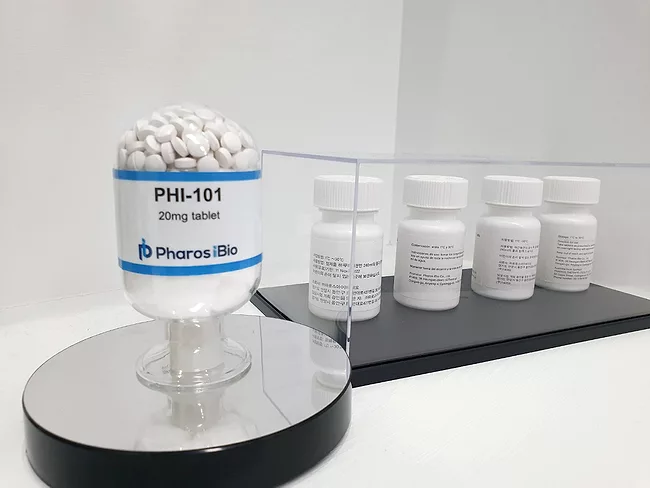
South Korean artificial intelligence-based drug developer Pharos Ibio Co. Ltd. said that the Ministry of Food and Drug Safety (MFDS) granted an orphan drug designation for PHI-101, a second-line therapy for acute myeloid leukemia (AML).
South Korean artificial intelligence-based drug developer Pharos Ibio Co. Ltd. said that the Ministry of Food and Drug Safety (MFDS) granted an orphan drug designation for PHI-101, a second-line therapy for acute myeloid leukemia (AML).
Cincinnati Children’s Hospital Medical Center, Kurome Therapeutics Inc. and the U.S. Department of Health and Human Services have jointly patented interleukin-1 receptor-associated kinase 1 (IRAK-1) and/or IRAK-4 and/or FLT3 (FLK2/STK1) inhibitors reported to be useful for the treatment of cancer, autoimmune and inflammatory disorders.