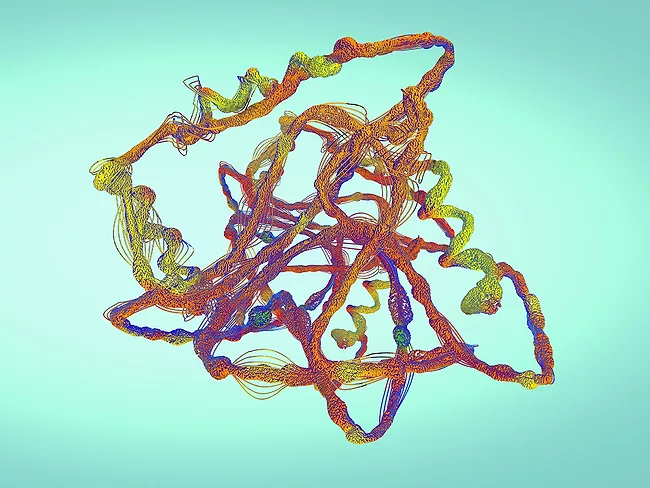
Neosphere Biotechnologies GmbH has entered into a collaboration with Kymera Therapeutics Inc. that seeks to unlock undrugged or poorly drugged disease-causing protein targets that can be addressed by targeted protein degradation.
Kymera Therapeutics Inc. has described salts of IL-1 receptor-associated kinase 4 (IRAK-4) degradation inducers and their crystalline forms reported to be useful for the treatment of autoimmune diseases and inflammatory disorders.
In allergic diseases, STAT6 is a critical transcription factor in the IL-4 and IL-13 signaling pathways and the key driver of Th2 inflammation. Because STAT6 functions through protein-protein and protein-DNA interactions, selectively and potently inhibiting STAT6 with traditional small-molecule inhibitors has been a challenge. However, it is well suited for a targeted protein degradation approach, whereby a binding event is adequate to direct degradation.
Kymera Therapeutics Inc. has described proteolysis targeting chimeras (PROTAC) compounds comprising an E3 ubiquitin ligase cereblon (CRBN)-binding moiety covalently linked to a cyclin-dependent kinase 2 (CDK2)-targeting moiety through a linker.
Kymera Therapeutics Inc. has unveiled two new first-in-class oral degrader programs for immune-mediated diseases: KT-621, a STAT6 degrader, and KT-294, a TYK2 degrader.
Kymera Therapeutics Inc. has identified proteolysis targeting chimeras (PROTACs) comprising an E3 ubiquitin ligase binding agent coupled to probable global transcription activator SNF2L2 (SMARCA2; BAF190B; SNF2-α) and/or polybromo-1 (PB1) protein targeting moiety via a linker reported to be useful for the treatment of cancer, viral infection, neurodegeneration, liver, metabolic, cardiovascular, genetic and inflammatory disorders, among others.
Interleukin-1 receptor-associated kinase 4 (IRAK4) plays a critical role in innate immunity by acting both as a scaffolding protein and a protein kinase, and its overactivation correlates with several autoimmune disorders.
Proteolysis targeting chimera (PROTAC) compounds comprising an E3 ubiquitin ligase binding moiety covalently linked to non-receptor tyrosine-protein kinase TYK2-targeting moiety have been reported in a Kymera Therapeutics Inc. patent as potentially useful for the treatment of neurological, inflammatory and endocrine disorders, autoimmune diseases, transplant rejection, graft-vs.-host disease and cancer.
Kymera Therapeutics Inc. has described proteolysis targeting chimeras (PROTACs) comprising an E3 ubiquitin ligase binding moiety covalently linked to an MDM2 targeting moiety through a linker and reported to be useful for the treatment of cancer.
Kymera Therapeutics Inc. has divulged proteolysis targeting chimera (PROTAC) compounds comprising a cereblon (CRBN)-binding moiety covalently linked to interleukin-1 receptor-associated kinase 4 (IRAK-4)-targeting moiety reported to be useful for the treatment of cancer.