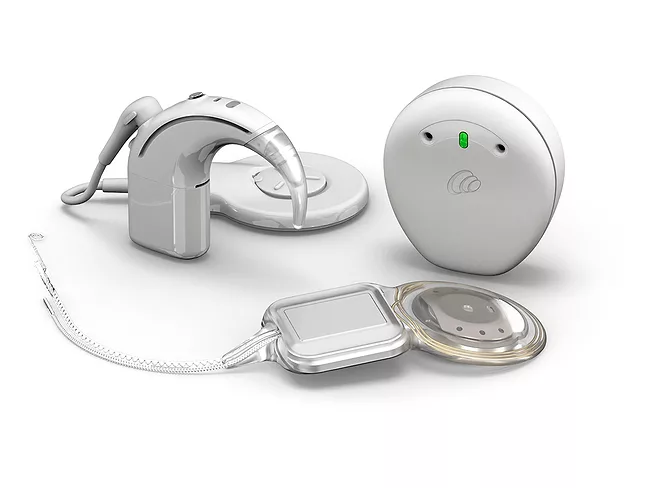
Shares in Aussie hearing implant maker Cochlear Ltd. plummeted nearly 39% April 22 after the company slashed fiscal 2026 earnings guidance and warned that weaker-than-expected demand in developed markets was exposing a more cyclical and discretionary side to its business than investors had assumed.
The U.S. FDA and CMS are teaming up to give Medicare beneficiaries quicker access to breakthrough medical devices and provide manufacturers with certainty of reimbursement.
When the U.S. CMS didn’t get takers for its voluntary Better Approaches to Lifestyle and Nutrition for Comprehensive Health (BALANCE) model to cover obesity drugs under Medicare Part D, the agency punted. It announced late April 21 that it will indefinitely delay the BALANCE model in Medicare but extend its temporary Medicare GLP-1 Bridge demonstration model through the end of 2027. (The Medicaid BALANCE model will still kick in this year in states that choose to participate in it.)
U.S. FDA drug approvals totaled 19 in March 2026, matching February and showing a solid level of regulatory activity, though slightly below the 22 approvals recorded in March 2025 and under the spike of 30 seen in March 2024.
The quest by psychedelic drugs for full legitimacy in the pharmaceutical world has seen marked progress as well as (fewer) setbacks of late, and developers are hopeful that an important corner has been turned.
Total med-tech financings reached $8.81 billion in the first quarter (Q1) 2026, a 6% decline from $9.33 billion in Q1 2025 but well above the post-downturn lows of recent years. The 2026 total exceeds $6.45 billion in Q1 2024 and $4.69 billion in Q1 2023, indicating continued recovery from the weaker funding environment that followed the 2021 peak. While still below the $16.59 billion recorded in Q1 2019 and the pandemic-era highs, the data suggest that financing activity has stabilized at a higher baseline, with 2026 maintaining momentum despite a slight year-over-year pullback.
Despite key vacancies, ongoing staffing challenges and policy issues at the U.S. CDC, FDA and NIH, some of the regulatory churn that roiled those agencies in the first year of the second Trump administration is settling a bit, at least in terms of the number of executive orders (EOs) coming out of the Oval Office.
 RSS
RSS