Anocca AB has secured the first regulatory authorization in Europe for a CRISPR-Cas gene-edited T-cell receptor T-cell therapy trial, with the phase I/II study now due to start over the next three months at sites in Sweden, Germany, Denmark and the Netherlands.
Merck KGaA is exercising its option for a global license to commercialize Abbisko Therapeutics Co. Ltd.’s pimicotinib for $85 million. As previously reported by BioWorld, Abbisko out-licensed China rights to its colony-stimulating factor 1 receptor inhibitor, pimicotinib, to Merck in a deal worth up to $605.5 million in December 2023.
Kinnate Biopharma Inc. has synthesized mitogen-activated protein kinase kinase (MAP2K; MEK; MAPKK) inhibitors reported to be useful for the treatment of cancer.
Navigo Proteins GmbH has established a strategic research collaboration with SCK CEN, the Belgian Nuclear Research Centre, to advance the preclinical development of next-generation radiotheranostics using the Auger-electron emitting radioisotope Terbium (161Tb).
The synthesis of RP-1664, a highly potent, selective and bioavailable PLK4 inhibitor for the potential treatment of cancer, was recently reported by Repare Therapeutics Inc.
Prelude Therapeutics Inc. described the discovery of PRT-3789, a first-in-human, highly potent and selective SMARCA2-targeted protein degrader, for the potential treatment of cancer.
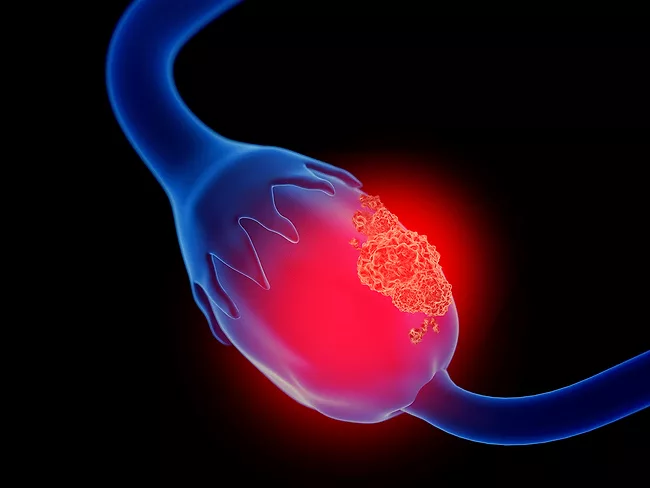
The aberrant expression of partner of NOB1 homolog (PNO1) is known to promote oncogenesis in the colorectum and the esophagus, but its involvement in ovarian cancer and the mechanisms behind it are not well known. Chinese researchers investigated the role of PNO1 in ovarian cancer development and progression in the preclinical setting.
French biotech Pep-Therapy SAS is in the midst of raising a €20 million (US$21.62 million) round and, at the same time, prospecting for potential partners after winning FDA orphan drug designation for its bifunctional peptide Pep-010 in the treatment of pancreatic cancer. Pep-010 currently is moving to the conclusion of a phase Ib trial and the new money will fund phase II development.
Relacorilant, a cortisol modulator from Corcept Therapeutics Inc., produced new and strong phase III results in treating platinum-resistant ovarian cancer. The company also has relacorilant in studies that could eventually lead to approval in other indications. In the near term, though, the positive data led to the company’s stock (NASDAQ:CORT) closing 109% higher at $114.22 per share on March 31.
Filamon Pty. Ltd. has described lysosomal targeting peptides (LYTAPs) acting as EGFR (HER1; erbB1) degradation inducers reported to be useful for the treatment of cancer.

 RSS
RSS