Abbott Laboratories raised its full-year 2026 adjusted diluted adjusted earnings per share guidance to $5.45 to $5.60, from previous range of $5.38 to $5.58, after a strong performance in the second quarter. Growth was driven by its medical devices business and cancer diagnostic unit.
Advancell Co. Ltd. has raised an oversubscribed $315 million series D round to accelerate its push to become a fully integrated global radiopharma developer, funding late-stage clinical development alongside isotope supply and manufacturing infrastructure.
Signs of recovery are emerging in the biotechnology investment sector, although investors across Asia say that capital is flowing selectively to companies that can demonstrate clinical differentiation, strong management teams and a clear path to commercialization.
Work at Shouyao Holdings (Beijing) Co. Ltd. has led to the identification of new GTPase KRAS mutant inhibitors potentially useful for the treatment of cancer.
Cimplrx Co. Ltd. and Dong Wha Pharmaceutical Co. Ltd. have discovered new carboxamide derivatives acting as interleukin-1 receptor-associated kinase 4 (IRAK-4) and/or IRAK-1 inhibitors. As such, they are potentially useful for the treatment of cancer, autoimmune disease and inflammatory disorders.
Genesis Molecular AI Inc. has synthesized new phosphatidylinositol 3-kinase α (PI3Kα) (mutant) inhibitors potentially useful for the treatment of cancer.
Tyra Biosciences Inc. has patented new pyrazolopyridine and imidazopyridine derivatives acting as fibroblast growth factor receptor 3 (FGFR3) inhibitors potentially useful for the treatment of cancer.
Shanghai Henlius Biologics Co. Ltd., Shanghai Henlius Biopharmaceutical Co. Ltd. and Shanghai Henlius Biotech Inc. have disclosed new antibody-drug conjugates comprising a monoclonal antibody targeting HER2 covalently linked to a camptothecin derivative potentially useful for the treatment of cancer.
Tempest Therapeutics Inc. has announced details of its pipeline of in vivo CAR T product candidates differentiated by a CD7-targeted mRNA/LNP delivery approach, with application in the fields of oncology and immunology. Tempest’s in vivo CAR T platform, CD7-targeted mRNA lipid nanoparticle (CD7-tLNP), offers broader T-cell reach, enhanced delivery efficiency and scalable in vivo CAR T.
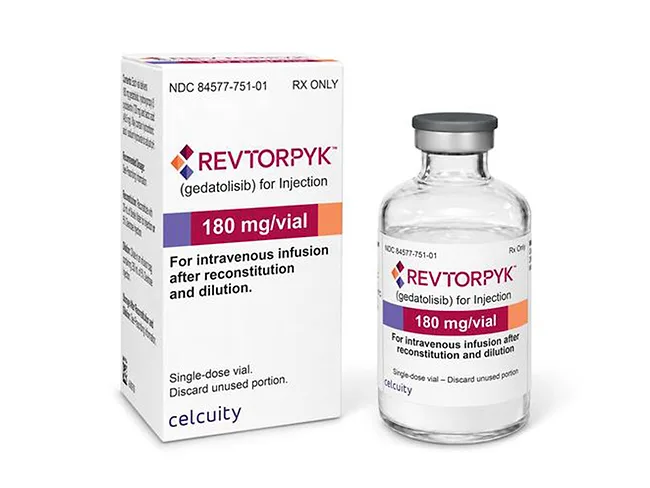
For the second time in two months, Celcuity Inc. failed to generate investor excitement despite disclosing positive news, this time following the U.S. FDA approval of Revtorpyk (gedatolisib) in a subset of breast cancer patients, marking the firm’s first foray into the commercial space and introducing a new treatment option for patients. Wall Street instead focused on an unanticipated launch delay, sending shares of Celcuity (NASDAQ:CELC) down 17.6% to close July 15 at $91.51.
 RSS
RSS