The Vivani Medical Inc. combination appears to be over less than three years since its inception after the company reported plans to spin off Cortigent, the division that develops brain implants. Vivani said it plans to create two focused companies dedicated to driving current and future value in their respective therapeutic areas.
CSPC Pharmaceutical Group Ltd. on Jan. 13 gained the National Medical Products Administration’s approval of Shanzeping (prusogliptin tablets; DBPR-108) as a novel oral dipeptidyl peptidase-IV (DPP-4) inhibitor to treat adult patients with type 2 diabetes.
Sana Biotechnology Inc. CEO Steve Harr said “cool and transformative science” led to his firm’s latest strides in type 1 diabetes, and the “very generalizable [clinical] result” cheered Wall Street, which led shares of the Seattle-based firm (NASDAQ:SANA) to close Jan. 8 at $4.30 up $2.65, or 160.6%. “I believe we now have all of the pieces in place to move forward rapidly,” Harr said.
From local drug discovery to global innovation, economic uncertainty is taking a toll on China’s innovative biotech system, forcing local companies to weather unpredictable storms, investors said during the Chinabio Partnering Forum in Shanghai in September.
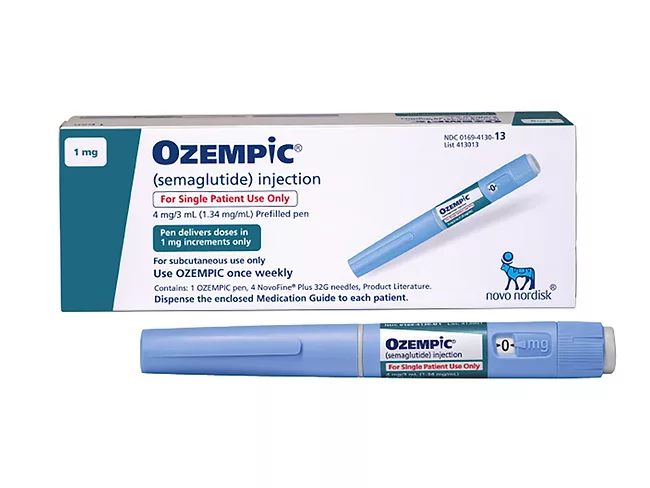
The Danish Medicines Agency is to ask the EMA’s pharmacovigilance committee to investigate a potential increased risk of an acute eye condition in diabetic patients being treated with the glucagon-like peptide-1 receptor agonist Ozempic (semaglutide).
Released from a clinical hold by the U.S. FDA in late September, Biomea Fusion Inc.’s menin inhibitor, icovamenib, has charged ahead to produce positive top-line data from a phase II study in type 2 diabetes (T2D). The data, however, didn’t stop the stock from dropping to near its lowest level of the past 12 months.
Although head-to-head results on tolerability were missing from the company’s data release, Eli Lilly and Co. said its U.S. FDA-approved weight-loss drug Zepbound (tirzepatide) beat the also-cleared Novo Nordic A/S compound Wegovy (semaglutide) in a phase IIIb study comparing the two.
Wall Street began comparing and contrasting what’s available after Amgen Inc. rolled out phase II data with weight loss candidate Maritide – a disclosure that led shares of the biotech heavyweight (NASDAQ:AMGN) to close Nov. 26 at $280.01, down $13.99.
The second time around wasn’t lovelier for Lexicon Pharmaceuticals Inc. as it once again made its case before the U.S. FDA’s Endocrinologic and Metabolic Drugs Advisory Committee for Zynquista (sotagliflozin) as an adjunct to insulin to improve glycemic control in people with type 1 diabetes and mild to moderate chronic kidney disease.
Lexicon Pharmaceuticals Inc. is counting on the Oct. 31 meeting of the U.S. FDA’s Endocrinologic and Metabolic Drugs Advisory Committee to help it break through the type 1 diabetes (T1D) door with Zynquista (sotagliflozin), proposed as an adjunct to insulin to improve glycemic control in people with T1D and mild to moderate chronic kidney disease.
 RSS
RSS