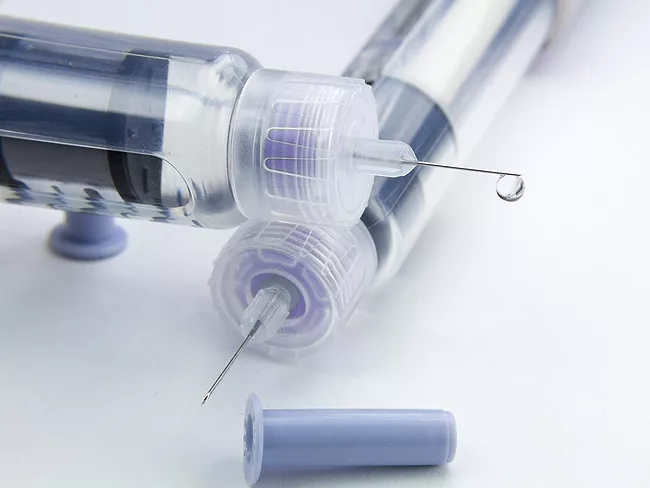
Adocia SA is looking to further apply its Biochaperone formulation technology to metabolic disorders, Olivier Soula, Adocia co-founder and CEO told BioWorld, the firmhaving recently gained positive top-line phase III results of Tonghua Dongbao Pharmaceutical Co. Ltd.’s THDB-0206 injection (Biochaperone Lispro) in diabetes patients in China.
The U.S. FDA on July 15 cleared Biocon Biologics Ltd.’s Kirsty (insulin aspart-xjhz) as the first and only interchangeable biosimilar product referencing Novo Nordisk A/S’ Novolog (insulin aspart), a rapid-acting diabetes medication.
Innovent Biologics Inc. announced a HKD$4.3 billion (US$547 million) placement on the Hong Kong Stock Exchange to advance its R&D projects and to fund its global expansion.
China’s Pegbio Co. Ltd. launched its IPO on the Hong Kong stock exchange May 19, to raise up to HK$300.82 million (US$38.4 million) to advance visepegenatide (PB-119), its glucagon-like peptide 1 (GLP-1) receptor agonist.
Hightide Therapeutics Inc.’s berberine ursodeoxycholate (HTD-1801) met primary and secondary endpoints in the Symphony 1 and Symphony 2 phase III trials in type 2 diabetes in Chinese patients. Based on the data, Shenzhen-based Hightide will submit an NDA to China’s National Medical Products Administration (NMPA) later this year.
Building upon its already impressive obesity drug portfolio, Novo Nordisk A/S has licensed a triple agonist of the receptors for GLP-1, GIP and glucagon from United Biotechnology Co. Ltd. China-based United is getting $200 million up front and the chance to earn up to $1.8 billion in milestone payments. United Biotechnology retains the rights to subcutaneously administered UBT-251, which is in the early stages of development for treating obesity, type 2 diabetes and other diseases, in China, Hong Kong, Macau and Taiwan while Bagsværd, Denmark-headquartered Novo get exclusive rights to develop, manufacture and commercialize the triple agonist receptor across the rest of the world.
CSPC Pharmaceutical Group Ltd. on Jan. 13 gained the National Medical Products Administration’s approval of Shanzeping (prusogliptin tablets; DBPR-108) as a novel oral dipeptidyl peptidase-IV (DPP-4) inhibitor to treat adult patients with type 2 diabetes.
From local drug discovery to global innovation, economic uncertainty is taking a toll on China’s innovative biotech system, forcing local companies to weather unpredictable storms, investors said during the Chinabio Partnering Forum in Shanghai in September.
Two leading glucagon-like peptide-1 (GLP-1) receptor agonists for obesity and type 2 diabetes – Novo Nordisk A/S’s semaglutide (Wegovy/Ozempic) and Eli Lilly and Co.’s tirzepatide (Mounjaro/Zepbound) – are advancing in China after taking the U.S. market by storm.
As Novo Nordisk A/S and Eli Lilly and Co. go head-to-head in the U.S. and Chinese glucagon-like peptide-1 receptor agonists (GLP-1RA) market for diabetes and obesity, Novo Nordisk is in innovator gear once more with leading studies of GLP-1s in Alzheimer’s disease.
 RSS
RSS