The U.S. Centers for Medicare & Medicaid Services ended the Treatment Choices model under the end stage renal disease payment payment system for several reasons, including its failure to deliver meaningful savings.
Cornerstone Robotics Ltd. raised an oversubscribed $200 million series D round to accelerate commercialization of its flagship product, the Sentire Endoscopic Surgical System.
Minze Health NV signed a three-year agreement with Medtronic plc to bring its Minze Diary Pod, an app-controlled automated urine collection device, to markets across the EMEA region. The partnership aims to enhance the support services available for patients with overactive bladder receiving sacral neuromodulation therapy with Medtronic’s Interstim system.
Two enzymes from the protein disulphide isomerase (PDI) family enable prostate cancer cells to grow, survive, and resist treatment. This discovery, however, could be taken as an advantage to improve therapy for this type of tumor. Blocking the function of PDIA1 and PDIA5 leads to cancer cell death and a reduction in tumor size.
Roche Holdings AG received CE-mark for the Kidney Klinrisk algorithm, an AI-based tool developed in collaboration with Klinrisk Inc. to stratify risk and assess the progressive decline in kidney function. The software will help clinicians to make more informed decisions when accessing adults with chronic kidney disease as well as individuals with diabetes or hypertension who are at elevated risk of kidney function decline.
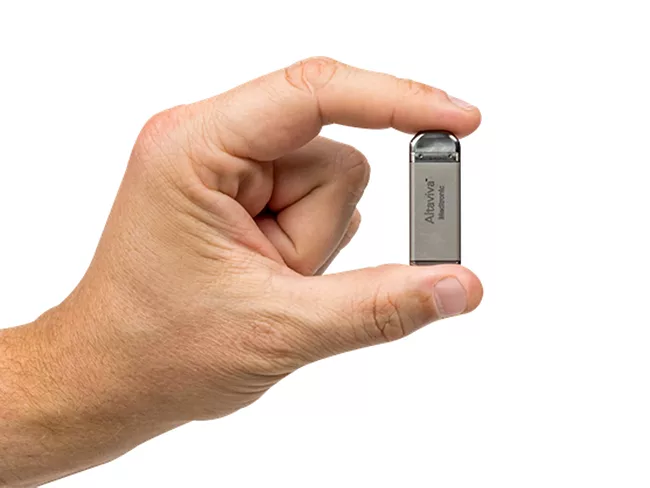
Medtronic plc received U.S. FDA approval for Altaviva, a minimally invasive implantable tibial neuromodulation device designed to treat urge urinary incontinence. Insertion near the ankle requires neither sedation nor imaging and patients walk out the clinic door with the device already activated.
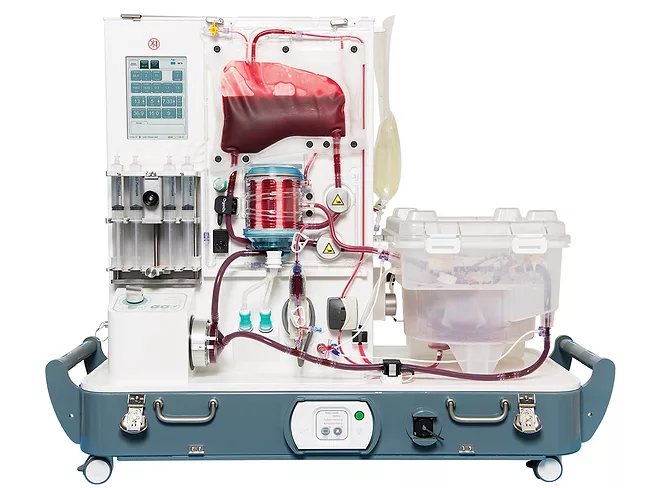
Organox Ltd.’s normothermic machine perfusion device, Metra, has been cleared by the U.S. FDA for use during air transport. The greenlight from the regulatory body paves the way for the broader use of donor organs that might otherwise be discarded, as the Metra system circulates oxygen and nutrient rich perfusate through the organ at near-body temperature, extending preservation times.
Neurogenic bladder is a disease involving inflammation and fibrosis of the bladder. Fibrosis has been linked to the type of programmed cell death known as pyroptosis, which in turn has been linked to cGAS-STING signaling and subsequent activation of the NLRP3 inflammasome. Researchers at Children’s Hospital of Chongqing Medical University wondered whether the same processes contribute to the fibrosis in neurogenic bladder.
Good news bracketed July for Teleflex Inc. as it completed the acquisition of the vascular intervention business of Berlin-based Biotronik SE & Co. for €760 million (US$879 million) on July 1 and released stronger-than-expected second quarter results on the closing day of the month. Both bode well for the company as it proceeds through a thorough restructuring announced in February.
Uromems SAS received investigational device exemption (IDE) approval from the U.S. FDA, and clearance from the French National Agency for the Safety of Medicines and Health Products (ANSM), to begin a pivotal trial of its Uroactive smart implant.
 RSS
RSS