Inceptor Bio LLC, a company developing cell therapies for difficult-to-treat cancers, has closed a $37 million series A financing led by Kineticos Ventures, the second fund founded by Inceptor CEO Shailesh Maingi. Altogether, about 40 investors have supported the company's efforts, he told BioWorld. Proceeds from the round, which follows a $26 million seed financing in 2021, will support moving Inceptor's lead CAR T program into phase I testing, a move targeted for the second half of 2023, and continued development of rare CAR-macrophage and CAR-natural killer cell programs.
For Kevin Friedman, the secret to making newly emergent Kelonia Therapeutics Inc. a success is reducing complexity and keeping everything as simple as possible. The Boston-based company just raised $50 million in series A funding to further its development of genetic medicines encompassing a range of diseases.
“We’re still a far cry from reproducible, durable benefits” with CAR T cells targeting solid tumors, Crystal Mackall told the audience at the 2022 annual meeting of the American Association for Cancer Research (AACR). But “we’re beginning to see some signals.” Mackall is the founding director of the Stanford Center for Cancer Cell Therapy.
Cellpoint B.V. has picked up U.S and European rights to a chimeric antigen receptor T-cell (CAR T) therapy from Shenzhen Pregene Biopharma Co. Ltd. Cellpoint will develop and commercialize the candidate, PRG-1801, for the treatment of hematological indications.
Cancer therapy developer Immpact Bio USA Inc. has raised $111 million to further its "logic gate"-based CAR T-cell platform, the source of a CD19/CD20 bispecific in phase I testing for B-cell non-Hodgkin lymphoma patients whose disease has returned or who has stopped responding to treatment. New data from that study, showing complete remissions in seven of eight patients treated, accompanied the appointment of a new president and CEO for the company as well as a new board chair.
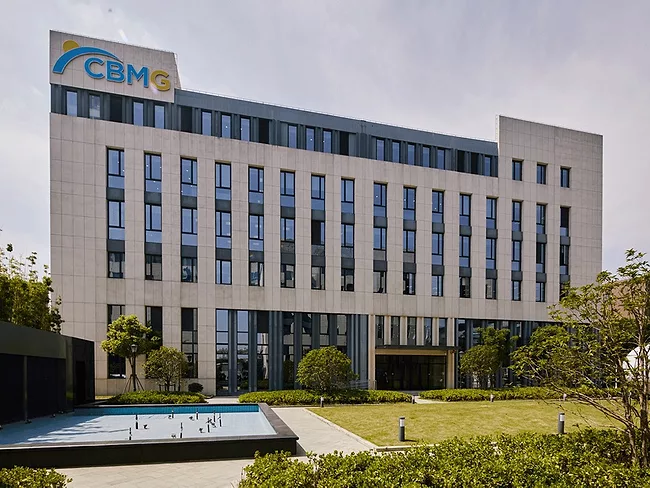
Cell therapy developer Cellular Biomedicine Group Inc. (CBMG) completed a $120 million series A financing, its first since becoming a private company. The funds will benefit the U.S. and China-based firm’s CAR T pipeline, and the round was jointly led by Astrazeneca-CICC Fund, Sequoia Capital China and Yunfeng Capital. Existing investors including GIC Private Ltd. (formerly Government of Singapore Investment Corp.) and TF Capital also took part.
A collection of CAR T-cell programs originally licensed by Precision Biosciences Inc. to Baxalta Inc. in a $1.6 billion deal are, after handoffs to Shire and Servier SAS, back where they began. Precision said April 15 it would reacquire all development and commercial rights to the programs, including two clinical-stage CD19-targeting allogeneic CAR T candidates, from Servier for $1.25 million in cash, plus the waiver of earned but as-yet unpaid milestones totaling $18.75 million.
Citing the limited data for CAR T therapies in treating multiple myeloma, the Institute for Clinical and Economic Review said their cost-effectiveness for some patients will depend on whether a second dose is needed.
Atara Biotherapeutics Inc. licensed a pair of mesothelin-directed CAR T treatments, ATA-2271 and ATA-3271, to Bayer AG for $60 million up front with the potential for $610 million in development, regulatory and commercialization milestone payments. Atara is also eligible for tiered royalties that peak in the low double-digit percentage of net sales of the two drugs. South San Francisco-based Atara will provide translational and clinical manufacturing services for the two drugs that will be reimbursed by Bayer.
When the first chimeric antigen receptor T-cell (CAR T) therapy, Kymriah (tisagenlecleucel), was approved in 2016 for treating B-cell acute lymphoblastic leukemia, its developer, Novartis AG, confined the initial rollout to just 20 treating centers. Its label carried a black box warning, because of the risk of life-threatening cytokine release syndrome, and Basel, Switzerland-based Novartis put in place a comprehensive risk evaluation and mitigation system to ensure its safe use. Catamaran Bio Inc., a Boston-based startup that has raised $42 million in seed and series A financing, is considering the administration of similarly engineered natural killer cells in walk-in clinics. “If the product is safe, it can be given as an out-patient treatment,” Chief Scientific Officer Vipin Suri told BioWorld. “As a field, this absolutely has to be our ambition.”
 RSS
RSS