Aussie gene therapy company Mirugen Pty Ltd. has emerged from stealth mode from the Center for Eye Research Australia in Melbourne, toting a AU$4.5 million (US$2.9 million) seed round that will see it optimize its lead candidate to treat retinitis pigmentosa.
Precision medicine is becoming a reality in Asia Pacific as more targeted therapies are being developed that are tailored to individual patients, offering a potential cure for disease. But is Asia Pacific ready to harness this transformation, and if not, what are the hurdles that need to be cleared?
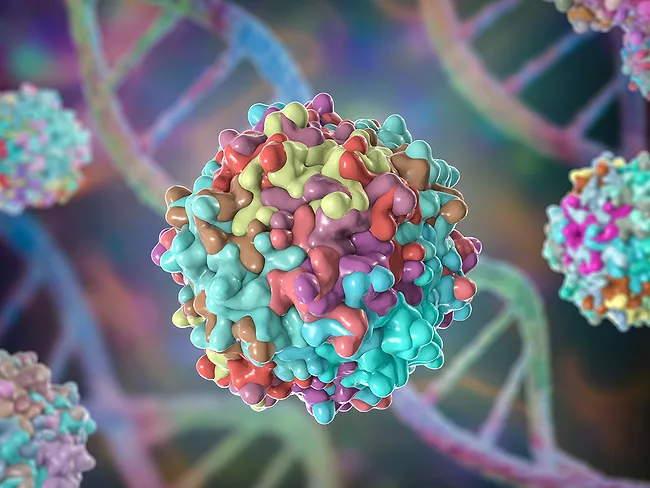
Under a new licensing deal announced July 8, JCR Pharmaceuticals Co. Ltd. granted Alexion Pharmaceuticals Inc. rights to its adeno-associated virus (AAV) capsids for use in up to five of Alexion’s genomic medicines programs.
In yet another fail for the Duchenne muscular dystrophy (DMD) field, Taiho Pharmaceutical Co. Ltd.’s pizuglanstat (TAS-205) did not meet the primary endpoint in a phase III trial. The phase III Reach-DMD trial, a randomized, placebo-controlled, double-blind and open-label, extension study of pizuglanstat in patients with DMD showed no significant difference in the mean change from baseline to 52 weeks in the primary endpoint of time to rise from the floor in the ambulatory cohort of the study.
Using informed consent to do what Congress couldn’t, the U.S. FDA is flexing its regulatory authority to halt clinical trials that involve sending cells from American patients to China or other adversarial nations for genetic engineering and subsequent infusion back into the patient.
Rznomics Inc. scored a potential ₩1.9 trillion (US$1.35 billion) global license option agreement with Eli Lilly and Co. to codevelop a novel RNA editing gene therapy to treat hereditary hearing loss.
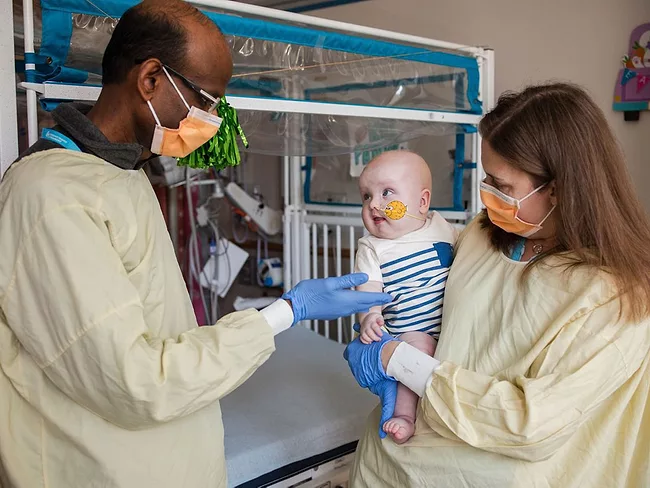
Using a customized gene editing therapy, researchers at the Children’s Hospital of Philadelphia have reported success in treating an infant with a severe metabolic disorder. Kiran Musunuru, Barry J. Gertz Professor for Translational Research in the University of Pennsylvania’s Perelman School of Medicine, presented the case at the American Society of Gene and Cell Therapy’s 2025 annual meeting. The case study was simultaneously published in The New England Journal of Medicine.
Nuevocor Pte. Ltd. has closed a $45 million series B, enabling it to move lead gene therapy NVC-001 into the clinic in the treatment of an inherited form of cardiomyopathy.
In a deal potentially worth $810 million for Regenxbio Inc., Nippon Shinyaku Co. Ltd. is partnering on the U.S. and Asian development and commercialization of iduronate-2-sulfatase enzyme RGX-121 for Hunter syndrome and RGX-111 for Hurler syndrome.
After raising AU$16.75 million (US$10.4 million) in a series A round, Celosia Therapeutics Pty Ltd. is heading toward the clinic with its novel gene therapy that targets TDP-43, a protein directly linked to amyotrophic lateral sclerosis (ALS) pathology.
 RSS
RSS
-and-Raymond-Wong-(R).webp?height=488&t=1755204408&width=650 "Mirugen co-founders Keith Martin (L) and Raymond Wong (R)")