The U.S. Patent and Trademark Office (USPTO) is driving home its message that inter partes reviews (IPRs) are not to be used in conjunction with court action presenting “inconsistent positions” as a litigation strategy.
The U.S. Supreme Court’s ruling in Hikma Pharmaceuticals USA Inc. v. Amarin Pharma Inc. could either discourage the development of generic drugs under a skinny label or make innovators think long and hard about investing hundreds of millions of dollars in developing new indications for drugs already on the market.
Sun Pharmaceuticals Industries Ltd. will pay $11.75 billion cash to acquire Organon & Co. The transaction is expected to close in early 2027. The addition of Organon’s women’s health products, legacy drug brands and biosimilars are expected to boost Mumbai, India-based Sun’s global reach. The all-cash buy is also expected to relieve Jersey City, N.J.-based Organon of an $8.6 billion debt pile, accumulated after its debt-laden 2021 spinout from Merck & Co. Inc.
Sun Pharmaceuticals Industries Ltd. will pay $11.75 billion cash to acquire Organon & Co. The transaction is expected to close in early 2027. The addition of Organon’s women’s health products, legacy drug brands and biosimilars are expected to boost Mumbai, India-based Sun’s global reach. The all-cash buy is also expected to relieve Jersey City, N.J.-based Organon of an $8.6 billion debt pile, accumulated after its debt-laden 2021 spinout from Merck & Co. Inc.
The days of the U.S. FDA considering as trade secrets country-of-origin info for drugs and their ingredients have to end, the Senate Aging Committee was told at a Jan. 29 hearing on truth in drug labeling.
After passing on one skinny label case a few years ago, the U.S. Supreme Court agreed to delve into the dark hole the Federal Circuit has dug for drug label carveouts that allow generic drugs and biosimilars to come to market even though some indications of the reference drug may still be protected by exclusivities or patents. The high court granted cert Jan. 16 to Hikma Pharmaceuticals v. Amarin Pharma Inc., which revolves around Hikma’s marketing of its generic version of Amarin’s blockbuster drug, Vascepa (icosapent ethyl).
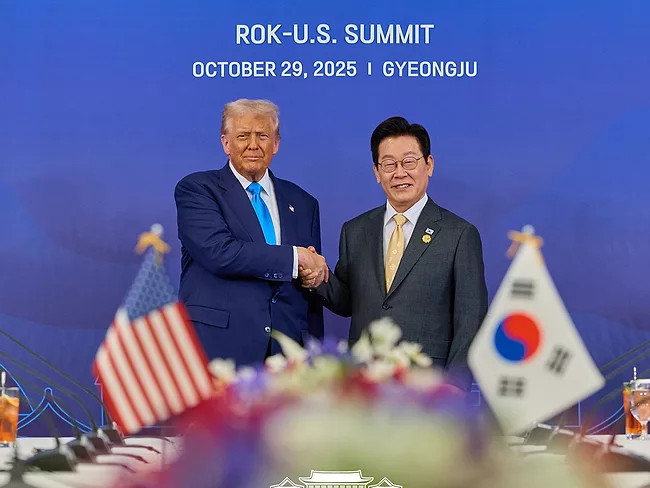
The Korea Biotechnology Industry Organization on Oct. 30 welcomed the bilateral trade deal between the U.S. and South Korea announced during U.S. President Donald Trump’s state visit alongside the Asia-Pacific Economic Cooperation forum in Gyeongju, South Korea.
The Korea Biotechnology Industry Organization on Oct. 30 welcomed the bilateral trade deal between the U.S. and South Korea announced during U.S. President Donald Trump’s state visit alongside the Asia-Pacific Economic Cooperation forum in Gyeongju, South Korea.
 RSS
RSS