As the FDA has in the past when a court issued an opinion it didn’t agree with, the U.S. agency is trying to limit the fallout from an appellate court ruling in Catalyst Pharmaceuticals Inc. vs. Becerra, which involved the breadth of orphan drug exclusivity, to that case alone.
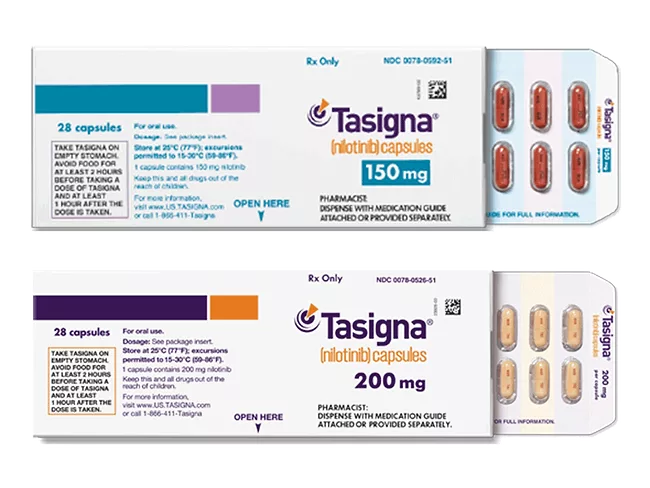
Expanding its mandate to accelerate access to essential medicines to people in low- and middle-income countries, the Medicines Patent Pool signed its first voluntary licensing agreement for a cancer treatment, Novartis AG’s Tasigna (nilotinib).
Expanding its mandate to accelerate access to essential medicines to people in low- and middle-income countries, the Medicines Patent Pool signed its first voluntary licensing agreement for a cancer treatment, Novartis AG’s Tasigna (nilotinib). A twice-daily oral drug, Tasigna is a tyrosine kinase inhibitor included on the World Health Organization’s Model List of Essential Medicines as a second-line treatment for adult and pediatric chronic myeloid leukemia.
Expanding its mandate to accelerate access to essential medicines to people in low- and middle-income countries, the Medicines Patent Pool signed its first voluntary licensing agreement for a cancer treatment, Novartis AG’s Tasigna (nilotinib). A twice-daily oral drug, Tasigna is a tyrosine kinase inhibitor included on the World Health Organization’s Model List of Essential Medicines as a second-line treatment for adult and pediatric chronic myeloid leukemia.
Teva Pharmaceuticals USA Inc.’s quest to get the U.S. Supreme Court to overturn the Federal Circuit and preserve label carveouts, or so-called skinny labels, continued Oct. 3 with the high court asking the solicitor general to weigh in.
The U.K. could be downgraded as a place to research and launch new medicines because of economic shocks and a looming rebate of 30% or more on sales of branded products, according to industry sources.
Claiming it would be impossible to carve out a so-called skinny label that would comply with generic drug “same labeling” rules, Novartis AG is petitioning the U.S. FDA, for the second time, not to approve generic versions of its blockbuster heart drug, Entresto (sacubitril + valsartan), that attempt to carve around a cardiovascular indication that has exclusivity until Feb. 16, 2024.
If the U.S. Supreme Court agrees to hear Teva Pharmaceuticals USA Inc. vs. Glaxosmithkline LLC, it could be one of the biggest biopharma cases on the court’s calendar in the coming year. But that’s still an if. Whether the patent infringement case involving a so-called “skinny label” makes it to the high court’s docket depends on which interpretation of the underlying question the court accepts.
It was bound to happen someday. With more and more prescription drugs coming to the U.S. market, the FDA is running out of unique combinations for the 10-digit national drug code given to each product.
As part of its ongoing effort to speed drug pricing competition in the U.S. through the development of generics, the FDA is releasing another batch of draft and revised draft product-specific guidances on the design of bioequivalence studies to support abbreviated new drug applications. Among the 30 new draft guidances is one specific to remdesivir, which was approved in October 2020 as a COVID-19 treatment.
 RSS
RSS