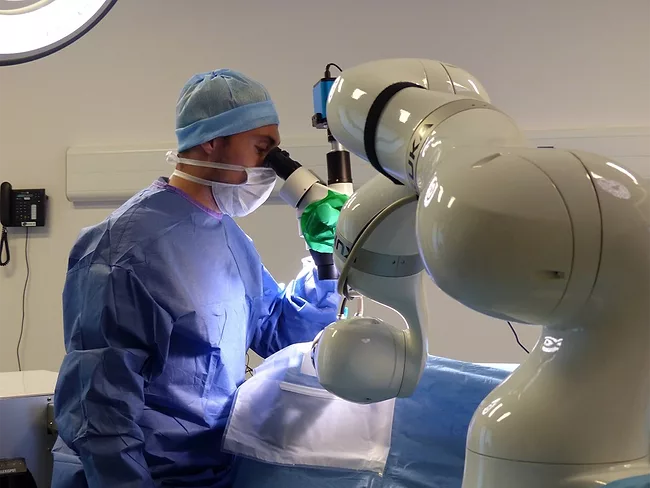
PARIS – Less than a year after its formation, Acusurgical SAS, has secured a $7 million series A round to develop its robotic platform for assisting surgeons performing microsurgery procedures in retinal surgery. “Our goal isn’t to replace the surgeon but to increase his surgical capacities. Our mission is to create an augmented surgeon,” Christoph Spuhler, CEO and co-founder of Montpellier, France-based Acusurgical, told BioWorld.
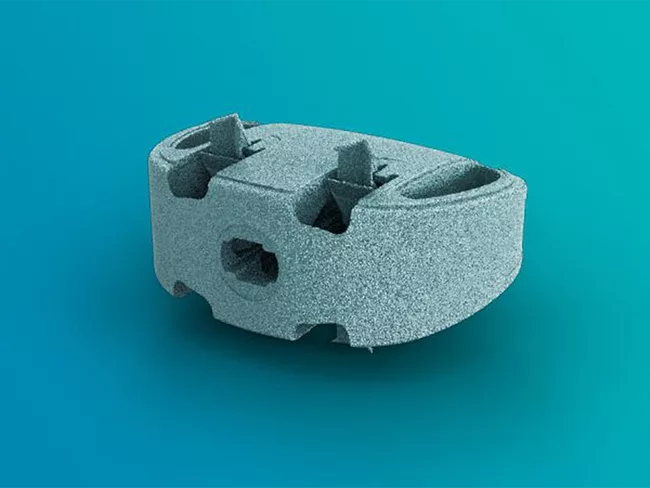
Blue Ocean Spine GmbH has won a major investment from SHS GmbH, also from Tuttlingen in Germany, to develop its next-generation functional spinal implant. The two companies are declining to disclose the size of the series A investment.
Theator Ltd., the artificial intelligence (AI)-powered surgical intelligence platform, has raised $15.5 million in a series A financing led by Insight Partners. The funds will be used to scale commercial operations and partnerships with U.S. providers, grow the company’s R&D team and secure its footprint in the field of AI-driven surgical planning, intraoperative support, and review. New investor Blumberg Capital also participated in the round, along with all existing investors including Nfx, Stageone Ventures, Kdt Ventures and Iangels.
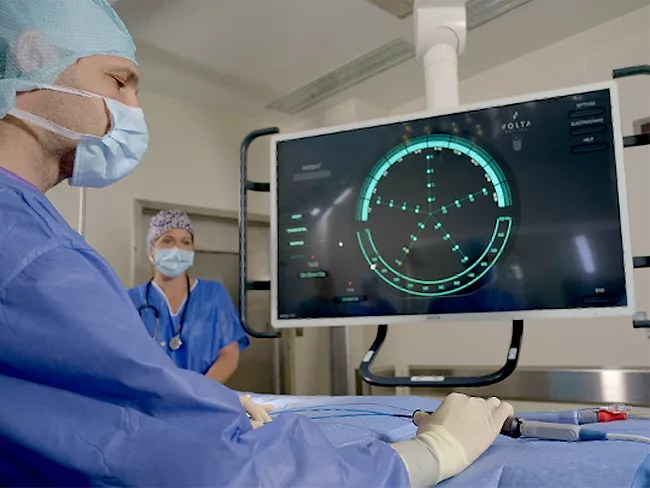
PARIS – Four years after being set up in Marseilles, France, Volta Medical SAS reported raising $28 million in a series A round for the VX1 software mapping system, an artificial intelligence (AI) algorithm that is compatible with most readily available multipolar catheters and technology used in operating rooms and cath labs to treat cardiac arrhythmia.
Spectrawave Inc. has scooped up $13.2 million in a series A-2 financing led by prior investor Deerfield Management. The funds will be used to complete development and regulatory filing for its flagship cardiac imaging technology. Prior unnamed seed investors also participated in the round. With this latest infusion, Spectrawave has raised a total of approximately $30 million to date.
Liquid biopsy startup Delfi Diagnostics Inc. scooped up $100 million in a series A round led by Orbimed Advisors LLC. The company will use the funds to grow its team of cancer researchers and machine learning experts and to validate its next-generation blood-based testing technology in prospective clinical trials. Existing investors Menlo Ventures, Samsara Biocapital, Illumina Ventures, Av8 Ventures also participated in the round, along with new investors Foresite Capital, Northpond Ventures, Cowen Healthcare Investments and Rock Springs Capital.
A new $23 million in funds gives Brainbox Solutions Inc. a head start as it begins enrollment in the pivotal clinical trial of its mild traumatic brain injury (TBI) diagnostic and prognostic test. Bioventures Investors took the lead in the series A financing. The Tauber Foundation, the Virginia Tech Carilion Innovation and Seed Funds, Genoa VC, Pharmakon Holdings LLC, and Astia Angels participated in the fundraising round along with qualified investors including the Cleveland Cavaliers' Kevin Love, a mental health advocate.
TORONTO – Waterloo, Ontario-based health startup Kenota Inc. has raised $9 million in series A funding to develop an in-clinic allergy test that takes less than 30 minutes and requires only a few drops of blood from a mild finger prick. This brings the total investment to $11 million for a point-of-care system that detects antibodies signaling allergies to egg, milk and peanuts and that will eventually search out environmental allergies to bee stings and shellfish.
Neurotech startup Nēsos Corp. has emerged from stealth with a novel approach for the treatment of rheumatoid arthritis. Using wireless earbuds, the technology delivers electrical fields to targeted areas of the brain to help regulate immune function. The company recently raised $16.5 million in a series A round to advance clinical development of its first e-immunotherapy product.
Artificial intelligence (AI)-powered cell capture startup Deepcell Inc. scooped up $20 million in a series A round led by Bow Capital. The funds are earmarked for developing the company’s microfluidics-based technology, building out a cell morphology atlas of more than 400 million cells and advancing a hypothesis-free approach to cell classification and sorting.
 RSS
RSS