Optina Diagnostics, of Montreal, and the Wagner Macula & Retina Center are collaborating on a clinical study using Optina's Retinal Deep Phenotyping (RDP) platform to screen for Alzheimer's disease. The program will put the platform into nine community eye clinics in Virginia and North Carolina.
HONG KONG – South Korean biotech Deep Bio Inc. has won CE marking for its artificial intelligence (AI)-powered medical software DeepDx-Prostate Connect.
Urinary tract infections (UTIs) are a common reason for women to visit their doctor. While virtual doctor visits have been possible to detect UTIs, patient-reported symptoms typically have drove diagnoses. Now, Los Angeles-based Scanwell Health is bringing its at-home smartphone-enabled test and treatment service for UTIs to all 50 states. Scanwell said its offering its the first U.S. FDA-cleared urine testing app available over-the-counter without a prescription.
Hand-held diagnostics don't come cheaply, and their applications remain somewhat limited. Abbott Laboratories' Istat portable clinical analyzer, for example, retails at about $15,000, with each individual cartridge costing hundreds of dollars apiece to measure each of roughly a few dozen blood gas, electrolyte, chemistry and hematology levels in few minutes from two to three drops of whole blood.
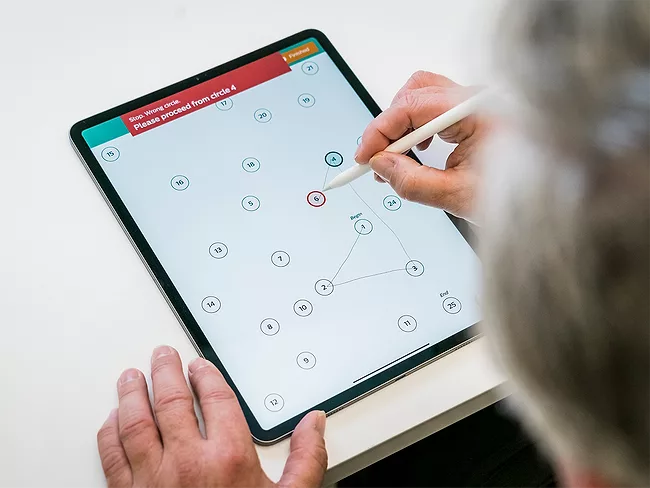
A neuropsychologist consult is typically the first step for a neurologist in aiding in the diagnosis and monitoring of neurological conditions. But timely appointments for an assessment by these specialists can be difficult to obtain, even under the best of circumstances. To better enable neurologists to assess which patients are most in need of a consultation with a neuropsychologist, Royal Philips NV has launched an artificial intelligence (AI)-based cognitive assessment tool in the U.S. Known as Philips Intellispace Cognition, the digital, cloud-based assessment tool takes established neuropsychological tests and enables their administration by a medical assistant via a tablet in an office setting.
Marlborough, Mass.-based Hologic Inc. got good news from the U.S. FDA, which has given the green light for the 3Dquorum imaging technology, which employs Genius AI. The technology works along with Hologic's Clarity HD high-resolution imaging technology to reduce tomosynthesis image volume for radiologists by 66%, the company said.
Nanthealth Inc. has received U.S. FDA clearance for a whole exome sequencing test to determine overall tumor mutational burden (TMB) in cancer tissue. Known as Omics Core, the first-of-its-kind in vitro diagnostic test is available now as part of Nanthealth's GPS Cancer molecular profiling suite.
BOSTON – For diagnosing nonalcoholic steatohepatitis (NASH), liver biopsy is "the reference standard," Dean Hum, president of Genfit Corp., told BioWorld MedTech. "I'm not going to call it the gold standard."

 RSS
RSS