Med-tech companies with an AI component in their solutions will certainly find investors willing to back them. AI after all, is being used to develop more effective, smarter technologies. However, investors will only deploy capital into innovations that address genuine clinical needs. The aging population is driving interest in devices targeting cardiovascular and musculoskeletal disorders, and other solutions geared toward neurological conditions, women’s health and diagnostics are also attracting investor attention.
Danaher Corp. agreed to acquire Masimo Corp. for $9.9 billion in a move to strengthen its diagnostics business. Under the terms of the agreement, Danaher will acquire all the outstanding shares of Masimo for $180 per share in cash, representing a 38.3% premium to Masimo’s last closing price.
An AI-based software developed by Screenpoint Medical BV could help detect breast cancers earlier and reduce the number of cancers that appear between routine screenings. In a trial of over 100,000 women, the use of the company’s Transpara Detection system resulted in a 12% reduction in the rate of interval cancers, compared to standard mammography screening. The results from the Mammography Screening with Artificial Intelligence study was published in the Lancet.
Australian respiratory imaging technology company 4dmedical Ltd. raised AU$150 million (US$105 million) in an institutional placement to accelerate U.S. adoption of its CT:VQ lung imaging software to bolster the company’s lead in software-based lung imaging.
En Carta Diagnostics SA's EC Pocket Lyme received FDA breakthrough device designation for its rapid, molecular diagnostic test for the early detection of Borrelia bacteria, which causes Lyme disease. The designation marks a pivotal step for the French startup as it will enable closer interaction with the agency, accelerating its route to market, and getting it to patients sooner.
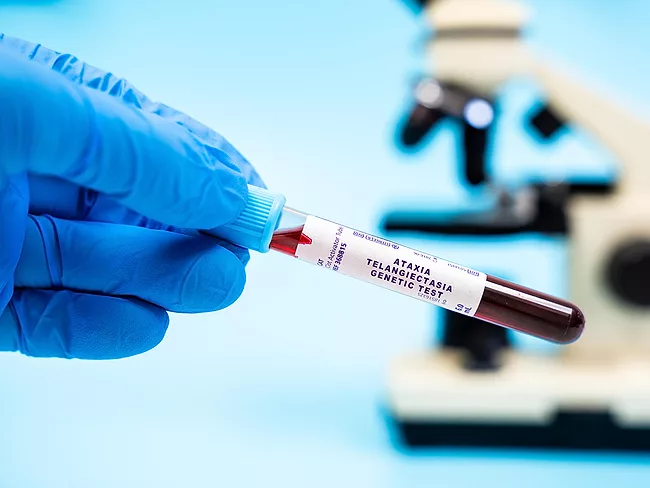
A Jan. 28 report on Medicare spending on lab tests indicated that spending on many types of tests flattened between 2022 and 2024, but spending on genetic tests rose 20% between 2023 and 2024 to $3.6 billion. While the report does not specifically call out fraud as a driver of spending, the U.S. Department of Justice posted a Jan. 26 press release identifying a case of Medicare gene testing fraud that amounted to $52 million, just one of several recent examples of this kind of fraud.
The U.S. FDA’s Center for Biologics Evaluation and Research posted four warning letters to makers of HIV sample collection kits, an example of a shift in FDA enforcement in the IVD space that is still allowed after a historical loss in court.
A team of international researchers is investigating whether a finger-prick blood test could be used to help diagnose Alzheimer’s disease before symptoms appear. With current diagnostic methods relying on expensive brain scans and invasive lumbar punctures, the trial is exploring whether the simple test could offer a faster, cheaper, and more accessible route to identifying the disease.
Rhythm Biosciences Ltd. launched a new genetype colorectal cancer risk assessment clinical test that incorporates clinical and lifestyle risk factors alongside its established 140-SNP polygenic risk score to identify people at elevated risk of colorectal cancer. The test supports more targeted screening and complements Melbourne-based Rhythm’s Colostat blood-based CRC detection test, which debuted in Australia in December 2025.
Cellbxhealth plc, previously called Angle plc, appointed CEO Peter Collins along with several non-executives to its board as it embarks on a new strategic direction. Over the past few months the company overhauled its management team, reduced its workforce by 60% and raised £8.2 million (US$11 million) as it changes focus from research to commercialization of its Parsortix system, a platform that captures and harvests circulating tumor cells (CTCs).
 RSS
RSS