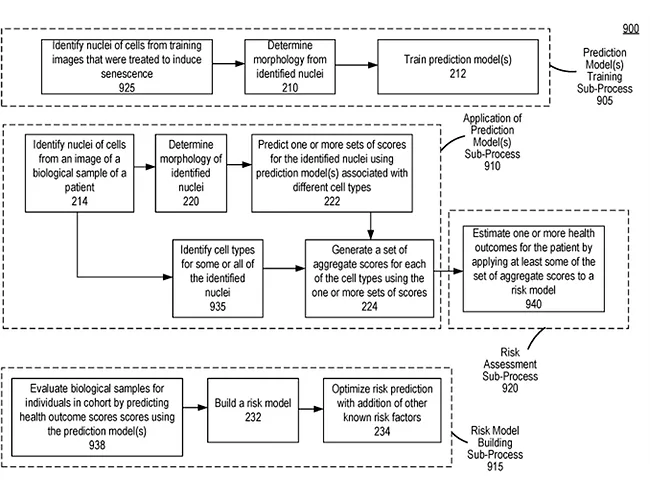
The first filing from Cancerrisk AI Inc. describes their development of a system that uses deep learning to predict future cancer risk from a biopsy image.
In what represents the first patenting from Eyecheq Inc., the company is seeking protection for its self-guided eye examination systems which may be mounted in easily movable and transportable kiosks, on tabletop stands, walls or suspended from ceilings.
Abionic SA received U.S. FDA 510(k) clearance for its in vitro diagnostic Capsule pancreatic stone protein (PSP) sepsis test. Produced by the pancreas and immune cells, PSP provides an early biomarker for sepsis that could push back detection of deadly condition by 24 to 48 hours.
Collagen-producing activated myofibroblasts, which are key effector cells in fibrogenesis in different organs, express high levels of platelet-derived growth factor receptor β (PDGFRβ).
Ngenebio Co. Ltd. launched a precision diagnostic panel called Oncoaccupanel RNA in South Korea Oct. 29 as a test to detect oncogenic fusion genes commonly found in solid tumors.
The third PCT family of patenting to emerge from IR Medtek LLC, and its first as the sole named assignee, sees its CEO, Douglas Cohen, continue to build protection for the company’s platform which uses a light detection technology and machine learning to improve the accuracy of cancer diagnosis.
Researchers from Universidad Carlos III de Madrid presented the development and preclinical characterization of a novel specific radiotracer for the diagnosis of Clostridioides difficile infection (CDI).
A recent retrospective cohort study of Insight MMG highlighted potential of Lunit Inc.’s artificial intelligence-powered breast cancer screening tool in detecting “subtle signs of cancer” earlier for women.
Early results from REFLECTION, a real-world study, mirrored results for Grail Inc.'s multi-cancer early detection (MCED) assay in clinical trials, according to a presentation at the 2024 Early Detection of Cancer Conference. The study, conducted at U.S. Department of Veterans Affairs (VA) sites, focuses on the real-world application of the Galleri test, which screens for multiple cancers in asymptomatic individuals.
Fibroblast activation protein (FAP) is absent or expressed at a very low level in normal tissues. However, it is overexpressed in around 80% of solid tumor stroma.
 RSS
RSS