In a recently published study, researchers from the University of Pennsylvania and collaborators aimed to identify compounds with high affinity to α-synuclein aggregates and high selectivity toward pathological α-synuclein compared to other brain targets.
AI-powered drug R&D platform firm Oncocross Co. Ltd. is leading the procession of year-end Korea biotech IPOs this week, pricing an offering of about 11.85 million shares on the Korea Exchange at ₩7,300 each for gross proceeds of ₩85.56 billion (US$59.5 million).
Labcorp Holdings Inc. launched its new H5N1 bird flu molecular test for humans in the U.S. as an international outbreak of the disease continues to spread in cows and poultry – and people. As BioWorld reported recently, just one mutation would make the flu variant highly transmissible in humans.
Peptidream Inc. has announced a new peptide radiopharmaceutical development candidate, PD-29875, a novel first-in-class highly selective macrocyclic peptide-radioisotope conjugate against Claudin 18.2 (CLDN18.2).
Researchers at Stichting AMC Foundation and Vrije Universiteit van Amsterdam have identified [18F]-labeled pyrazolidine-3,5-dione compounds targeting P2Y purinoceptor 12 (P2RY12; P2Y12) acting as PET and SPECT imaging agents. They are reported to be useful for the diagnosis of multiple sclerosis, Alzheimer’s disease and Parkinson’s disease.
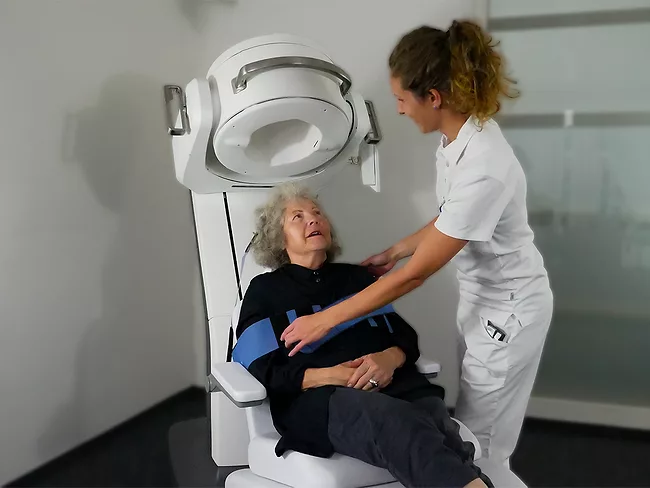
Positrigo AG is raising $10 million for production and commercialization of its Neurolf brain positron emission tomography system in the U.S. The system hepls to diagnose Alzheimer’s disease. With drugs such as Leqembi and Kisunla gaining U.S. FDA approval to treat the devastating neurological condition, the company is seeing increasing demand for its system, Neurolf CEO and co-founder Jannis Fischer, told BioWorld.
Beacon Biosignals Inc. can rest easy now that it has received U.S. FDA authorization of its predetermined change control plan for the Dreem 3s, a wearable sleep monitor that conducts electroencephalograms as users sleep. The authorization allows Beacon to incorporate updates to the Dreem 3S sleep-staging algorithm acquired through machine learning without submitting a new 510(k) application.
An artificial intelligence-powered contactless monitoring device developed by Albus Health Ltd. can detect signs of asthma attacks in children up to five days before they occur.
In what represents the first patenting from Glasgow-based Microplate Dx Ltd., three of its co-founders describe a system for diagnosing microbial infections and performing rapid antimicrobial susceptibility testing, enabling quicker and more precise determination of effective antibiotics.
Many studies have linked the presence of specific bacteria to various diseases. But a general overgrowth of gut bacteria can be a symptom of different conditions, including colorectal cancer and inflammatory bowel disease.
 RSS
RSS