For the last few years, Hong Kong has been the preferred financial hub for many Chinese health care companies to go public and raise money from global investors. “Biotechnology is today the fastest-growing IPO market segment,” said Nicolas Aguzin, CEO of HKEX, during the Hong Kong Exchanges and Clearing Ltd. (HKEX) Biotech Summit 2021.
Zhejiang Jingxin Pharmaceutical Co. Ltd. has in-licensed JBPOS-0101, a class I new drug for epilepsy, from Bio-Pharm Solutions Co. Ltd. for mainland China, Hong Kong, and Macau. The partnership could bring South Korea’s Bio-Pharm more than $40 million, including an up-front payment of $5 million, milestone payments of up to $35 million, and potential royalties on future sales.
Samsung Bioepis Co. Ltd. has emerged as the first company to obtain marketing authorization from the EMA for a biosimilar of Lucentis (ranibizumab), a significant development for the Korean biosimilar specialist. The approval comes less than two months after the company received a positive opinion from the EMA’s CHMP for Byooviz (ranibizumab), formerly called SB-11.
Vigencell Inc., a company focused on immune cell therapy, raised ₩99.4 (US$85.17 million) through an IPO on South Korea’s Kosdaq board and plans to use the funds to drive its R&D and company operations. “We particularly want to increase the competitiveness of our pipeline by advancing our technology and clinical development,” Vigencell CEO Tai-Gyu Kim told BioWorld. “We will also expand our discovery of new candidates and R&D in general, as well as updating our facilities and hiring researchers.”
Cadila Healthcare Ltd. (also known as Zydus Cadila) has received emergency use authorization (EUA) in India for Zycov-D, making it the world’s first plasmid DNA vaccine for COVID-19. Besides the adult population, the Drug Controller General of India’s nod has also given the South Asian country its first COVID-19 vaccine for adolescents ages 12 to 18.
Innocare Pharma Ltd. has signed a licensing agreement with Incyte Corp. for the exclusive rights to the monoclonal antibody Monjuvi (tafasitamab) for hematology and oncology indications in mainland China, Hong Kong, Macau and Taiwan. Under the terms of the deal, Innocare will pay Incyte an up-front fee of $35 million, as well as up to $82.5 million in potential development, regulatory and commercial milestones and tiered royalties.
A new rule published by India’s Central Drug Standards Control Organization that would require additional tests, trials or even approvals for drugs after changes in their active substances is likely to have only limited impact on companies and the market, despite evoking memories of a bruising patent dispute eight years ago.
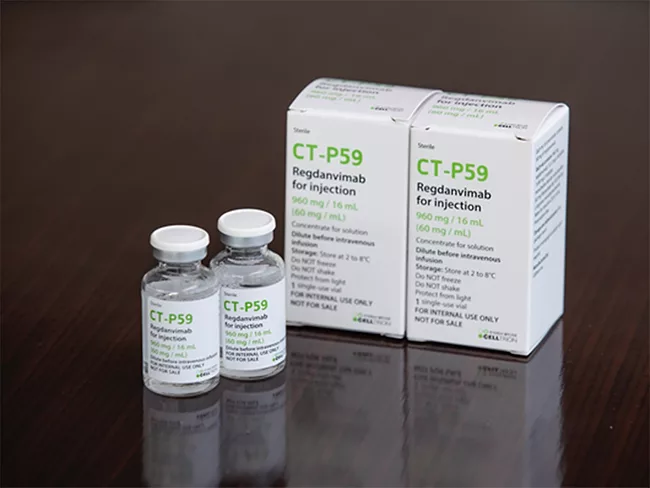
Celltrion Inc. has bagged its first green light outside Asia for its COVID-19 monoclonal antibody Regkirona (regdanvimab) with an emergency use authorization in Brazil. Brazil’s Anvisa gave the EUA for the drug to treat high-risk adult patients, including those aged 65 or older, with mild and moderate COVID-19 symptoms on Aug. 11. The regulator reached its decision on the drug, also known as CT-P59, via a unanimous vote.
Sinovac Biotech Ltd. said booster shots of its Coronavac vaccine against SARS-CoV-2 induce strong immune responses in adult and elderly populations following a considerable loss of antibodies six to eight months after completing the current two-dose regimen.
SK Bioscience Ltd. has won approval from the South Korean Ministry of Food and Drug Safety (MFDS) to begin a phase III trial for its COVID-19 vaccine candidate GBP-510, making the recombinant protein antigen vaccine the first domestically developed candidate to make it to late-stage testing. “We aim to begin the phase III trials within August and to have the data ready by early 2022,” a company spokesman told BioWorld.
 RSS
RSS