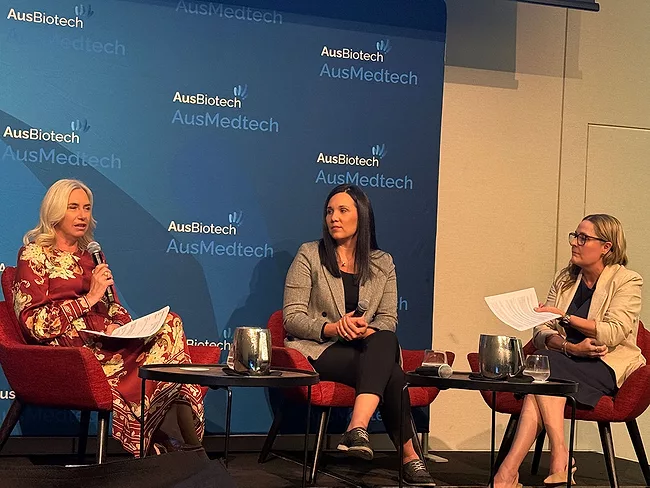
Artificial intelligence, remote monitoring and need-based innovation are beginning to reshape Australia’s medtech sector’s devices, as well as the way health care itself is delivered, according to speakers at the 2026 Ausmedtech conference in Perth May 19-20.
Artificial intelligence, remote monitoring and need-based innovation are beginning to reshape Australia’s medtech sector’s devices, as well as the way health care itself is delivered, according to speakers at the 2026 Ausmedtech conference in Perth May 19-20.
Of all the issues that could be on the table at the talks between U.S. President Donald Trump and China President Xi Jinping, the life sciences sector is the “sweet spot” for collaboration between the two countries in a way that would benefit the world, Sen. Thom Tillis, R-N.C., said in a Brookings Institution webinar in advance of the two-day summit that starts May 14.
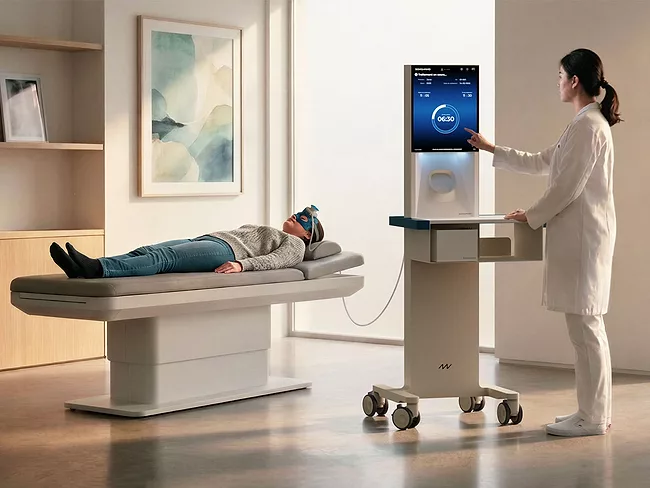
Sonomind SAS raised €20 million (US$23 million) in a series A funding round for its ultrasound-based neuromodulation technology for depression. The funds will be used for clinical trials of the non-invasive device, which uses a custom-made acoustic lens to precisely target deep regions within the brain to bring relief to patients suffering from treatment-resistant depression.
Of all the issues that could be on the table at the talks between U.S. President Donald Trump and China President Xi Jinping, the life sciences sector is the “sweet spot” for collaboration between the two countries in a way that would benefit the world, Sen. Thom Tillis, R-N.C., said in a Brookings Institution webinar in advance of the two-day summit that starts May 14.
Med-tech financing activity in the first four months of 2026 reached $10.05 billion, similar to 2025’s $10.31 billion and 2022’s $10.62 billion. While below the peak years of 2019-2021, when financings were above $15 billion in the time period, total value is still above the levels seen in 2023-2024. April saw $1.51 billion raised, compared to $2.44 billion in March, $4.55 billion in February and $1.52 billion in January.
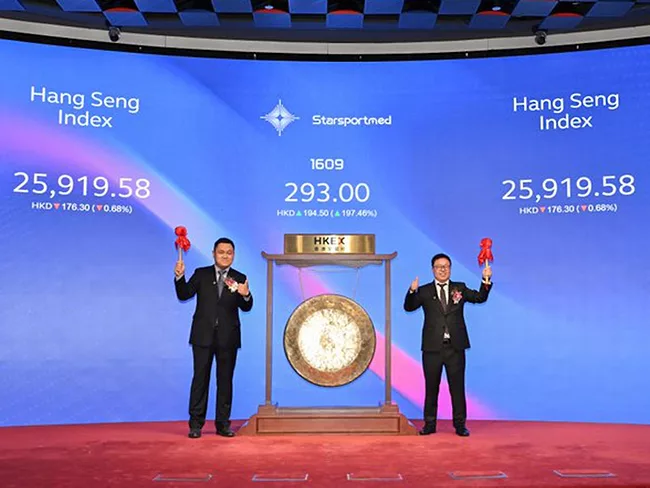
Star Sports Medicine Co. Ltd. debuted on the Hong Kong Stock Exchange with an HK$829.55 million (US$105.86 million) IPO May 5, with shares closing about 118% higher on the first day.
It’s a sure bet when the U.S. Trade Representative releases its annual Special 301 Report that Chile, China, India, Indonesia, Russia and Venezuela will be on the Priority Watch List. The 2026 report was no exception.
Star Sports Medicine Co. Ltd. debuted on the Hong Kong Stock Exchange with an HK$829.55 million (US$105.86 million) IPO May 5, with shares closing about 118% higher on the first day.
It’s a sure bet when the U.S. Trade Representative releases its annual Special 301 Report that Chile, China, India, Indonesia, Russia and Venezuela will be on the Priority Watch List. The 2026 report was no exception.
 RSS
RSS