PERTH, Australia – Six classes of medical devices listed on Australia’s Register of Therapeutic Goods (ARTG) will fall under new classification requirements on Nov. 25, 2021, following numerous consultations with industry. The consultations were part of the Australian government’s plans to overhaul its medical device regulations to be more in line with the European Medical Device Regulation (MDR).
HONG KONG – Dia Imaging Analysis Ltd. has teamed up with Sonoscape Medical Corp. to deliver cardiac ultrasound artificial intelligence (AI) solutions. The partnership aims to reduce the variability associated with manual or visual analysis, and increase efficiency and accuracy throughout the analysis process. As a result, China-based Sonoscape's ultrasound devices will be offering a layer of automated AI-based analysis to support the clinician’s decision-making process, courtesy of Dia's AI-based cardiac solutions.
PERTH, Australia – The launch of Australia’s first medical device development and manufacturing facility in Melbourne is set to fast-track new treatments for people with conditions such as epilepsy, Parkinson’s disease, hearing loss, stroke and diabetes.
PERTH, Australia – The FDA granted Oncores Medical Pty. Ltd. breakthrough device designation for its quantitative micro-elastography (QME) imaging system. The hand-held imaging tool helps surgeons differentiate between cancerous and healthy tissue in real time at the point of surgery, and it could substantially improve outcomes in breast-conserving surgery (BCS) and reduce repeat operations for women with breast cancer.
HONG KONG – The Vietnamese Ministry of Health (MoH) has published a draft decree intended to refine the legal framework for regulating medical devices in the country. Released under the title Official Dispatch No. 2271/BYT-TB-CT, the draft document consolidates the amendments made to the current decree and introduces new sections addressing clinical trials, the Essential Principles for Safety and Efficiency of Medical Devices, and advertising.
HONG KONG – The revisions for China’s Regulations for Supervision and Administration of Medical Devices, which promise harsher penalties and post-market enforcements, will come into effect on June 1, 2021. The revisions see authorities take a more progressive and aggressive approach to the regulatory enforcement of medical device products in China.
To encourage more innovative medical devices to enter the market faster, China has revised its regulation to allow third parties to manufacture devices, foreign devices that are not yet approved overseas to be imported to the country, and to shorten the regulatory process. The new regulation will take effect on June 1. The 2021 version of the Regulation on Supervision and Administration of Medical Devices introduced a few important changes, echoing Beijing’s call to spur health care innovation. The last update was in 2014.
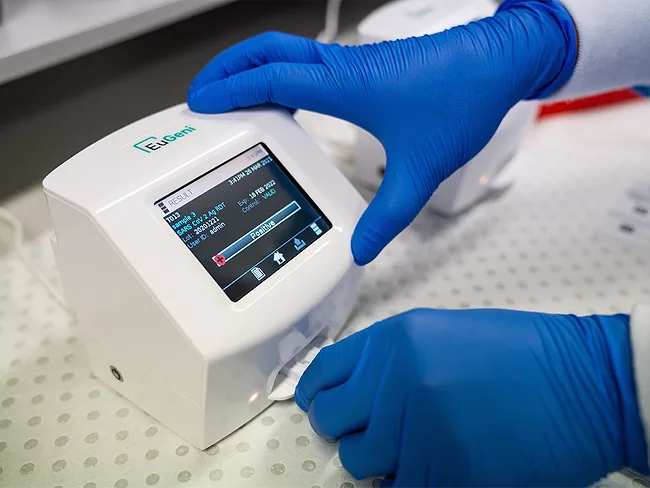
PERTH, Australia – After gaining European clearance for its Eugeni COVID-19 rapid antigen test, Anteotech Ltd. reported a A$12 million (US$9.3 million) capital raise to launch its first global product that will help screen travelers, making it easier and safer to open borders. The Brisbane, Australia-based company was largely unheard of before the COVID-19 pandemic hit, but it has emerged as one of the few companies that has developed a low-cost, high sensitivity rapid COVID-19 test.
HONG KONG – Researchers at The Chinese University of Hong Kong (CUHK) have developed an artificial intelligence (AI)-based system for the automated, rapid and accurate detection of COVID-19 infections in chest computed tomography (CT) images. The system can provide immediate results, without the need for clinicians to interpret images. It could be potentially used in radiology imaging departments in hospitals.
PERTH, Australia – Advanced Human Imaging Ltd. (AHI) has created an algorithm that allows users to take a few quick scans on a smartphone to create a human avatar of themselves that can calculate risk for certain diseases and help diagnose conditions earlier, while also saving money. The Perth-based company is attracting a lot of attention, announcing three deals in the last week. The imaging technology has a myriad of uses from providing digital health scans to personal training to diagnosing skin cancers.
 RSS
RSS