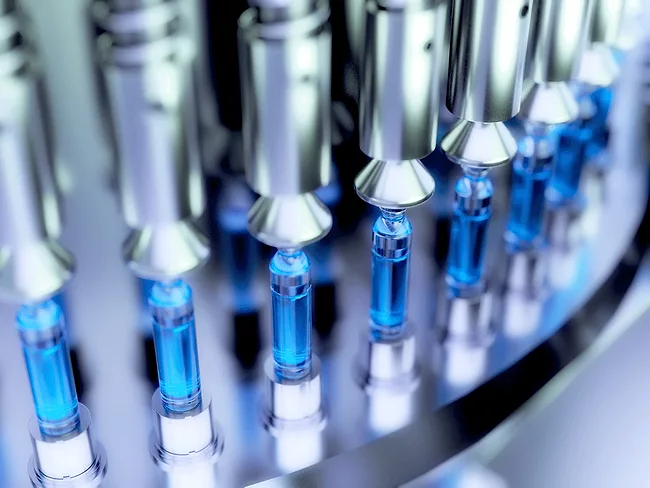
Aim Vaccine Co. Ltd. may become the first company to gain regulatory clearance of a prophylactic iterative serum-free human rabies vaccine. Beijing-based Aim said it is preparing a regulatory submission of its independently developed rabies vaccine based on positive phase III results that showed good safety, immunogenicity and immune persistence.
Visen Pharmaceuticals Co. Ltd. announced its initial public offering (IPO) on the Hong Kong Stock exchange (HKEX) to raise roughly HKD$603.3 million (US$77.6 million) to advance its pipeline of endocrinology assets.
China’s National Medical Products Administration (NMPA) approved the country’s first injectable teprotumumab biosimilar from Innovent Biologics Inc. under the brand name of Sycume (teprotumumab N-01) to treat thyroid eye disease on March 14. The NMPA on March 15 accepted Simcere Pharmaceutical Group Ltd.’s NDA of deunoxavir marboxil (ADC-189) tablets, a product originally developed by Jiaxing Andicon Biotech Co. Ltd. to treat influenza A and B.
Visen Pharmaceuticals Co. Ltd. announced its initial public offering (IPO) on the Hong Kong Stock exchange (HKEX) to raise roughly HKD$603.3 million (US$77.6 million) to advance its pipeline of endocrinology assets.
Aim Vaccine Co. Ltd. may become the first company to gain regulatory clearance of a prophylactic iterative serum-free human rabies vaccine. Beijing-based Aim said it is preparing a regulatory submission of its independently developed rabies vaccine based on positive phase III results that showed good safety, immunogenicity and immune persistence.
Leyden Laboratories BV added a fresh $70 million in financing to advance Panflu, its phase II-ready intranasal pan-influenza prophylactic medicine, while acquiring Cov Biotechnology Pte. Ltd. (Covbio) and its zoonotic virus-targeting portfolio to prepare for the next pandemic.
While the U.S. has historically led the global pharmaceutical industry by pursuing both continual innovation and high quality, those strengths could become areas of weakness in times of political uncertainty, according to PA Consulting expert Andy Prinz.
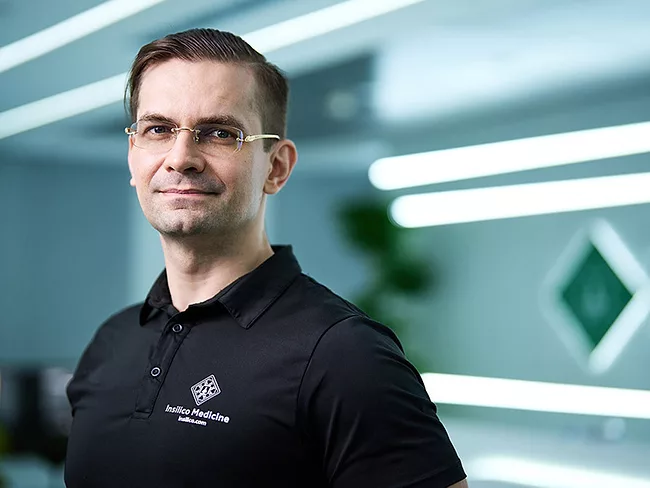
Insilico Medicine founder and CEO Alex Zhavoronkov told BioWorld that he tries to spend as much time as possible in China, because that's where the artificial intelligence (AI) drug development company conducts synthesis and tests for early stage discovery. “And nowadays, not a day goes by without somebody launching an AI drug discovery company,” he said, noting that Chinese AI company Deepseek could be a huge disrupter.
While the U.S. has historically led the global pharmaceutical industry by pursuing both continual innovation and high quality, those strengths could become areas of weakness in times of political uncertainty, according to PA Consulting expert Andy Prinz.
Insilico Medicine founder and CEO Alex Zhavoronkov told BioWorld that he tries to spend as much time as possible in China, because that's where the artificial intelligence (AI) drug development company conducts synthesis and tests for early stage discovery. “And nowadays, not a day goes by without somebody launching an AI drug discovery company,” he said, noting that Chinese AI company Deepseek could be a huge disrupter.
 RSS
RSS