First the stick and now the carrots. The pharma industry in the U.K. on March 1 published its proposal for a new pricing scheme, under which it is offering to pay a fixed rebate of 6.88% across all eligible drug sales, an offer it said will deliver more than £1 billion (US$1.2 billion) per annum back to the National Health Service.
Visionhealth GmbH will use the €3 million (US$3.2 million) it recently raised in a pre-series A financing to conduct a clinical trial on its digital health app designed to provide more accurate dosing of treatments for chronic obstructive pulmonary disease (COPD) and asthma.
The European Health Data Space (EHDS) proposal is designed to standardize practices for transmission and other sharing of health information, but this proposal is far from the only significant development coming out of Brussels.
While still pending clearance in the U.S., Medtronic plc’s Minimed 780G advanced hybrid closed loop (AHCL) system continues to post strong results in clinical trials. Results of two studies presented at the 2023 Advanced Technologies & Treatments for Diabetes Conference in Berlin on Feb. 27 demonstrated that patients with type 1 diabetes (T1D) who used the device for one year maintained a 26.7% increase in time in range for adults and a 14% increase in time in range for children aged 7 to 17 compared to their baseline using multiple daily injections with a continuous glucose monitor (CGM).
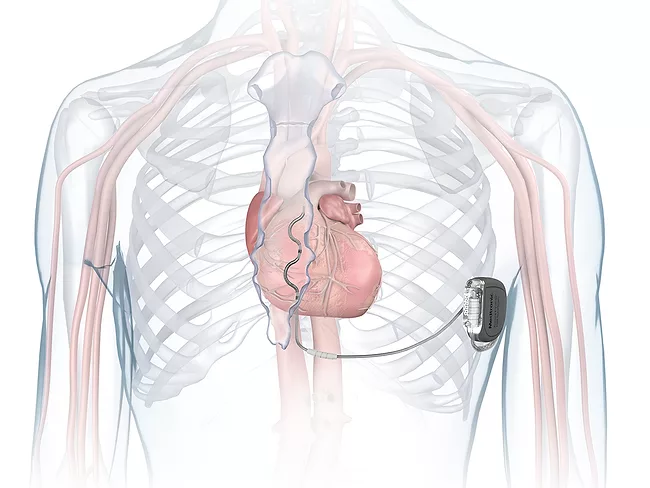
Medtronic plc recently received the CE mark for its Aurora extravascular implantable cardioverter-defibrillator (EV-ICD) strengthening its cardiovascular portfolio which saw a 7% year-on-year growth in the third quarter of its fiscal year 2023.
Plans by the U.K. government to claw back from pharma companies another 3.1% of the proportion of the drugs they sell to the National Health Service have been heavily criticized by the pharmaceutical industry as sending the “worst possible signal” to global investors. The Department of Health and Social Care announced in a consultation in December that it planned to increase the statutory scheme payment percentage from 24.4% to 27.5% starting April 1, 2023.
Looking to turn around the decline of clinical trials within its borders, the U.K. government appointed James O’Shaughnessy, a former health minister, board member of Health Data Research UK and a senior partner at Newmarket Strategy, to conduct an independent review of the country’s commercial clinical trial landscape.
More than two months after a voluntary recall by Zimmer Biomet Holdings Inc. (ZBio), the U.K. Medicines and Healthcare products Agency (MHRA) issued an alert confirming the U.K. National Joint Registry has identified that there are higher revision rates for certain of the company’s total knee replacement prostheses, as compared to all other knee replacements in the registry.
Previa Medical SA will begin clinical trials later this year of its artificial intelligence software designed for early detection of sepsis after it raised €2.1 million (US $2.2 million) in seed funds.
 RSS
RSS