The U.S. FDA has granted premarket approval for Transmedics Group Inc.’s OCS heart system for use with organs from donors after circulatory death (DCD). The approval expands on a prior FDA approval of the device for use with organs from donors after brain death in September 2021. Andover, Mass.-based Transmedics said its system can now be used for ex vivo reanimation, functional monitoring, and beating-heart preservation of donation-after-circulatory-death hearts.
Not satisfied with the findings of a World Trade Organization (WTO) dispute panel, Turkey informed the WTO April 28 that it has initiated arbitration proceedings to review those findings, which involve an EU complaint about measures Turkey employs concerning the production, importation and marketing of prescription drugs.
In his second stint as U.S. FDA commissioner, Robert Califf discussed the challenges in leading a massive agency that has seen seven commissioners come and go over the past 10 years.
Making his first in-person appearance April 27 before the House Energy and Commerce Subcommittee on Health, U.S. Health and Human Services Secretary Xavier Becerra was prepared to answer questions about President Joe Biden’s fiscal 2023 budget that would increase HHS’ discretionary budget to $127 billion, nearly a 27% increase over the 2021 enacted level.
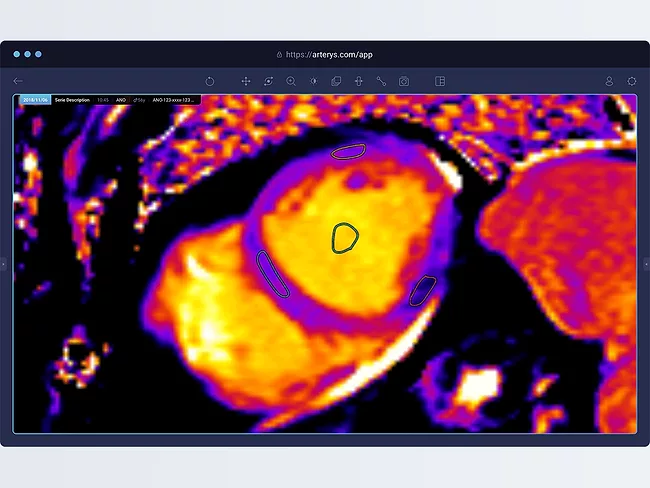
Yes, getting FDA 510(k) clearance for your medical device is something to cheer about. But consider Arterys Inc. It just reported its eighth FDA clearance, this time for a next generation, deep learning cardiac analytics platform. The Cardio AI’s purpose, Arterys CEO John Axerio-Cilies told BioWorld, is to leverage artificial intelligence (AI) and deep learning for analysis of cardiac MRI images that is faster, more accurate and repeatable than ultrasound and other imaging modalities.
The American Society of Clinical Oncology (ASCO) updated its guidelines to recommend use of Biotheranostics Inc.’ Breast Cancer Index (BCI) molecular gene-expression test to aid decisions on extended endocrine therapy in certain patients with the most common type of breast cancer.
In the second of two hearings before the U.S. Senate Health, Education, Labor and Pensions Committee on the next iteration of the FDA drug and device user fee agreements, the focus was supposed to be on advancing regulation and innovation. But Ranking Member Richard Burr (R-N.C.) shifted the spotlight April 26 to accountability in his opening remarks and subsequent questioning.
The U.S. FDA’s device center reported April 18 that it has revoked the emergency use authorizations (EUAs) for five tests for the SARS-CoV-2 virus, a seemingly significant reduction in the inventory of tests for the COVID-19 pandemic. However, the sponsor of the test in each of these revocations requested that the EUA be revoked, an indication that the market for some types of these tests is saturated.
Perkinelmer Inc. said the Vega is a first-of-its-kind preclinical ultrasound system that will accelerate preclinical research and drug development studies of cancer, cardiovascular, liver, kidney and other diseases. The imaging platform combines hands-free automation with high-throughput capability, which the company said is a major advance over manual ultrasound scanning across the bodies of individual lab mice.
The U.S. FDA’s draft device user fee agreement was months late in arriving on Capitol Hill, a fact which also delayed the public meeting on the draft, an event that finally took place April 19. The meeting kicked off with an acknowledgement by second-time FDA commissioner Robert Califf of the growing role of user fees in FDA finances, but Mark Leahey, president and CEO of the Medical Device Manufacturers Association (MDMA), said that the quality of FDA reviews was at least as important as the timeliness of those reviews even though the user fee deals include many deadline-based metrics.
 RSS
RSS