Onkos Surgical Inc. nabbed an additional $15 million from its existing investors in a series C fundraising round. The Parsippany, N.J.-based company plans to use the new cash to accelerate research and development for its product line which is designed to meet the specialized needs of oncology patients who require orthopedic surgery and the surgeons who work with them.
The Medical Device Innovation Consortium (MDIC) has launched a digital health initiative that will aid the FDA in its efforts to devise a workable regulatory system for these products, which includes a work stream for change control. This work stream promises to be a massive effort, but Joe Sapiente, MDIC's vice president for clinical science and technology, told BioWorld that MDIC needs subject matter experts in this and several other areas to sustain the group’s momentum and thus aid the FDA’s efforts to produce guidance for digital health products.
U.S. Attorney General (AG) Merrick Garland has rescinded two important policy documents, including the Brand memo, which limited the ability of federal prosecutors to use non-compliance with federal agency guidance as proof of violations of the law. The rescission of these memos increases the risk that drug and device companies will be prosecuted more vigorously due to deviation from FDA guidance documents, which at times conflict with other guidances and thus may create a series of nearly unavoidable compliance failures.
Although COVID-19 is still dictating how things are done in the U.S. and throughout the world, the FDA looked beyond the pandemic in an update to its guidance on conducting clinical trials of medical products during the public health emergency.
The FDA has released two draft guidances under the safety and performance-based pathway for class II devices, proving some much-needed momentum for the agency’s fiscal year 2021 guidance agenda. The two drafts address performance metrics for facet screw systems and the use of resins in dentures, thus adding substantially to the number of class device types that can be reviewed outside the usual substantial equivalence mechanism ordinarily relied upon in the 510(k) program. The FDA began implementing the safety and performance-based pathway for devices in late 2019, an approach that serves as a substitute for the abbreviated 510(k) mechanism.
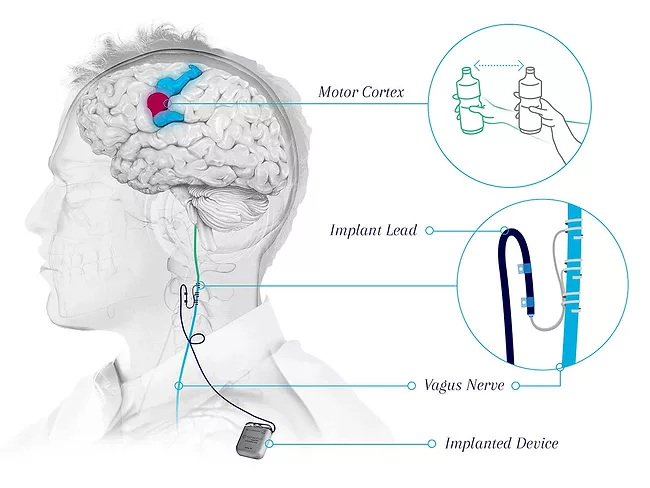
Vagus nerve stimulation (VNS) researchers notched another success with FDA approval of a drug-free rehabilitation system that uses the technology to help patients who have lost mobility in their hands and arms as a result of ischemic stroke regain function. Microtransponder Inc.’s Vivistim pairs rehabilitation exercises with VNS to enhance their impact. The clinical study evaluated by the FDA for the system's approval showed that Vivistim doubled the improvement in upper extremity motor function compared to supervised rehabilitative exercises alone at six weeks and 90 days.
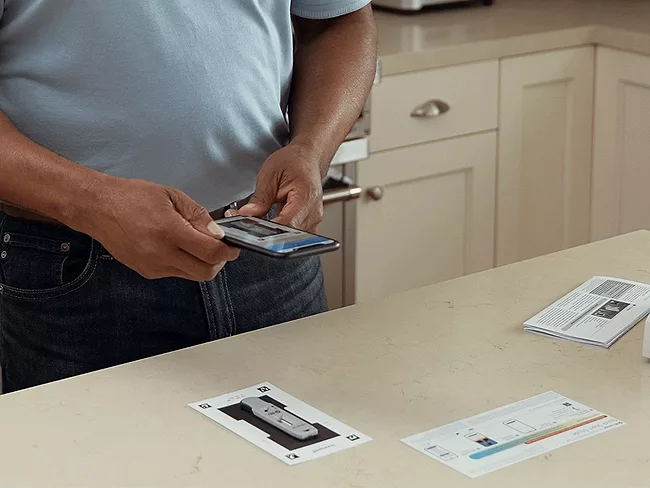
The FDA has issued an emergency use authorization (EUA) for Becton, Dickinson & Co.’s (BD) Veritor At-Home COVID-19 test – a rapid COVID-19 digital antigen test. The test, which is designed for home use, uses a mobile app from Los Angeles-based Scanwell Health Inc. that provides instructions on how to collect and transfer the nasal swab sample to the test stick. The smartphone camera is then used to capture, analyze and interpret results within 15 minutes. BD said it will initially be rolled out to businesses, schools and governments looking to provide a self-testing option.
Investigators at MIT have identified a protein capable of delivering its own mRNA to cells, and engineered that protein to deliver mRNA sequences of their choosing. In a mouse model, the team used their approach to deliver the mRNA for two different proteins.
The wave of home-use tests for the COVID-19 pandemic has amplified the question of how device makers might validate such a test, but there is also the question of how to convert a device from prescription-only (Rx-only) use to over-the-counter (OTC) status to consider. The FDA has provided an update on OTC devices, which indicates that a conversion from prescription-only use to OTC use will require usability testing and a new regulatory filing, but the update conflicts with the agency’s own policy on changes to a device undertaken only to convert the label from prescription to OTC use.
The FDA has posted an advisory regarding robotically assisted surgery (RAS) for mastectomy, but the agency also pointedly noted that it is aware of studies underway for such indications without the appropriate oversight. The FDA did not name Intuitive Surgical Inc. in the notice, but the company nonetheless responded to the FDA statement by confirming the absence of any devices thus approved or cleared. The FDA had previously issued a Feb. 28, 2019, advisory stating that the safety and efficacy of RAS devices for mastectomy and the prevention or treatment of breast cancer had not been established.
 RSS
RSS