The Medicare inpatient draft for fiscal 2022 reflects the effects of the COVID-19 pandemic on claims data for a large number of devices, including those that received additional reimbursement under the new technology add-on payment (NTAP) program. Device makers are urging CMS to add a second year of extension to those NTAP payments, however, a proposal which if adopted would give the affected device makers additional time to recoup their investments.
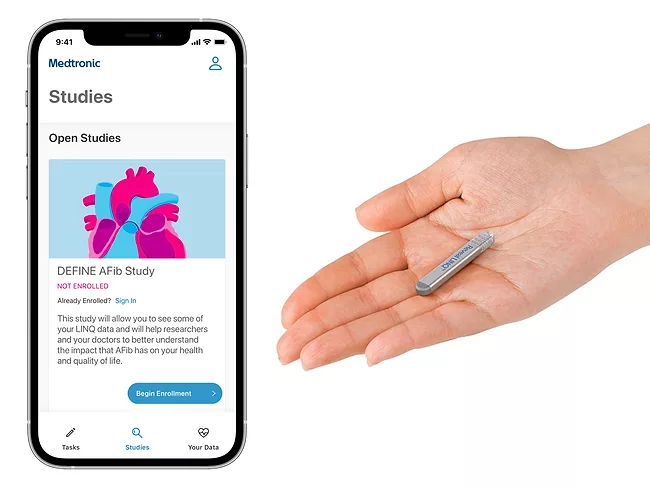
Medtronic plc kicked off an app-based research study to improve understanding of atrial fibrillation (AF) disease burden and its impact on patient outcomes, quality of life and health care utilization. The first patients in the DEFINE AFib study were enrolled at Duke University Medical Center and the Florida Electrophysiology Associates in Atlantis, Fla. “When it comes to managing atrial fibrillation, there is not a ‘one-size-fits-all’ approach, and the hope is that DEFINE AFib may give us the tools to help personalize AF management based on a patient’s individual health profile and physiology,” said Jonathan Paul Piccini, director of cardiac electrophysiology and associate professor of medicine at Duke University School of Medicine and chair of the DEFINE AFib Steering Committee. “DEFINE AF will harness the power of digital health to make fundamental discoveries about how we can manage atrial fibrillation better in each and every one of our patients.”
The FDA has posted an update on its surveillance of adverse events for bronchoscopes, noting that the number of medical device reports (MDR) has risen to between 100 and 200 such reports per year in the U.S. However, the agency noted that there are half a million procedures performed with these devices each year in the U.S. alone, and that these data are insufficient to infer a specific incidence of adverse events.
While stakeholders have concerns about the costs of registries for medical devices, they are still generally seen as less expensive and simpler to administer than randomized, controlled clinical trials (RCTs). A new journal article compares the quality of the data from a registry and the data generated by a clinical trial, and despite an interest in ascertaining whether registry data provided similar data quality, the authors concluded that registry data is still more useful as a means of supporting, rather than supplanting, the RCT.
As cyberattacks on U.S. hospitals continue to increase with health care’s growing reliance on technology, a new report from the U.S. Office of Inspector General (OIG) has flagged Medicare’s requirements for being silent on the cybersecurity of networked medical devices. The OIG’s study found hospitals are not required to identify networked device cybersecurity in their emergency preparedness risk assessments, and as a result, they don’t include this information “very often.”
The U.S. Senate and the House of Representatives have reintroduced the Verifying Leading-edge IVCT Development (VALID) Act, a bill that would authorize the FDA to regulate lab-developed tests (LDT). The question of the agency’s statutory authority to regulate LDTs is part of a long-running debate, but the immediate question is whether Congress will see fit to deal with the question this year rather than wait until 2022, when the next device user fee will require legislative authorization.
The U.S. House Appropriations subcommittee passed an appropriations bill for the FDA that would add $257 million to the agency’s budget authority for fiscal year 2022, an increase of 8% over the currently enacted level. The Alliance for a Stronger FDA said in a June 25 statement that it will work to ensure the Senate comes up with similar numbers, characterizing the push to fully fund the agency as “a multi-year marathon, not a sprint.”
Pattern Computer Inc.'s test for SARS-CoV-2 infection gives new meaning to rapid results. Taking 15 seconds from start to result, the test offers balanced accuracy of better than 96%, according to the company. The test is also not dependent on timing, unlike current antibody tests, and takes less time than point-of-care PCR tests. Its light-based system creates patterns based on a saliva sample, which is then matched against a previously developed model.
The FDA’s device center recently updated its guidance for testing and labeling of devices for compatibility with magnetic resonance (MR) fields. Some items, such as orthopedic plates and screws, might not have been evaluated for compatibility up to now. The FDA’s Sunder Rajan said that existing 510(k) and PMA devices are grandfathered in under the legacy policy, but that all implants will have to be evaluated for MRI compatibility going forward, even devices not previously subject to testing.
There is “a wide gap” in the availability of pediatric medical devices that suggest most of these were developed for adolescents, according to a new study on FDA premarket approval applications (PMAs). The findings stem from an evaluation of 297 PMA documents for 149 high-risk devices, 68% of which include pediatric age indications. Pediatric medical devices have lagged behind their adult counterparts in terms of availability, options and innovation. The new findings add to the current relatively limited body of research considering the ample medical device space but are consistent with previous findings that most devices indicated for children are limited to those over 18 years of age.
 RSS
RSS