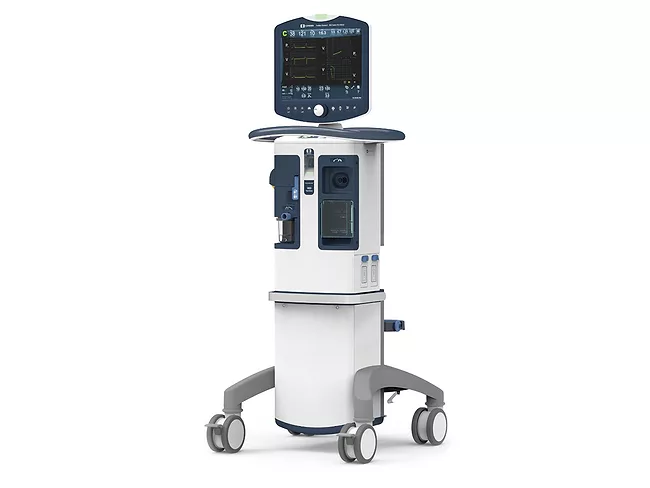
Like so many other ventilator providers in recent days, Resmed Inc. has committed to ramping up production. It aims to triple its ventilator output and multiply its ventilation mask production by 10. But the San Diego-based company’s specialty is not mechanical ventilation that requires intubation, which is most commonly used in the intensive care unit (ICU), although it does produce some of those.
Astrotech Corp., of Austin, Texas, has a broad range, having developed mass spectrometers in agriculture and manufacturing and selling chemical analyzers for use in the airport security and other applications. Now, it is looking to help in the fight against COVID-19.
Everlywell Inc. stepped back from its announcement that consumers could access at-home testing for COVID-19 starting on March 23, 2020, following a U.S. FDA update that cautioned against fraudulent at-home tests.
Despite seeing good growth in 2019, with net sales jumping to almost $2.4 million vs. $993,000 over the previous year, Electrocore Inc. has suspended its guidance due to uncertainty over COVID-19. The company previously said full-year revenue should be in the range of $7 million to $9 million.
The pressure is rising on the Trump administration to activate the Defense Production Act (DPA) for the COVID-19 outbreak as the Senate yet again reconsiders an economic stimulus package. Sens. Brian Schatz (D-Hawaii) and Chris Murphy (D-Conn.) unveiled the Medical Supply Chain Emergency Act in an effort to force the White House to mandate the production of needed supplies, a bill that is likely to languish until Congress can move on economic relief legislation.
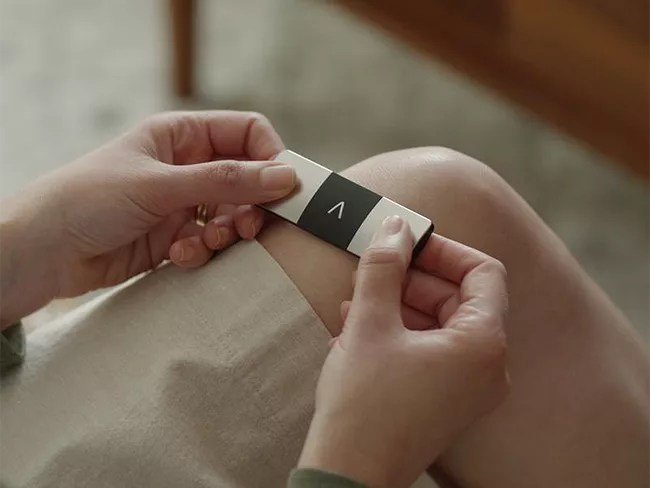
With an eye toward helping those potentially suffering from COVID-19, Mountain View, Calif.-based Alivecor Inc. said its six-lead electrocardiogram (ECG), known as the Kardiamobile 6L, now is allowed for use in the measurement of a patient's QTc and detection of QT prolongation. The Kardiamobile 6L enables patients to take a six-lead ECG outside a doctor’s office.
With the number of COVID-19 cases continuing to rise and with people social distancing and quarantining, at-home diagnostics and telehealth offer the means for doctors and patients to get vital answers and care without meeting face to face. Now, Los Angeles-based Scanwell Health has gained exclusive rights to license and distribute a rapid serology test from Innovita Biological Technology Co. Ltd., of Hebei, China, for at-home testing of SARS-CoV-2, the coronavirus that causes COVID-19.
President Donald Trump has issued an executive order enabling the Defense Production Act, which gives the U.S. Department of Health and Human Services broader leeway to conscript industrial production to deal with the COVID-19 outbreak.
As COVID-19 testing remains elusive in the U.S., much of the nation’s focus has started to shift to how to treat the presumed millions of patients who are already or soon to be infected with the novel coronavirus.
The U.S. capacity for SARS-CoV-2 testing is limited by several items, including the swabs used to collect patient specimens, but the supply of reagents has been front and center recently. Despite those concerns, several private test makers said they are quickly ramping up production, including Thermo Fisher Scientific Inc., of Waltham, Mass., which said it has enough supplies of all types on hand to provide 2 million reactions per week, a volume that should increase to 5 million per week in April.
 RSS
RSS