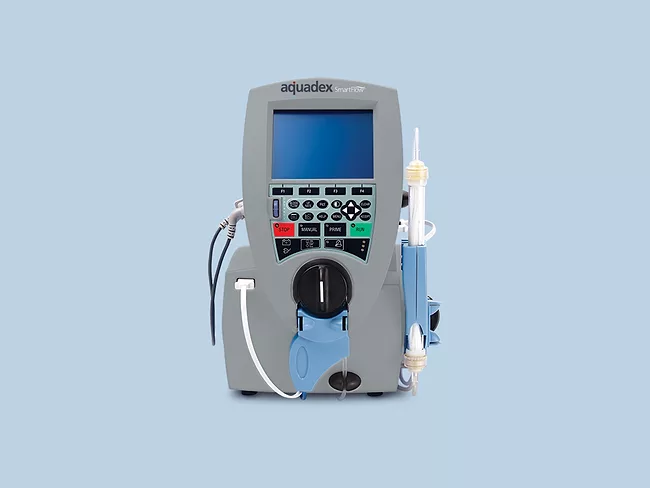
As the COVID-19 outbreak continues to dominate the news, an increasing number of companies have come forward to help. For its part, CHF Solutions Inc., of Eden Prairie, Minn., is looking to bring its device-based intervention for fluid management to the fight.
Avellino Lab USA Inc. has developed a diagnostic test for the novel coronavirus SARS-CoV-2, which has been validated in keeping with the U.S. Food and Drug Administration (FDA)'s Policy for Diagnostics Testing in Laboratories Certified to Perform High-Complexity Testing under CLIA prior to Emergency Use Authorization for Coronavirus Disease-2019 during the Public Health Emergency. Physicians can order the assay now, while the company continues testing.
Despite the growing concerns about the potential for the community spread of COVID-19 in the U.S., the FDA-FTC public workshop on competition in the biologics marketplace went ahead as scheduled March 9, playing to a full house with some audience members sitting in an overflow room. And all the invited speakers and people registered to speak during the open public hearing session showed up.
The latest version of legislation for regulatory reform has arrived, and the conventional wisdom may be that the Verifying Accurate, Leading-Edge IVCT Development (VALID) Act will not be passed until the next user fee agreement is codified into law. Nonetheless, Susan Van Meter, executive director of AdvamedDx, told BioWorld that the associated reforms are urgently needed by patients and test developers alike, and there is consequently no need to wait for user fee legislation to pass the VALID Act.
The Senate passed by a vote of 96-1 the spending bill for the outbreak of the new coronavirus (COVID-19), which will be on President Donald Trump’s desk by week’s end. The bill provides $7.8 billion in new funds to tackle the outbreak and another $490 million in existing funds for telehealth, all with the aim of speeding the response to the pathogen.
The March 4 congressional hearing on the budget for the NIH was peppered with questions about the COVID-19 outbreak, although the general sentiment is that the agency will receive yet another boost in appropriations in fiscal 2021.
Lowering levels of tau protein improved multiple symptoms of autism spectrum disorders (ASD) in two different mouse models of the disease, both of which are driven by hyperactivity of the mTOR PI3 kinase pathway.
Against the backdrop of the global spread of COVID-19, India announced restrictions Tuesday on the export of 26 active pharmaceutical ingredients (APIs) and formulations of those ingredients.
COVID-19 is bringing more pressure to bear on Congress to pass S. 2723, the Mitigating Emergency Drug Shortages (MEDS) Act, which has been sitting in the Senate Health, Education, Labor and Pensions (HELP) Committee since Sen. Susan Collins (R-Maine) introduced it in October 2019 – a few months before the novel coronavirus emerged.
The U.S. FDA is well known for encouraging industry to meet with the agency “early and often” for complex premarket filings, but the Combination Products Coalition (CPC) says a recent draft guidance seems to offer the exception. The group said the December 2019 FDA guidance for feedback on combination product applications “seems to generally discourage” the use of the combination product agreement meeting (CPAM). It added that the complexity of some combination products suggests that such a meeting may well be crucial to an efficient application process.
 RSS
RSS