When it comes to lowering U.S. drug prices, Congress has a lot of options among the several bills that have been introduced in both the House and Senate over the years. But a deadlock between bipartisan measures and partisan proposals has reduced legislative action to mere talk. The deadlock, and the at times hyperbolic debate, continued in yet another congressional hearing March 16 on “the urgent need to lower drug prices in Medicare,” as the Senate Finance Committee billed it.
Three U.S.-listed China-based biopharmas were among five companies named this week by the U.S. SEC for reportedly failing to submit necessary accounting reports under the Holding Foreign Companies Accountable Act (HFCAA).
Myriad Genetics Inc. is launching a new suite of genetic tests designed for personalizing chemotherapy treatment. The Precise oncology offering includes Myriad’s precise tumor molecular profile test and two companion diagnostic tests, Mychoice CDx and Bracanalysis CDx. The company said the combination of germline, somatic and companion testing aims to maximize information for oncologists as they assign individual treatment plans. Results from each test are gathered as a single report accessed on an online portal.
The U.S. Securities and Exchange Commission (SEC) recently issued a provisional list of five U.S.-listed Chinese companies that reportedly failed to submit necessary accounting reports required under Holding Foreign Companies Accountable Act. The list included three biopharmas: Beigene Ltd., Hutchmed Ltd., and Zai Lab Ltd.
The bipartisan PREVENT Pandemics Act, which seeks to put into U.S. law many of the lessons learned from the COVID-19 pandemic, marked its first milestone March 15, with the Senate Health, Education, Labor and Pensions (HELP) Committee sending it to the full Senate with a do-pass recommendation on a 20-2 vote.
The FDA issued a rare 518(a) Notification Order to Royal Philips NV last week that requires the company to take more aggressive measures to notify patients, physicians and distributors about the June 2021 class I recall of its continuous positive airway pressure (CPAP) and bilevel positive airway pressure (BiPAP) systems. The recall stemmed from health risks posed by the deterioration of the polyester-based polyurethane (PE-PUR) noise reducing foam in the equipment.
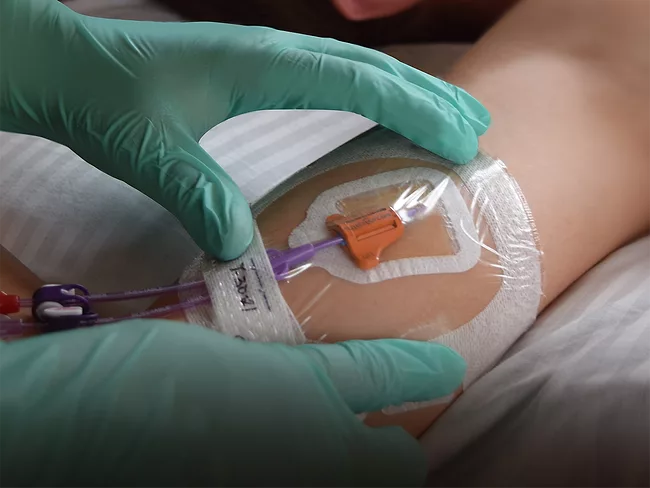
Interrad Medical Inc. has formed a strategic partnership with Eloquest Healthcare Inc. to accelerate sales growth of what is described as the only subcutaneous catheter securement device in the world.
The U.S. Securities and Exchange Commission (SEC) recently issued a provisional list of five U.S.-listed Chinese companies that reportedly failed to submit necessary accounting reports required under Holding Foreign Companies Accountable Act. The list included three biopharmas: Beigene Ltd., Hutchmed Ltd., and Zai Lab Ltd.
2023 may be a pivotal year for biosimilars in the U.S. with a number of approved Humira (adalimumab) biosimilars set for staggered launches under agreements with Abbvie Inc. How successful those launches are, including the launch of Boehringer Ingelheim GmbH’s interchangeable, Cyltezo, and potential other interchangeables, will be determined in large part by three pharmacy benefit managers that together control the prescription drug formularies for nearly 80% of Americans covered by Medicare and private insurance.
The list of FDA warning letters in recent months has conspicuous in its absence of letters to device makers, but that trend has reversed with three warnings posted March 8, including a warning letter to Cardioquip LLC.
 RSS
RSS