The U.S. Centers for Medicare and Medicaid Services (CMS) has moved incrementally to date on the Medicare inpatient-only (IPO) list for a number of procedures, but the agency recently proposed to eliminate the IPO list altogether by 2024. The Advanced Medical Technology Association (Advamed) cautioned that the elimination of the entire IPO list should at the least be accompanied by a monitoring of outcomes to ensure that quality of the services is not affected, but also said the translation of payment codes for outpatient performance of these procedures might lead to inadequate reimbursement rates.
The U.S. Centers for Medicare and Medicaid Services (CMS) finalized its Medicare inpatient payment rule for fiscal 2021, and Boston Scientific Corp., of Marlborough, Mass., was perhaps a surprise winner with a new technology add-on payment (NTAP) for its Eluvia paclitaxel-coated stent for the lower limbs. The Eluvia had faltered at a previous NTAP application due to the controversy over paclitaxel in devices for the peripheral vasculature, but Boston Scientific said in a Sept. 3 press release that the decision to grant an NTAP payment “is particularly important,” given the scrutiny applied to paclitaxel’s use in these devices.
While the emergency use authorization (EUA) the FDA granted Aug. 23 for convalescent plasma remains a political talking point, the agency moved ahead Sept. 2, issuing an updated, immediately effective guidance on the use of convalescent plasma to treat COVID-19 patients in ongoing clinical trials, on an expanded access basis or under the EUA.
The need for self-administered surveillance testing finally has a few candidates, thanks to labs and test developers across the globe, and the U.S. FDA is keen on exploiting the opening. Tim Stenzel, director of the FDA’s Office of In Vitro Diagnostics and Radiological Health, said on the agency’s Sept. 2 testing town hall that the agency is interested in a test intended to be self-administered multiple times compared to a test validated under a single test approach, a flexibility that may prove critical in advancing the U.S. approach to testing for the COVID-19 pandemic.
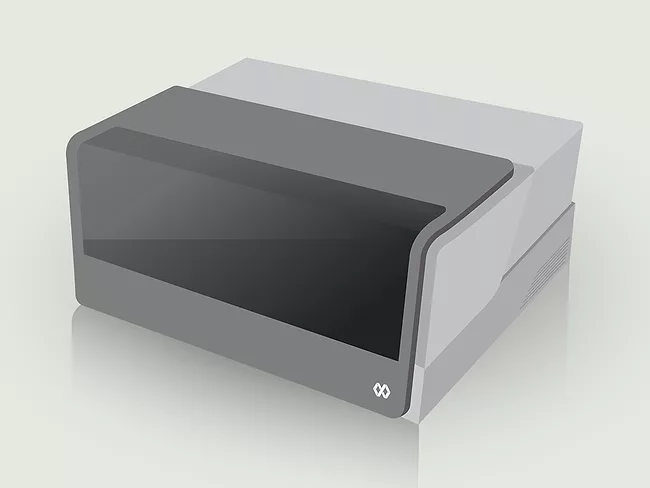
The idea of being able to produce vaccines at the point of care with the push of a button may sound futuristic, but Codex DNA Inc. claims it will have the first fully automated, tabletop vaccine printer ready for the market in 18-24 months. Will this be a game-changer in rolling out a COVID-19 vaccine? Probably not. But the technology could better position health officials to respond to the next pandemic, or eventually to produce a better, faster influenza vaccine each year.
With a potential COVID-19 vaccine moving closer to reality and the U.S government signing contracts for millions of potential doses, an unresolved question is who should be at the front of the line to get those first doses.
The U.S. Centers for Medicare and Medicaid Services (CMS) capped off the month of August 2020 with one of the more significant Medicare coverage documents in recent memory. The more immediately impactful part of the proposed rule would offer immediate coverage for devices approved or cleared under the FDA’s breakthrough devices program, but the broader element of this proposed rule offers a definition for the term “reasonable and necessary,” a development that itself constitutes a breakthrough in the world of Medicare coverage of medical technology.
In a bid to build public confidence and demonstrate its transparency in determinations about potential COVID-19 vaccines, the FDA will convene its Vaccine Advisory Committee for a virtual meeting Oct. 22 to discuss the general development of the vaccines for the U.S. market.
The Court of Justice for the European Union (CJEU) has invalidated the EU-U.S. Privacy Shield, a mechanism designed to ensure the privacy of EU citizens’ data when conveyed to other nations in a manner consistent with the EU’s General Data Protection Regulation (GDPR). Makers of drugs and devices are not without recourse in transferring patient data to the U.S. for clinical trials conducted in Europe, but industry must revisit their standard contractual clauses to ensure those protocols provide the necessary privacy provisions, or face fines that could amount to tens of millions of euros.
The U.S. Department of Justice (DOJ) unveiled two interim final rules intended to deal with enforcement activities in connection with policies enunciated over the past four years, including the so-called Brand memo, which banned federal prosecutors from using federal agency guidance as leverage in prosecutions of private-sector entities.
 RSS
RSS