The U.K. National Institute for Health and Care Excellence (NICE) said devices used to repair paravalvular leak around replaced mitral or aortic valves should only be used in studies because of a limited set of data on efficacy.
The European Commission has posted the first sets of standards for the European Medical Device Regulation (MDR) and In Vitro Diagnostic Regulation (IVDR). The new publications had been long-awaited as more and more manufacturers leverage voluntary consensus standards to comply with requirements across regulatory bodies while promoting international harmonization.
The U.S. Centers for Medicare & Medicaid Services (CMS) had previously waded into a sea of opposition from device makers and medical societies alike in its proposal to eliminate the inpatient-only (IPO) list. The new administration at CMS has proposed to reverse that move and sustain the IPO, which should alleviate concerns that outpatient procedures will ding the reputations of these devices.
Fibromyalgia is an often debilitating condition, characterized by chronic pain throughout the body that can leave patients fatigued, depressed and unable to perform even the simplest of activities. While a handful of drugs have been approved to treat this autoimmune disorder, they can have unpleasant side effects and do not benefit all patients. To that end, the FDA has granted a breakthrough device designation to Neurometrix Inc.’s Quell wearable neurostimulation device for treating the symptoms of fibromyalgia in adults.
Regardless of the controversy swirling around the FDA’s accelerated approval of Biogen Inc.’s Alzheimer’s drug, Aduhelm, that U.S. approval is expected to open the door to more opportunities for Alzheimer’s treatments and diagnostics.
Responding to the growing number of state-sponsored cyber threats to health care and other key sectors and to the compromise of the Microsoft Exchange Server, which was disclosed in March, Canada, the EU, U.K., U.S. and other NATO allies issued statements July 19 laying out expectations and markers for how responsible nations behave in cyberspace and specifically calling out China’s “malicious cyber activity.”
Regulatory snapshots, including global submissions and approvals, clinical trial approvals and other regulatory decisions and designations: Neurometrix, Venus Concept.
The Organization for Economic Cooperation and Development (OECD) announced a two-pillar plan for reform of international rules of taxation that would update rules said to be insufficient for the 21st Century economy. The proposal, a joint effort of the OECD and the G20, is to apply a minimum tax rate of 15% on goods shipped across national boundaries, thus putting an end to tax havens that have been used to avoid taxes.
The FDA is applying a good deal of resources toward a framework for regulation of artificial intelligence (AI) and machine learning (ML), but there are several sources of drag on those efforts. According to the FDA's Jana Delfino, one of these is that there is little agreement between regulators on a number of definitions, including the meaning of terms such as "validation," a problem she said must be solved if the field is to advance in a meaningful manner.
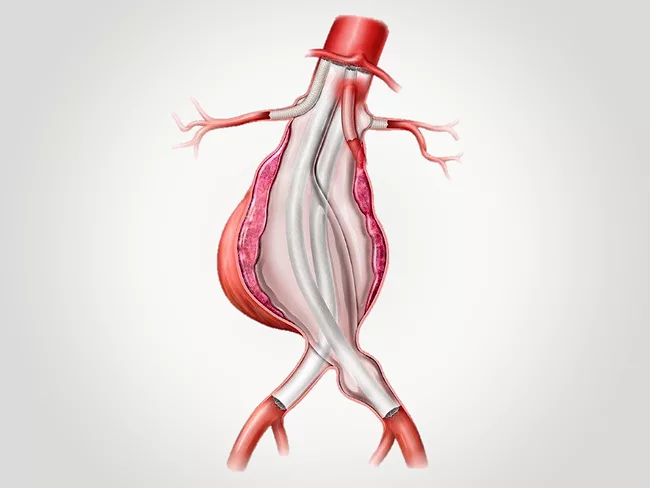
The FDA has granted breakthrough device designation to Endologix LLC for its Chimney Endovascular Aneurysm Sealing (ChEVAS) system. The device, which is intended for use in treating aortic aneurysms, is currently being evaluated in a multicenter pivotal study. The ChEVAS system is an endovascular abdominal aortic aneurysm (AAA) therapy designed to combine the Nellix 3.5 endograft with parallel visceral chimney stents to enable treatment of patients with juxtarenal, pararenal and suprarenal AAA.

 RSS
RSS