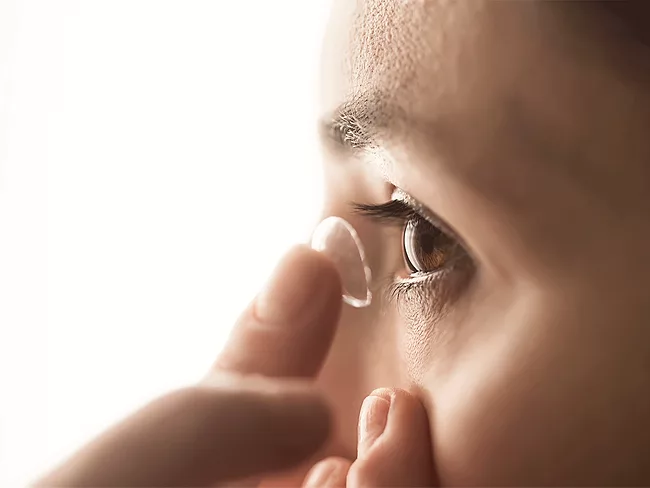
HONG KONG – Johnson & Johnson Vision (J&J Vision) has received its first global approval from Japan for its Acuvue Theravision with Ketotifen contact lenses. The Japanese Ministry of Health, Labour and Welfare’s green light will help with patients with vision correction, while simultaneously alleviating ocular allergic symptoms for allergic conjunctivitis, while they wear the lenses.
Regulatory snapshots, including global submissions and approvals, clinical trial approvals and other regulatory decisions and designations: Helius Medical Technologies, Medtronic, Qiagen, STS Lab.
The latest global regulatory news, changes and updates affecting medical devices and technologies, including: Canada invests in variant research; Time needed to develop immunity with Sputnik V.
South San Francsico-based Twist Bioscience Corp. and Biotia Inc., of New York, received the first FDA emergency use authorization (EUA) for a capture-based next-generation sequencing (NGS) assay for the coronavirus that causes COVID-19. The technique reduces the likelihood of misdiagnosing or failing to identify mutations compared to standard sequencing.
TORONTO – A distinguished Canadian health care policy expert said a report from Canada’s COVID-19 Testing and Screening Expert Advisory Panel recommending testing and screening for school-age children and teachers comes “late in the game” now that the focus has shifted to vaccinating the Canadian population.
The latest global regulatory news, changes and updates affecting medical devices and technologies, including: FDA approves Harmony device to treat patients with congenital heart disease.
The use of dermal fillers has spiked in recent years for a number of reasons, but so have the associated adverse events. An FDA advisory committee made several associated recommendations, including that a patient’s vision be prospectively evaluated prior to any peri-ocular treatment with fillers, but this could be a simple count-the-fingers check, something that should not appreciably increase procedure times or affect the volume of procedures.
Fluxergy Inc. said Thursday that it has won CE-IVD marking for its one-hour COVID-19 real-time polymerase chain reaction (RT-PCR) test. The automated, sample-to-action Fluxergy diagnostic testing system can run multiple assay types – such as molecular, immunochemistry, chemistry and cytometry – simultaneously on the same cartridge. The SARS-CoV2 RT-PCR test is the first CE-marked product for the Fluxergy diagnostic platform.
The latest global regulatory news, changes and updates affecting medical devices and technologies, including: FDA seeks nominations for blood products advisory panel; Massachusetts hospital hit for HIPAA access non-compliance; No reports recorded for Medtronic recall; Tillis, Cotton eye patent examiner practice for Section 101 problem.
 RSS
RSS