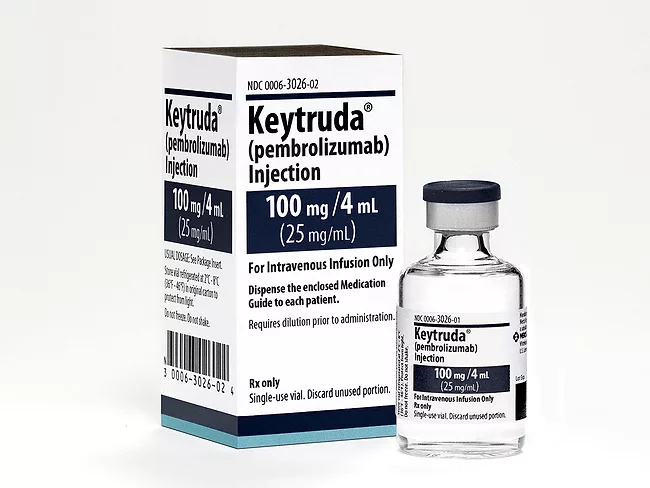
In the final part of its three-day meeting on accelerated approvals granted to anti-PD-1/PD-L1 antibodies, the FDA’s Oncologic Drugs Advisory Committee (ODAC) voted unanimously to continue the accelerated approval for Merck & Co. Inc.’s Keytruda (pembrolizumab) as a therapy for patients with advanced hepatocellular carcinoma (HCC) who have been previously treated with sorafenib (Nexavar, Bayer AG).
Shares of Protalix Biotherapeutics Inc. (NYSE:PLX) fell 33% to $3.93 on April 28 after the company reported receiving an FDA complete response letter (CRL) in answer to its BLA for pegunigalsidase alfa, a galactosidase enzyme replacement therapy it has long advanced for the potential treatment of Fabry disease.
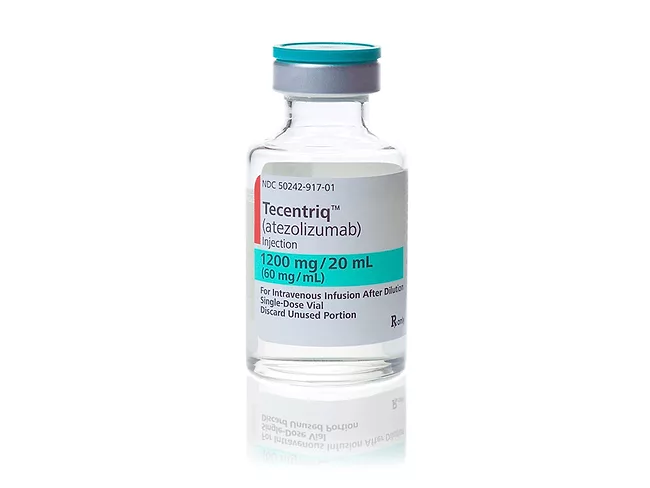
If the FDA follows the advice of its Oncologic Drugs Advisory Committee (ODAC), both Keytruda and Tecentriq will remain on the U.S. market, for the time being, with accelerated approval as first-line treatments for certain patients with advanced or metastatic urothelial carcinoma. The committee voted 5-3 April 28 to recommend continuing accelerated approval for Merck & Co. Inc.’s Keytruda (pembrolizumab) and 10-1 for maintaining the accelerated approval of the Roche Group’s Tecentriq (atezolizumab) until the final data come in from a confirmatory trial that’s expected to be completed next year.
In a virtual meeting fraught with technical difficulties, the FDA’s Oncologic Drugs Advisory Committee (ODAC) voted 7-2 April 27 that the accelerated approval for Tecentriq (atezolizumab) in combination with nab-paclitaxel as a treatment for unresectable locally advanced or metastatic triple-negative breast cancer (mTNBC) in adults with PD-L1+ tumors should continue as additional trials are conducted or completed.
About a year and a half after Enzyvant Inc.'s tissue-based therapy for children born without a thymus met with a complete response letter over chemistry, manufacturing and controls concerns, its BLA is once again on track for FDA review, the company told BioWorld. Following a resubmission intended to fully address the agency's concerns, the application has a new PDUFA date of Oct. 8.
As part of a U.S. FDA evaluation of confirmatory trials for anti-PD-1/PD-L1 antibodies, the agency’s Oncologic Drugs Advisory Committee (ODAC) is being asked this week to consider whether three blockbuster biologics should continue to be available for certain cancer indications for which they received accelerated approval. At question is whether the data from the confirmatory trials for the Roche Group’s Tecentriq (atezolizumab), Merck & Co. Inc.’s Keytruda (pembrolizumab) and Bristol Myers Squibb Co.’s Opdivo (nivolumab) has proved sufficient benefit in particular indications and, if not, whether alternative or ongoing trials could do so.
Nearly a full month ahead of the PDUFA date, ADC Therapeutics SA said Friday the FDA has granted accelerated approval for Zynlonta (loncastuximab tesirine), a CD19-targeted antibody-drug conjugate for the single-agent treatment of adults with relapsed or refractory large B-cell lymphoma after two or more lines of systemic therapy. The approved indication includes the treatment of patients with diffuse large B-cell lymphoma not otherwise specified and those with DLBCL arising from low grade lymphoma and high grade B-cell lymphoma, which ADC's CEO Chris Martin said would be an important point of differentiation for the product.
Another PD-1 antibody is about to hit the U.S. market, following the FDA’s accelerated approval of dostarlimab (TSR-042) from partners Anaptysbio Inc. and Glaxosmithkline plc. But dostarlimab, branded Jemperli, will be only one of two PD-1 drugs indicated for endometrial cancer, going up against Merck & Co. Inc.’s Keytruda (pembrolizumab).
In addition to safety questions about its COVID-19 vaccine, Johnson & Johnson is facing manufacturing challenges as a key partner, Emergent Biosolutions Inc., has yet to get FDA approval to manufacture or distribute the vaccine or its components in the U.S. That approval could be awhile in coming. On April 21, a day after completing its onsite inspection of Emergent’s Bayview plant in Baltimore, Md., the FDA released Form 483 from its inspection, revealing nine observations related to cross-contamination issues, lack of employee training and poorly designed and maintained facilities.
The FDA lost another hearing in the lawsuit filed against the agency by Genus Medical Technologies LLC in a case that yet again resurrects the product classification question. Both courts that heard the lawsuit asserted that the FDA does not enjoy unfettered discretion to classify a device as a drug merely as part of its authority under the Administrative Procedures Act (APA).

 RSS
RSS