Blueprint Medicines Corp. gained the FDA’s nod for Ayvakit (avapritinib) to treat systemic mastocytosis (SM), adding another indication to the KIT inhibitor’s label. For the first time, patients have available a targeted therapy designed to block D816V mutant KIT, the central driver of the disease.
More than four months after its original PDUFA date of Feb. 2, 2021, Mallinckrodt plc’s Stratagraft gained FDA approval for use in deep partial-thickness thermal burns.
The U.S. isn’t the only country tossing COVID-19 vaccines due to potential cross-contamination of the drug substances manufactured at an Emergent Biosolutions Inc. plant.
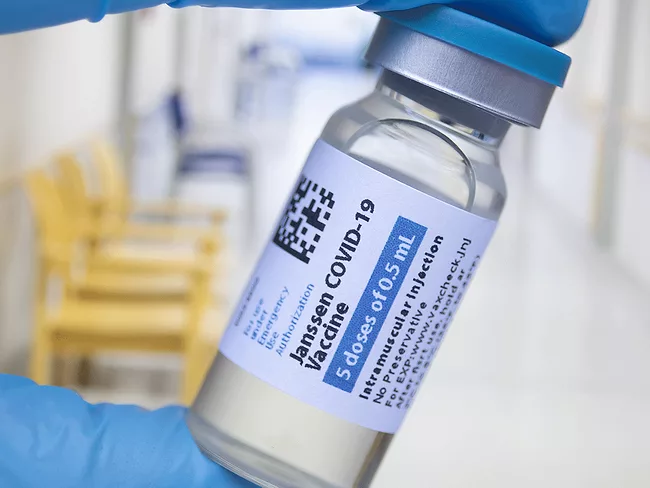
The FDA has authorized two batches of Johnson & Johnson’s COVID-19 vaccine from a troubled Emergent Biosolutions Inc. manufacturing facility to be made available under emergency use authorization (EUA) while determining that several other batches were unsuitable for use. While the FDA would not confirm the number of unsuitable batches, the newly authorized batches, however, can be used in the U.S. or exported.
Of all the controversies surrounding the FDA, the agency’s reliance on user fees and its use of accelerated review of therapies might be the most consistent sources of public angst. Coleen Klasmeier, a partner of Sidley Austin LLP, told BioWorld that while she is not particularly concerned about regulatory capture stemming from FDA reliance on user fees, it may be appropriate to ask whether the drug premarket review process leaves FDA staff with more confidence in a new drug application than the data would seem to suggest.
The good of the many versus the good of the individual is the age-old question that faced the FDA’s Vaccines and Related Products Advisory Committee (VRPAC) June 10 as it considered the risk-benefit issues of COVID-19 vaccines in children. Panelist Cody Meissner, director of pediatric infectious disease at Tufts Medical Center, said while he believes a vaccine is needed for children, he wants to know that the safety of the vaccine is greater than the risk of hospitalization for people younger than 18.
Recognizing that people with cancer want to know what symptoms they may experience and how a particular therapy may affect their quality of life, the FDA is issuing a draft guidance advising sponsors on incorporating a core set of patient-reported outcomes (PROs) into cancer clinical trials.
In a bid to bring more drug manufacturing back to the U.S. and to ensure an adequate supply of essential medicines, even in public health emergencies, the U.S. Department of Health and Human Services is forming a public-private consortium on advanced manufacturing and the onshoring of domestic production.
The FDA has lifted clinical holds on four studies from Bluebird Bio Inc., following recent similar actions with other gene therapy programs. Two of the studies concern phase I/II and phase III clinical trials of the gene therapy Lentiglobin (BB-1111) in treating sickle cell disease. The remaining two studies are phase III clinical trials of betibeglogene autotemcel gene therapy, which share a vector with Lentiglobin, for treating transfusion-dependent beta-thalassemia.
Novo Nordisk A/S will this month launch its weekly weight loss glucagon-like peptide-1 injection Wegovy (semaglutide) at the same monthly cost as its older daily shot Saxenda (liraglutide), following FDA approval in overweight and obese adults.

 RSS
RSS