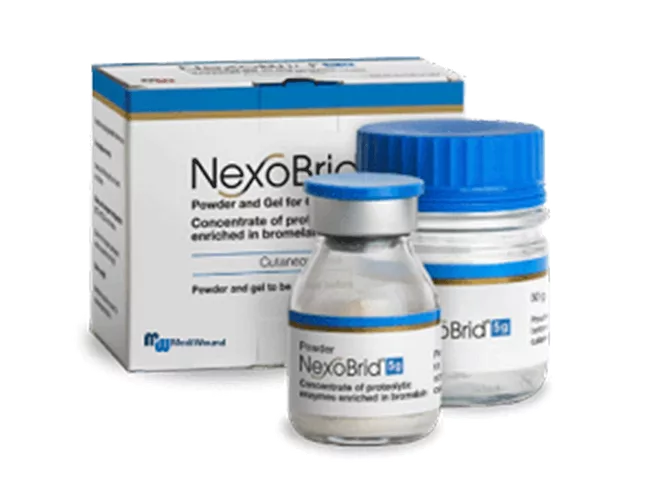
A not-unexpected complete response letter (CRL) for Nexobrid, being developed by Mediwound Ltd., delayed the therapy’s approval and knocked the company’s share values backward. Nexobrid, proteolytic enzymes enriched in bromelain for treating for eschar removal (debridement) in adults with deep partial-thickness and/or full-thickness thermal burns, had a June 29 PDUFA date.
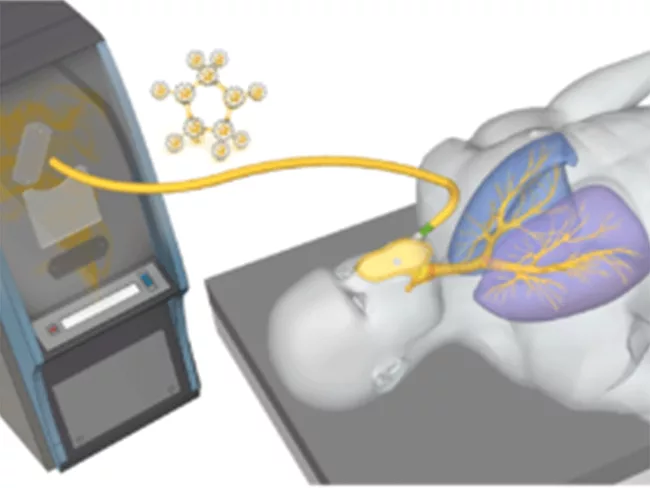
PERTH, Australia – Cyclopharm Ltd. said it received a complete response letter (CRL) from the FDA for its Technegas NDA for pulmonary embolisms. The CRL relates to better defining and validating production and delivery of the Technegas particle and other aspects of crucible manufacturing and dosimetry that need to be addressed before the NDA can be approved.
The U.S. House Appropriations subcommittee passed an appropriations bill for the FDA that would add $257 million to the agency’s budget authority for fiscal year 2022, an increase of 8% over the currently enacted level. The Alliance for a Stronger FDA said in a June 25 statement that it will work to ensure the Senate comes up with similar numbers, characterizing the push to fully fund the agency as “a multi-year marathon, not a sprint.”
Accelerated approval based on a phase II single-arm trial doesn’t appear to be in the cards for Incyte Corp.’s retifanlimab as a second-line treatment for advanced or metastatic squamous cell anal cancer (SCAC). Following the lead of FDA reviewers June 24, the agency’s Oncologic Drugs Advisory Committee (ODAC) voted 13-4 to recommend that the agency defer its approval decision until more data are available from POD1UM-303, a confirmatory trial in platinum-naïve advanced SCAC.
New FDA breakthrough therapy designations awarded for two investigational Alzheimer's disease (AD) candidates, Eli Lilly and Co.'s donanemab and the Bioarctic AB-Eisai Co. Ltd.-developed asset lecanemab (BAN-2401) underline ongoing willingness at the U.S. regulator to invest deeper attention in the potential of amyloid plaque reduction to slow progress of the disease, a critical and costly challenge estimated to affect more than 6 million Americans.
The follow-up to the U.S. 21st Century Cures Act, dubbed Cures 2.0, encodes several anticipated features such as a Medicare coverage mechanism for breakthrough devices and the Advanced Research Projects Agency for Health (ARPA-H). Less expected was a provision for the use of real-world evidence in evaluation of the safety and effectiveness of drugs and biologics after FDA approval, a provision that could prove useful in post-approval evaluations of products such as Biogen’s Aduhelm.
Although the U.S. CDC considers myocarditis to be a rare event linked to mRNA COVID-19 vaccines, the FDA is adding a warning about the adverse event to its doctor and patient fact sheets for the vaccines.
More than two weeks after the FDA gave its go-ahead to Biogen Inc.’s Aduhelm (aducanumab), controversy still rages over the accelerated approval as well as the price for the anti-amyloid beta monoclonal antibody for Alzheimer’s disease (AD). Embattled U.S. regulators made the uncommon move of releasing documents – with more due to be made public later – that show the internal deliberations that led to Aduhelm’s clearance.
With the July 25 PDUFA priority review date looming for Incyte Corp.’s retifanlimab as a second-line treatment for advanced or metastatic anal cancer, the FDA has one voting question for its Oncologic Drugs Advisory Committee (ODAC): Should it hold off on its approval decision until more data are in from a phase III study?
Shares in Orphazyme A/S cratered after the FDA rejected its arimoclomol for Niemann-Pick disease type C, a rare and potentially fatal inherited condition where fat builds in tissues and organs.
 RSS
RSS